A wood planer machine is a tool used to make lumber a consistent thickness and create a smooth surface. It is a standard machine in woodworking shops and is often used after rough cutting to prepare boards for building.
If you have uneven or rough wood, a planer helps refine it into usable material.
What Does a Wood Planer Do
A planer removes thin layers from the surface of wood. This process:
- Smooths rough lumber
- Brings boards to uniform thickness
- Prepares surfaces for joining or finishing
It works best when the board already has one flat reference face.
How a Wood Planer Works
Inside the machine, a rotating cutter head trims the surface while feed rollers push the board forward.
The key parts include:
- Cutter head with blades
- Infeed and outfeed rollers
- Adjustable bed for thickness control
The rollers press the board flat as it moves through the blades.
Types of Wood Planers
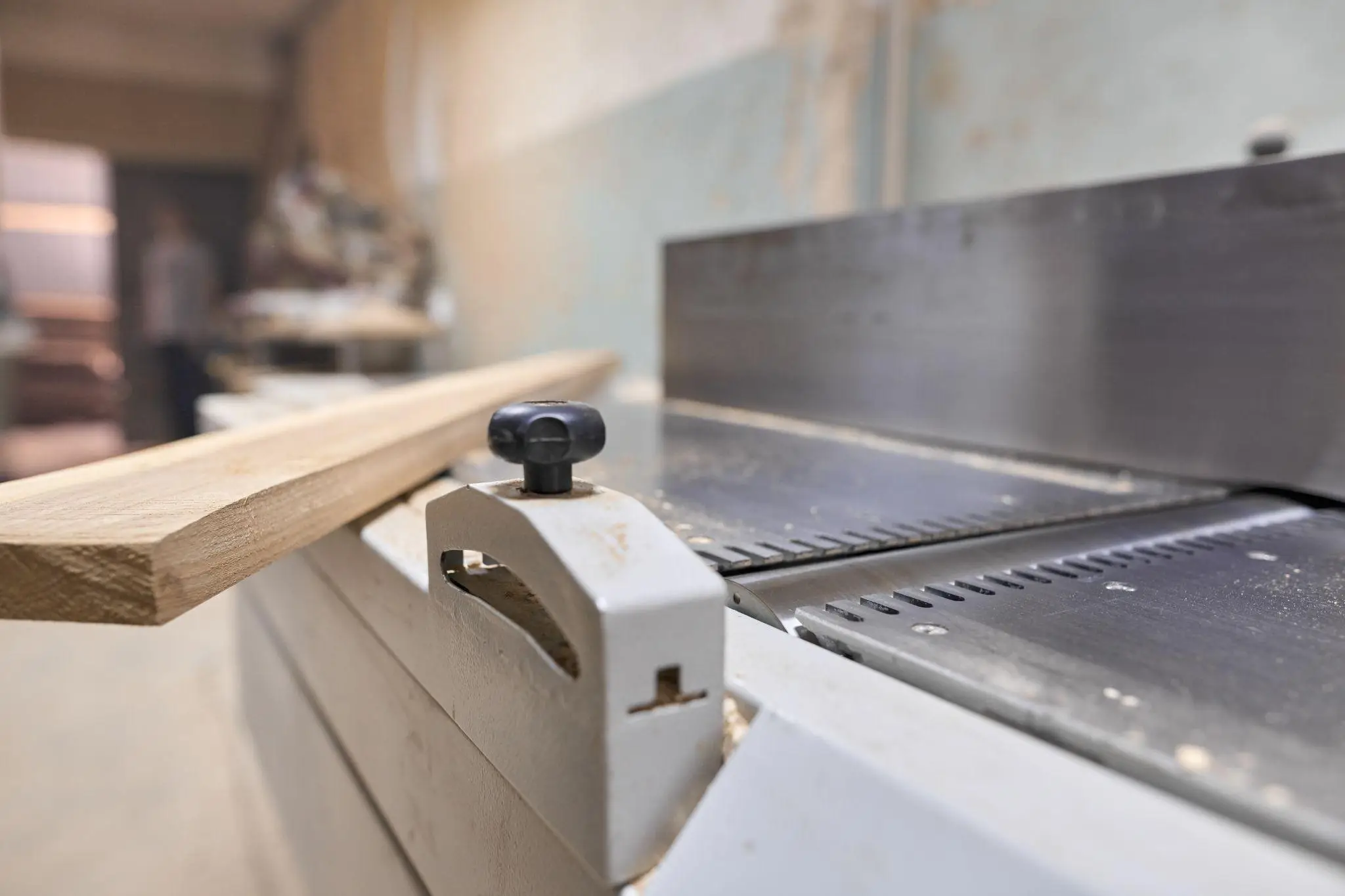
Common options include:
- Benchtop planers for small shops
- Thickness planers for general use
- Industrial planers for large operations
Brands like DeWalt and Makita dominate this space.
Benefits of Using a Planer
A wood planer is fast and efficient for:
- Reducing thickness quickly
- Creating smooth finishes
- Processing multiple boards consistently
For standard lumber, it is one of the most useful tools available.
Limitations of Wood Planers
Planers are not designed to fix every problem.
They struggle with:
- Twisted or cupped boards
- Very wide slabs
- Irregular shapes
- Highly figured grain
This is because the rollers hold the wood down during cutting.
Why Planers Struggle with Warped Wood
When a warped board enters the machine, the rollers press it flat temporarily. The cutter head removes material while the board is under pressure.
Once it exits, the wood can spring back toward its original shape.
This means the board may look smooth but still not be truly flat.
Alternative: Router-Based Flattening
A router-based flattening system solves this problem by removing high spots without forcing the wood flat.
Instead of feeding the board through a machine, the router moves across the surface. This makes it ideal for:
- Large slabs
- Live edge boards
- Warped material
A system like a TrueTrac router sled allows controlled, even passes across wide surfaces.
Router Planer vs Wood Planer
|
Feature |
Wood Planer |
Router Planer |
|---|---|---|
|
Speed |
Fast |
Slower |
|
Size capacity |
Limited |
Very large |
|
Handles warp |
Limited |
Excellent |
|
Surface control |
Moderate |
High |
Both tools are useful, but they serve different roles.
Best Use Cases for Each Tool
Use a planer when:
- Boards are already flat
- You need consistent thickness
- You are processing multiple pieces
Use a router planer when:
- The wood is warped
- The slab is too wide
- The shape is irregular
A Wood Planer Is Useful, but It Is Not Always the Best Tool for the Job
A wood planer machine is great for making boards smooth and bringing them to a consistent thickness. It is fast, efficient, and a solid choice for standard lumber that already has one flat reference face.
But that does not mean it is the right solution for every project.
When wood is twisted, cupped, oversized, or too valuable to risk, a standard planer can only do so much. That is where a router-based flattening system becomes the better option. It gives you more control over difficult material and makes it possible to flatten slabs, wide glue-ups, and irregular boards that a planer cannot handle well.
For many woodworkers, the smartest setup is not choosing one tool over the other. It is knowing when each one makes sense. Use a planer for speed and thicknessing. Use a flattening system when accuracy, size, and surface control matter more.