Runner rugs are the favourite “small change, big impact” home design trick of all time.
They have been suggested for years and they are the one interior design element that has truly remained over the years. By using just one well-placed runner rug you can:
- Warm up a cold hallway instantly
- Pull together mismatched flooring
- Make a narrow space feel longer (yes, really)
And the best part? It costs you a fraction of what proper renovation would.
Here’s how to make it work…
What’s coming up:
- Why Runner Rugs Quietly Change Everything
- Where Runner Rugs Actually Belong
- How To Pick The Right Runner (Without Regret)
- Common Runner Rug Mistakes To Avoid
Why Runner Rugs Quietly Change Everything
Walk into any well-designed home and you’ll see. The hallway doesn’t feel like a hallway. The kitchen doesn’t echo. The entryway feels like a hug and not a wind tunnel.
That’s not an accident. That’s a runner rug doing its quiet work.
Most people obsess about sofas, paint colours, lighting — and they neglect the long, skinny strip of floor that everyone steps on every day. The place to start your search is Rugs Direct, which has an enormous selection of runner rugs in all lengths, fibres and patterns for hallways, kitchens and entryways.
A good runner does three things at once:
- Adds warmth: Both literally and visually — it softens hard floors
- Creates flow: Your eye follows the runner from one space to the next
- Protects your floors: High-traffic areas wear down fast without a buffer
And that last point is more important than people realize. A runner is the most inexpensive insurance policy you can place on a hardwood or tile floor.
Pretty cool for a long rectangle, right?
The market shift substantiates that. Textured floor coverings have seen their demand increase. Natural fibre rugs have become 67% more popular. Runners are no longer an afterthought — they’re an integral part of the plan.
Where Runner Rugs Actually Belong
Runner rugs are not a ‘one-size-fits-all’ proposition. Each area has a different function for the runner and part of the challenge is positioning the runner accordingly.
Hallways
This one’s a no-brainer. A long, skinny hallway practically cries out for a runner. Bare hallways feel cold and clinical — almost hospital-like. A runner instantly makes it feel like a home.
Pro tip: Leave 4-6 inches of bare floor on each side of the runner. Don’t stretch it all the way across.
Kitchens
A runner going the length of your kitchen counter is one of the smartest things you can do. You’re on your feet there for hours — chopping, washing, cooking. Your back, knees, and feet will thank you. It also traps every drop and splash before it hits your tile.
Entryways
Flooring is the first thing your guests see when they walk in. A runner can set the tone for your entire home. It is also the first line of defense against tracked in mud, water and grit.
Bedrooms
Put a runner down the side of the bed you get out of in the morning. There’s nothing like stepping onto soft fabric instead of a cold floor at 6am to start your day.
Bathrooms
Slim, long bathrooms pair very well with a runner. The extra warmth and traction are welcome in a space that needs both.
How To Pick The Right Runner (Without Regret)
Picking a runner rug appears simple. You go to buy one and realise there are 1000 choices. Let’s make it easy…
Get The Size Right
This is the part where most people get it wrong. A runner that is too short looks like a rogue bath mat. A runner that is too long looks like you haven’t measured.
The rule of thumb:
- Hallways: Keep about 4-6″ of floor on each side and 4-8″ at each end
- Kitchens: Run the rug along the length of your main work zone
- Bedrooms: Aim for 2/3 the length of your bed
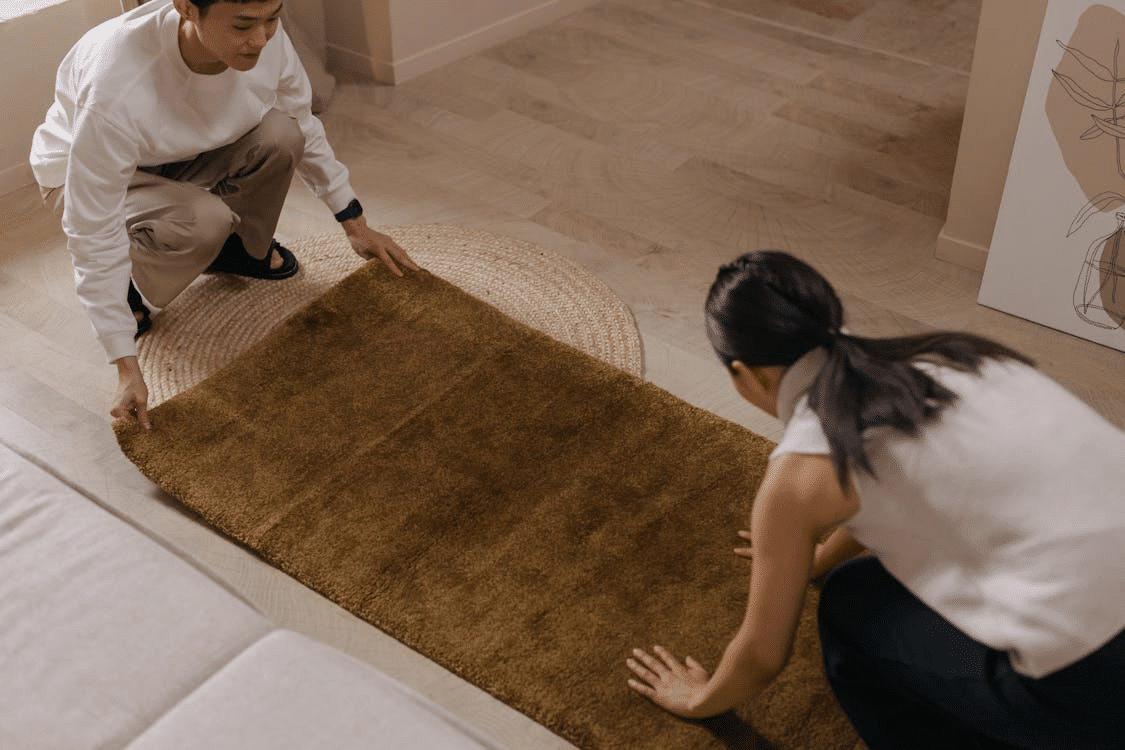
Measure your space twice. Buy once.
Choose The Right Material
Stuff matters. A silk runner in your kitchen is asking for trouble. A jute runner next to your front door will be grubby by next Tuesday.
Match the material to the room:
- High-traffic areas: Wool or synthetic blends. Tough, easy to clean, hides dirt.
- Kitchens: Washable synthetic or flatweave. You will spill things.
- Bedrooms and quiet spaces: Wool, cotton, or natural fibres. Comfort wins here.
Mind The Pattern
A busy pattern can disguise a lot of sins — crumbs, scuffs, paw prints. A light, plain runner looks gorgeous in photos but picks up every speck of dirt within a week.
If you have children, pets, muddy boots in your life, go patterns. Believe it.
Don’t Forget The Backing
A slippery runner is a disaster in the making. Be sure to use a non-slip pad with your runner or purchase one that already has rubber backing. Each year an estimated 37,991 adults age 65 and older are treated in U.S. emergency departments for falls involving carpets and rugs, and most of those falls occur at home.
A non-slip pad is around ten bucks. It’s the least expensive safety improvement in your home.
Common Runner Rug Mistakes To Avoid
Right rug or not, sometimes life hands you lemons…Here are the missteps frequently witnessed…
Mistake #1: Going Too Small
A short stubby runner in a long hallway looks funny. If you can’t find an appropriate length off-the-rack, seek custom sizing.
Mistake #2: Ignoring The Style Of The Room
Your runner must converse with the rest of the room. A traditional Persian runner in a super-modern minimalist hallway could be either a striking contrast or a jumbled mess.
Mistake #3: Forgetting The Maintenance
Runners suffer. They should be vacuumed every week and shampooed deeply every couple of months. If that’s more commitment than you have, get a low-pile machine-washable alternative.
Mistake #4: Skipping The Trial Run
If possible, sleep on the runner for a few days before making the decision. The “perfect” rug in the showroom is often a completely different color at home.
Final Thoughts
Runner rugs are one of the simplest ways to elevate a house from “fine” to “feels like home.” They warm things up. They protect your floors. They make narrow spaces look intentional instead of forgotten.
To recap:
- Pick the right size for the space (don’t eyeball it)
- Match the material to the room’s job
- Always use a non-slip pad
- Don’t be afraid of pattern — it hides dirt and adds character
The runner rug is small. The difference it makes is not.