Paint on concrete can look simple at first, but removing it is rarely a one-step job. Concrete is porous, so paint can settle into tiny openings and hold on long after the top layer dries.
If you are figuring out how to remove paint from concrete, the best method depends on the paint type, age, condition, and size of the mess.
Choosing the wrong method, however, can leave scratches, discoloration, or an even bigger cleanup job.
A few small details about the paint and concrete can completely change how easily that unwanted color comes off.
Why Paint Can Be Hard to Remove From Concrete?
Paint does not simply sit on top of concrete. Because concrete contains tiny pores and surface irregularities, paint can soak in and grip the slab as it dries.
That is why an old spill often leaves color behind even after you scrape away the visible layer.
The finish also matters. Smooth sealed concrete is usually easier to clean than rough, unsealed, stamped, or decorative concrete.
Paint type changes the job too. Water-based latex may respond to soap, scraping, or stripper, while oil-based coatings often need a compatible solvent or stronger remover.
Before choosing a tool, look at how deeply the paint has bonded. Removing it successfully is about loosening that bond without unnecessarily roughening, staining, or etching the concrete underneath.
How to Remove Paint From Concrete?
The right paint removal method depends on the paint’s age, how firmly it has bonded, and where the concrete is located.
This is for informational purposes only. If you suspect lead paint, consult a certified lead-safety professional before disturbing the surface.
1. Soap and Scrubbing

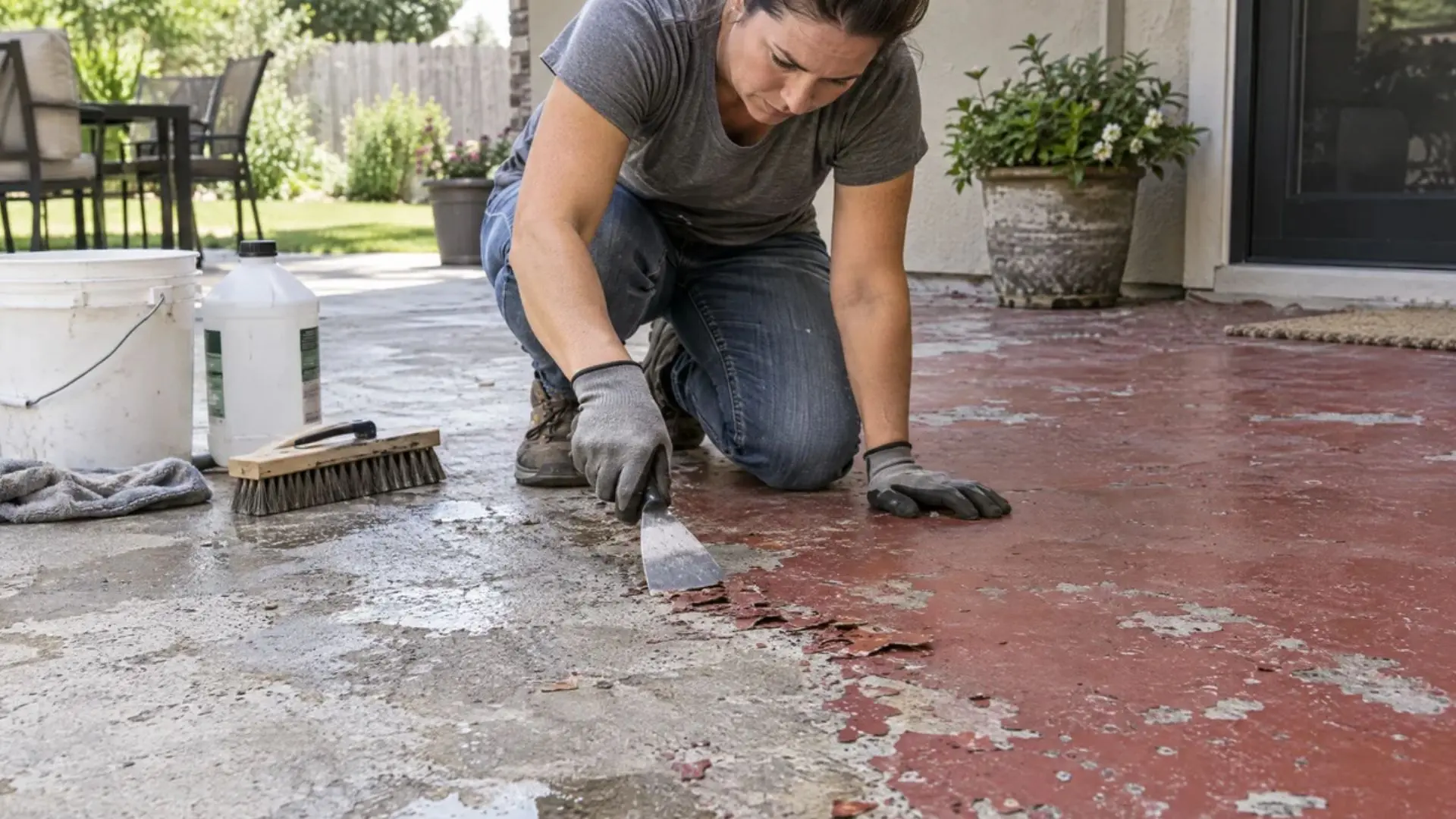
For fresh or light water-based paint, start with warm water, dish soap, and a stiff nylon brush. Blot wet paint first instead of wiping it across a wider area.
Let soapy water sit briefly on dried splatters, then scrub and rinse. A plastic scraper can help lift softened edges without being as aggressive as metal.
This method is inexpensive and gentle, but it usually will not remove thick, old, or deeply bonded coatings.
2. Concrete-Safe Paint Stripper

A concrete-safe paint stripper or concrete paint remover is often the most practical choice for old, dried, or firmly bonded paint. Spread it over the affected area and allow the full dwell time listed on the label.
The coating should soften, wrinkle, or lift enough to scrape away. Work in small sections so the product does not dry prematurely.
Wear the specified protective equipment and keep runoff away from landscaping, drains, and surrounding finished surfaces.
3. Acetone or Solvent

Acetone or another compatible solvent can help with small stubborn spots, particularly when soap and scraping have done little.
Apply only a small amount to the paint, allow it to work briefly, then scrub or blot the loosened residue.
Ventilation is essential because many solvents produce strong vapors and are highly flammable. Always check whether the product is suitable for the paint and concrete finish, and test it in a hidden area first.
4. Pressure Washing

Pressure washing is useful for outdoor concrete when paint is already peeling, flaking, or partly loosened. Begin with a wider spray pattern and test a small section before increasing pressure.
Keep the wand moving so the water does not carve lines into the concrete.
For stubborn coatings, pressure washing can help after a suitable stripper has loosened the paint, provided the product directions allow it.
Keep contaminated runoff away from drains, gardens, doors, vehicles, and nearby finished surfaces.
5. Grinding or Wire Brushing

Grinding or wire brushing can remove coatings that resist washing and chemical treatment, but these methods are more aggressive.
They are best suited to sturdy concrete where a slight change in texture is acceptable.
A grinder can strip floor areas faster than hand scraping, while a wire cup brush suits smaller patches.
Both can create dust and surface marks, so use proper dust control, protective equipment, and a test area before working across the slab.
6. Professional Blasting

Dustless blasting or similar professional surface-removal methods can make sense for large slabs, multiple coating layers, or paint that has bonded too strongly for normal DIY methods.
These systems use abrasive action and controlled equipment to remove coatings efficiently, but they still require an experienced operator. They can affect surface texture if used incorrectly.
For decorative concrete, large driveways, or whole garage floors, professional removal may offer better control than repeated stripping or aggressive home grinding.
Which Paint Removal Method Should You Use?
Choosing a method becomes easier when you match it to the paint condition instead of the location alone. Use this table as a starting point, then test the method on a small hidden area before treating the full surface.
|
Situation |
Start With |
If It Does Not Work |
|---|---|---|
|
Fresh latex spill |
Soap and warm water |
Gentle scraping |
|
Small dried spots |
Scrubbing and scraping |
Concrete-safe stripper |
|
Old patio paint |
Paint stripper |
Controlled pressure washing |
|
Small stubborn stain |
Compatible solvent |
Paint stripper |
|
Painted garage floor |
Paint stripper |
Grinding or professional removal |
|
Loose exterior paint |
Pressure washing |
Stripper |
|
Decorative concrete |
Gentle spot treatment |
Professional removal |
When Paint Must Be Fully Removed and When It Should Not Be
Not every painted concrete surface needs to be stripped back to bare concrete.
In some cases, complete removal is necessary for proper adhesion or repair, while in others, removing sound paint can create extra work without improving the result.
Must Be Fully Removed
Paint should be fully removed in the following cases, as leaving weak paint behind can cause new finishes to peel, crack, or separate later:
- Remove paint that is peeling, flaking, bubbling, or lifting from the surface.
- Strip coatings before applying concrete stain, dye, or treatments that must penetrate the pores.
- Remove paint where moisture, cracking, or surface damage needs to be inspected or repaired.
- Fully strip areas with several unstable paint layers that continue to separate.
- Remove incompatible coatings before applying a new system that requires bare concrete.
Should Not Be Removed
Complete removal is often unnecessary in the below-listed cases, as for them proper cleaning, light abrasion, and surface preparation may be enough.
- Keep paint that is firmly attached with no peeling, bubbling, or loose edges.
- Avoid stripping sound coatings when repainting with a compatible product.
- Do not remove paint only because the color is outdated if the coating itself is still stable.
- Leave well-bonded paint in place when the manufacturer allows recoating over an existing finish.
- Avoid aggressive removal on decorative or delicate concrete unless stripping is actually required.
What Reddit Users Say About Removing Paint From Concrete
Reddit homeowners often point out that pressure washing alone may not be enough for old, firmly bonded paint.
One user said a pressure washer removed some paint but required considerable time with little progress, which led them to look for a better approach.
Several commenters recommended applying a paint stripper first, allowing it to soften and bubble the coating, and then using a pressure washer to remove the loosened paint.
One person used this combination on a roughly 12-by-30-foot area and reported good results.
Users recommended chemical-resistant gloves, protective clothing, eye protection, and careful residue collection because stripper and paint chips can spread during pressure washing.
Planning for cleanup beforehand can make the entire job safer and far less messy.
Mistakes That Can Damage Concrete
Paint removal can go wrong when speed matters more than surface control. Avoid these mistakes that can leave permanent marks or create unnecessary cleanup:
- Using too much pressure: A concentrated pressure-washer stream can etch lines or expose aggregate, especially on older concrete.
- Scraping too early: Stripper needs proper dwell time. If paint has not softened, extra force usually creates more work.
- Using random chemicals: Never mix removers or solvents, and confirm that each product is suitable for concrete.
- Grinding without dust control: Mechanical removal creates fine concrete dust, so use suitable extraction and protective equipment.
- Ignoring runoff: Paint chips, solvent residue, and stripper sludge should be contained instead of washed into lawns or drains.
When to Call a Professional
Call a professional when the job is larger than a manageable DIY cleanup or when protecting the concrete finish matters more than saving time.
Entire garage floors, multiple old coating layers, epoxy systems, and deeply bonded exterior paint may require commercial grinders, blasting equipment, or specialized strippers.
Professional help is also sensible for decorative, colored, stamped, or polished concrete because an aggressive method can change the texture or color permanently.
Stop and get expert advice if the coating may contain lead, if indoor grinding would create significant dust, or if repeated attempts are damaging the slab.
This matters even more on a large decorative surface, since the cost gap between patching and replacing an outdoor concrete area can add up fast.
Final Thoughts
Removing paint from concrete becomes much easier when you match the method to the coating instead of attacking the surface with the strongest option first.
I would always test a hidden spot before treating a large visible area, especially on decorative or sealed concrete.
Give each product enough time to work, control dust and runoff, and clean the slab properly afterward.
A patient approach protects the concrete while giving you a cleaner, more even result.
Frequently Asked Questions
Will Paint Thinner Remove Paint From Concrete?
Paint thinner may loosen some oil-based paint, but it is not ideal for every coating. Test first, ventilate well, and follow the product label.
Will Vinegar Remove Paint From Concrete?
Vinegar may soften light water-based residue, but it is unreliable on cured paint. Scrubbing, stripper, or another compatible removal method usually works better.
Can Baking Soda Remove Paint From Concrete?
Baking soda alone is not a dependable paint remover. It may help with light residue, but dried coatings generally need scraping, stripper, pressure, or abrasion.