Wall art is one of the fastest, cheapest ways to change how a room feels. Not a renovation, not new furniture – just something hung on a bare wall. And yet most people default to a framed print from a big-box store, something mass-produced and forgettable.
Handmade fiber art is different. Woven wall hangings, punch needle panels, and macrame pieces carry texture, weight, and personality that flat prints simply can’t replicate. In 2025, there’s a documented resurgence in fiber arts among younger homeowners and renters – and it’s not a passing fad. This guide covers why textile art works so well on walls, how to choose the right piece for your space, and how to make your own using one of the most beginner-friendly techniques out there.
No prior craft experience needed. Start to finish, the process is simpler than most people expect.
Why Fiber Art Works So Well on Walls
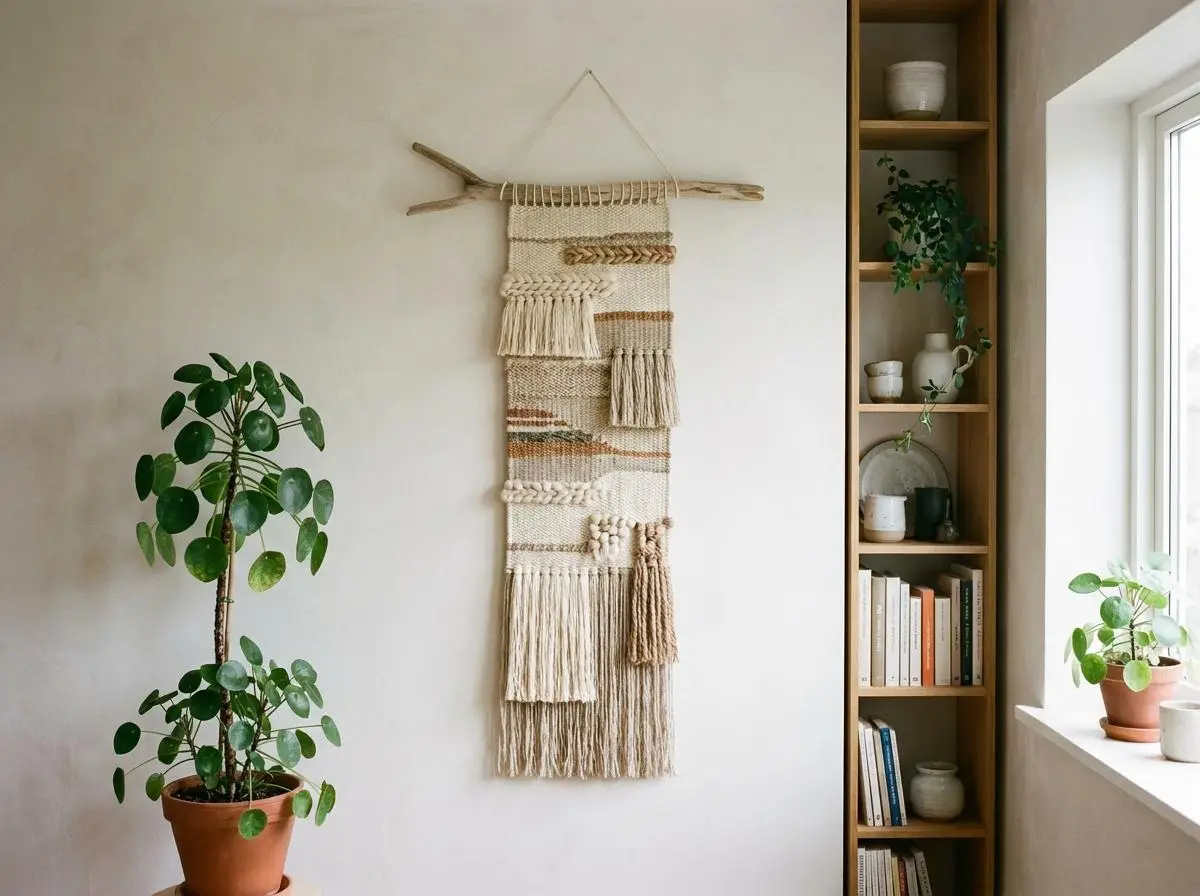 minimalist interior with handmade fiber art wall hanging and indoor plants by window
Texture does something to a room that paint and prints can’t. Fiber pieces catch light differently in the morning versus afternoon. They absorb sound. They add visual weight to a corner that feels empty without competing with furniture. If you’ve ever walked into a room and found it cold or underdecorated despite having decent furniture, there’s a good chance it needs something with physical depth on the walls.
The wall art market was valued at $68.4 billion in 2024, according to Future Market Insights – but you don’t need gallery prices to get the result. A woven wall hanging made from natural fibers can run anywhere from $80 to $400 in retail stores. DIY materials for the same piece typically cost $15 to $40.
Vertical format pieces deserve special attention here. Rooms with high ceilings often feel unfinished because the walls have a lot of height but the furniture doesn’t fill it. A piece that runs tall rather than wide pulls the eye upward and makes the room feel more proportional. This applies across all mediums, not just textiles, and works especially well when using vertical artwork to introduce height and structure. For narrow walls, hallways, and beside bookshelves or doorframes, choosing a single tall piece that fills the wall’s height is far more effective than trying to cluster several small horizontal pieces together.
According to a 2025 feature by My Modern Met, fiber and textile artists are leading a broader craft resurgence that’s crossed from niche studios into mainstream home interiors – with collectors and everyday buyers both looking for pieces with tangible human craftsmanship rather than digital reproduction.
The Rise of Handmade Textile Art

floral punch needle embroidery in hoop with yarn, scissors, and crafting tools on wooden table
Fiber arts aren’t trending for one reason. There’s a mix of forces driving the shift.
Michigan State University journalism research from 2025 found that TikTok and YouTube tutorial content has been a primary driver of craft adoption among adults aged 18 to 35, with fiber arts – punch needle, weaving, macrame – among the most-searched categories. The accessibility is part of it. You can watch someone complete a punch needle panel in a 20-minute video and have a realistic picture of what it takes before you buy a single supply.
The numbers back up the trend. According to a 2025 report from RainPOS, DIY craft kit sales grew by 35% in 2024. Etsy searches for macrame rose more than 400% in the same period. And according to Future Market Insights’ 2025 Wall Decor Market report, 54% of consumers now actively seek environmentally friendly materials in home decor – which handmade textiles, especially those using natural wool, cotton, and jute, fit cleanly.
Making your own piece also solves problems that buying can’t. You control the color palette down to the exact shade that matches your room. You set the dimensions to fit the specific wall you have. And you’re not paying retail markup on something that took a factory thirty seconds to print.
The main formats worth knowing:
- Woven wall hangings – made on a loom or simple DIY frame, with looped and knotted yarn
- Punch needle panels – a stitched looping technique that creates pile texture (more on this below)
- Macrame – knotted cord, typically cotton, very good for large statement pieces
- Yarn art – simpler strand-wrapped designs, good for beginners trying a first project
If you’re working on a broader room refresh alongside your wall art project, these DIY room decor ideas cover complementary projects that don’t require carpentry or a big budget.
How to Get Started With Punch Needle

person creating punch needle embroidery with colorful yarn in embroidery hoop on wooden table
Punch needle is probably the most beginner-friendly of the fiber art techniques. The learning curve is short – most first-timers can finish a small panel in three to four hours – and the supplies are inexpensive.
Here’s what you need to start:
- A punch needle tool (typically a hollow-tipped needle on a handle, available in different loop-height sizes)
- Monk’s cloth or burlap as your base fabric – both have an open weave that accepts the needle cleanly
- An embroidery hoop, large enough for your design, to keep the fabric pulled taut
- Yarn or embroidery floss in your chosen colors
The process is straightforward. Sketch your design directly onto the fabric with a marker – geometric shapes and botanical outlines both work well for a first project. Thread the yarn through the hollow needle, then push the tool through the fabric repeatedly in short strokes to build up a looped pile. Work from the center of your design outward. When you’re done, trim any uneven loops and finish the edges by folding and gluing the fabric onto a backing board, or mount the piece onto a wooden dowel.
Two tips that make a real difference: keep the fabric extremely taut throughout – loose fabric causes the loops to pull out – and work in natural light if you can, since the texture is much easier to read when you’re not squinting under overhead lighting.
Beginners often find it easiest to start with punch needle kits that bundle the needle, fabric, and yarn in one package. Sourcing each supply separately takes time, and kits often include a printed pattern so you’re not starting from a blank piece of cloth.
How to Hang and Style Your Finished Piece
Getting the display right matters as much as making the piece.
For mounting options, a wooden dowel rod is the most common choice for woven and punch needle pieces – loop the top edge of the fabric over the rod and hang it from a nail or hook. This gives a clean, natural look that suits most interiors. For a more polished finish, smaller punch needle panels can be framed behind glass like a conventional print. A floating shelf works for displaying smaller, freestanding pieces without putting nails in the wall, which matters for renters.
Proportion is where most people go wrong. A small 8-inch piece on a large blank wall looks lost. The rough rule: the piece should cover at least two-thirds of the wall space you’re trying to fill. For wide walls, grouping two or three smaller pieces at consistent spacing works better than a single small item. For narrow walls and hallways, a tall vertical piece beats a cluster every time.
Height placement: hang so the center of the piece sits at roughly 57 to 60 inches from the floor. That’s the standard gallery height, and it holds true for home display too.
Care is simple but worth knowing. Dust fiber art with a soft brush – a clean paintbrush works fine – every few weeks. Keep pieces out of direct sunlight. Natural fibers like wool and cotton will fade with prolonged UV exposure, and the texture yellows in a way that’s difficult to reverse.
These easy home improvement projects pair well with a fiber art wall update if you’re taking on a broader room refresh – many of them are weekend-scale, low-cost, and renter-friendly like the projects in this guide.
Putting It All Together
Handmade fiber art is one of the most accessible upgrades you can make to a room. The materials are cheap, the techniques are learnable in a single afternoon, and the result is something genuinely specific to your space – not a print that exists in ten thousand other apartments.
Whether you start by buying a curated vertical piece for an immediate impact or spend a weekend working through your first punch needle panel, the payoff is the same: a wall that feels considered rather than forgotten.
For more affordable home upgrade ideas across every room in your home, Seedsheets has a running list of projects that stay practical and budget-conscious without sacrificing the result.