Nobody wants to share their cozy sanctuary with eight-legged roommates, yet spiders have a knack for finding their way inside.
They’re drawn to warmth during cooler months and follow the trail of other insects right through your door. These uninvited guests can turn peaceful evenings into startling encounters that leave your heart racing.
If you’ve ever wondered why your home seems like spider central or felt that familiar shiver when you spot one scurrying across your floor, you’re in the right place.
This guide will walk you through practical, gentle ways to create a spider-free haven without harsh chemicals or constant worry.
Your peaceful home awaits.
Why Are Spiders in Your House?
Spiders aren’t invading your home to bother you; they’re simply following their survival instincts. Your house offers a buffet of insects like flies, mosquitoes, and ants that spiders love to feast on.
When temperatures drop or storms roll in, they slip inside seeking cozy shelter from harsh weather.
Tiny gaps around doors, windows, and foundations become their secret entryways, and you’d be surprised how little space they need.
Spider activity tends to spike during the fall when they’re searching for warm spots to settle in for winter.
Understanding these patterns helps you stay one step ahead and create an environment that’s far less appealing to these unwanted guests.
Common Types of House Spiders
House spiders come in various shapes and sizes, and knowing which ones you’re dealing with can ease your worries. Most indoor spiders are completely harmless and actually help control other pests.
Here’s a guide to common spiders and how they differ from outdoor ones.
| Spider Type | Characteristics | Behavior | Concern Level |
|---|---|---|---|
| Common House Spider | Small, brownish, with a round abdomen | Builds messy webs in corners and undisturbed areas | Harmless, beneficial |
| Cellar Spider (Daddy Long-legs) |
Extremely long, thin legs with a small body | Prefers basements and dark spaces | Harmless, shy |
| Jumping Spider | Compact, fuzzy with large front eyes | Active hunters, no webs, curious nature | Harmless, even friendly |
| Wolf Spider | Large, brown with a striped pattern | Ground dweller, hunts at night | Harmless but startling |
| Outdoor Spiders (Garden, Orb Weavers) | Larger, colorful, with elaborate webs | Rarely venture indoors unless forced | Generally harmless outdoors |
Spiders become a concern when you notice frequent bites, large infestations, or spot venomous species like black widows or brown recluses in your area. Otherwise, the occasional spider is more friend than foe.
Is It Possible to Keep Spiders Out Completely?
Let’s be honest: keeping your home completely spider-free is nearly impossible, but you can dramatically reduce their presence.
Think of it like tidying up. You can’t stop dust from settling, but regular cleaning keeps it manageable. Prevention beats constantly hunting down spiders after they’ve already made themselves comfortable.
Here’s something worth noting: spiders often hint at a bigger issue lurking in your home. Seeing lots of spiders usually means you have other pests they’re happily hunting.
Tackle the underlying insect problem, and spiders will naturally have fewer reasons to hang around.
It’s all connected in ways you might not expect.
How to Keep Spiders Out of Your House: Prevention Steps

Keeping spiders out starts with making your home less inviting to them. These prevention steps work together to create a barrier that discourages spiders from settling in.
1. Seal Entry Points
Spiders can squeeze through the tiniest openings, so sealing up your home is your first line of defense. A little effort here goes a long way in keeping them outside where they belong.
- Step 1: Inspect around windows, doors, and foundation for visible cracks and gaps.
- Step 2: Apply caulk to seal cracks in walls, baseboards, and around pipes.
- Step 3: Install or replace weather stripping on doors and windows for a tight seal.
- Step 4: Repair torn window screens and check for gaps in screen frames.
2. Reduce Food Sources
Spiders follow the food, and if your home is full of insects, they’ll keep coming back. Cut off their food supply, and they’ll look elsewhere for their next meal.
- Step 1: Address any existing insect problems with traps or natural repellents.
- Step 2: Switch outdoor lights to yellow bulbs that attract fewer insects.
- Step 3: Keep kitchen surfaces clean and store food in sealed containers.
- Step 4: Take out trash regularly and keep bins tightly closed.
3. Declutter Indoors
Clutter creates perfect hiding spots for spiders to build webs undisturbed. A tidy home leaves them with nowhere comfortable to settle.
- Step 1: Store items in sealed plastic bins rather than cardboard boxes.
- Step 2: Vacuum regularly in corners, under furniture, and along baseboards.
- Step 3: Clear away piles of clothing, magazines, or papers from the floors.
- Step 4: Keep closets organized and avoid leaving shoes or bags on the floor long-term.
Natural and DIY Methods to Keep Spiders Away
Natural remedies offer a gentler way to discourage spiders without harsh chemicals. These DIY solutions use scents and ingredients that spiders find unpleasant, creating an invisible barrier they’d rather avoid.
| Method | How to Use | Safety Notes |
|---|---|---|
| Essential Oil Spray | Mix 10-15 drops of peppermint or tea tree oil with water; spray entry points weekly | Toxic to cats; keep away from pets |
| Vinegar Solution | Equal parts vinegar and water; spray windowsills and doorways | Safe for most pets; smell fades quickly |
| Citrus Peels | Rub fresh lemon or orange peels along baseboards; replace when dry | Safe for pets and children |
| Cedar Blocks | Place in closets and storage areas; use cedar oil for larger spaces | Generally safe; watch for pet allergies |
| Eucalyptus | Hang dried bundles or spray diluted oil around the home | Toxic to cats and dogs if ingested |
Always test natural solutions in small areas first and keep concentrated oils away from curious pets and little hands. What smells lovely to you might be overwhelming or harmful to your furry friends.
What Homeowners Say: Community Tips That Work
Sometimes the best advice comes from people who’ve been in your shoes. Homeowners across the internet have shared their tried-and-true methods for keeping spiders at bay, and some of their tips might surprise you.
What Actually Works:
- “Spray peppermint oil along windows and doors, or anywhere they may enter.” This method consistently tops community recommendations.
- “Mix it with water and wipe it along the skirting boards.” Another effective application approach.
- “Switch to yellow bulbs. Way fewer bugs means way fewer spiders.” Addressing the root cause works.
- “Vacuum everything, including the webs.” Consistent removal forces spiders to relocate.
- “Diatomaceous earth around the foundation works wonders. Just keep pets away.” A natural barrier solution.
Common Myths Debunked:
- “Conkers don’t work. I tried them everywhere and still had spiders.” Old folklore fails in practice.
- “Ultrasonic repellents are a waste of money.” These devices consistently underdeliver.
For more community insights and personal experiences, check out this Reddit discussion where homeowners share what’s worked for them.
Keep Spiders Away Through Smart Cleaning and Outdoor Maintenance
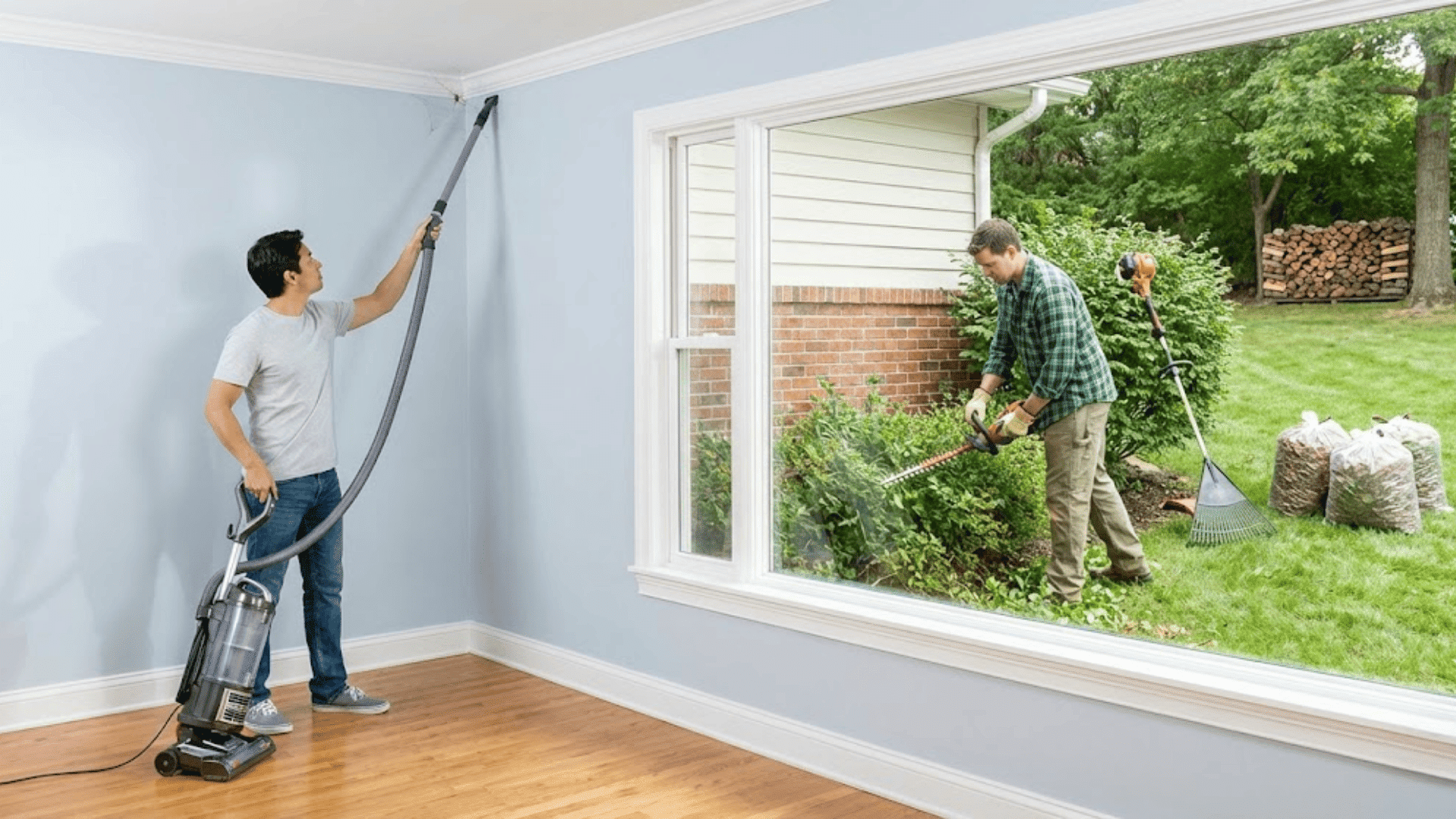
Prevention starts with consistent habits both inside and outside your home. These simple maintenance routines create an environment that spiders find far less appealing.
- Vacuum corners, ceilings, and baseboards weekly to remove existing webs and discourage spiders from rebuilding.
- Clear away outdoor clutter like leaf piles, stacked wood, and debris near your foundation, where spiders love to hide.
- Store firewood at least 20 feet from your house to prevent spiders from using it as a bridge indoors.
- Wash bedding and shake out stored fabrics regularly to eliminate hiding spots in closets and storage areas.
- Trim vegetation and maintain your yard to reduce insect populations that attract hungry spiders.
The connection between indoor and outdoor spaces matters more than you might think.
Spiders living comfortably in your yard will eventually find their way inside, so tackling both areas together gives you the best chance at long-term success.
Products That Help Keep Spiders Out of Your House
Sometimes natural methods need a little backup. These store-bought solutions offer extra protection when you need reliable, ready-to-use options for keeping spiders at bay.
| Product | Purpose | Where to Buy |
|---|---|---|
| Spider Repellent Spray | Creates a barrier at entry points; lasts 30-60 days | TERRO Spider Killer, Miss Muffet’s Revenge |
| Sticky Traps | Catches and monitors spider activity | Catchmaster Spider Traps |
| Door Sweeps | Seals gaps under doors | Home Depot, Lowe’s |
| Essential Oil Sprays | Natural, pet-friendly repellent | Mighty Mint Spider Repellent |
Store-bought solutions work best when combined with the prevention methods we’ve covered. Think of these products as your reinforcement team rather than a solo fix.
If you’re dealing with a serious infestation or venomous spiders, calling a professional pest control service is always the safest choice.
When to Call a Professional?
Sometimes DIY methods aren’t enough, and that’s perfectly okay. Knowing when to bring in experts can save you time, stress, and potential health risks.
Call a professional if you notice:
- Multiple spiders appearing daily despite your prevention efforts
- Egg sacs, in various locations throughout your home
- Venomous species like black widows or brown recluses
- Spiders in areas where children or pets spend time
- Large webs forming faster than you can remove them
Pest control services typically offer thorough inspections, targeted treatments for spider hotspots, exterior barrier applications, and follow-up visits to ensure long-term results.
Wrapping Up
Creating a spider-free home isn’t about achieving perfection; it’s about consistent effort and smart strategies.
Sealing entry points or using natural repellents gives you a complete toolkit for how to keep spiders out of your house. Start with one or two methods that feel manageable, then build as you see results.
Remember, every small step makes your space less inviting to eight-legged visitors. Which tip are you most excited to try first?
Drop a comment below and share your spider prevention wins or questions. Here’s wishing you a cozier, calmer home where you’re the only one spinning webs of comfort.