Air plants are something special, members of the Tillandsia genus that thrive without a speck of soil, drawing everything they need straight from the air around them.
These epiphytic wonders have become beloved houseplants for good reason: they’re forgiving, versatile in how you display them, and make thoughtful gifts that actually survive.
Their sculptural forms look just as remarkable nestled in a seashell as they do suspended from driftwood or tucked into a geometric holder.
If you’re ready to bring home something green without the usual fuss, understanding how to care for air plants will change how you think about indoor greenery.
Air Plant Basics
Air plants stand apart because they pull water and nutrients directly through their leaves rather than roots, making soil completely unnecessary.
This unique trait opens up endless creative display options: terrariums, wall mounts, or even hanging installations.
Not all air plants are identical, though. Mesic varieties prefer more humidity and frequent watering, while xeric types thrive in drier conditions with less moisture.
The secret to their survival lies in trichomes, those tiny silvery hairs coating their leaves that act like microscopic sponges, absorbing everything the plant needs from the surrounding air.
Understanding these basics helps you choose and care for the right variety.
Light Requirements for Air Plants
Getting the light right sets the foundation for healthy, thriving air plants.
Here’s what they need to flourish:
- Bright, indirect light works best; think filtered sunshine, not harsh direct rays that can scorch delicate leaves.
- East or north-facing windows offer the gentlest natural light without overwhelming your plants.
- Full-spectrum grow lights make excellent substitutes when natural light falls short, running for at least twelve hours daily.
- Pale, stretched-out growth signals your plant is reaching for more light and needs a brighter spot.
- Brown or crispy leaf tips mean too much direct sun is burning the foliage; it’s time to move to a shadier location.
Strike this balance, and your air plants will reward you with vibrant color and steady growth.
Watering Air Plants
Watering is where air plant care gets interesting, and where most mistakes happen. Overwatering causes rot, the number one killer of air plants.
These fine specimens need moisture but despise sitting in water, making proper technique and thorough drying absolutely critical for their survival.
1. Best Watering Methods
Different situations call for different approaches. Here’s how each method works:
| Method | Description | Best For |
|---|---|---|
| Soaking | Full submersion for 20–30 minutes in room-temperature water | Most thorough hydration; ideal for regular weekly care |
| Misting | Light spray between soaks | Quick moisture boost in dry conditions or for decorative displays |
| Dunking | Brief dip in water | Mounted plants or tiny species that can’t be easily soaked |
2. How to Water an Air Plant?
Follow these steps for successful soaking every time:
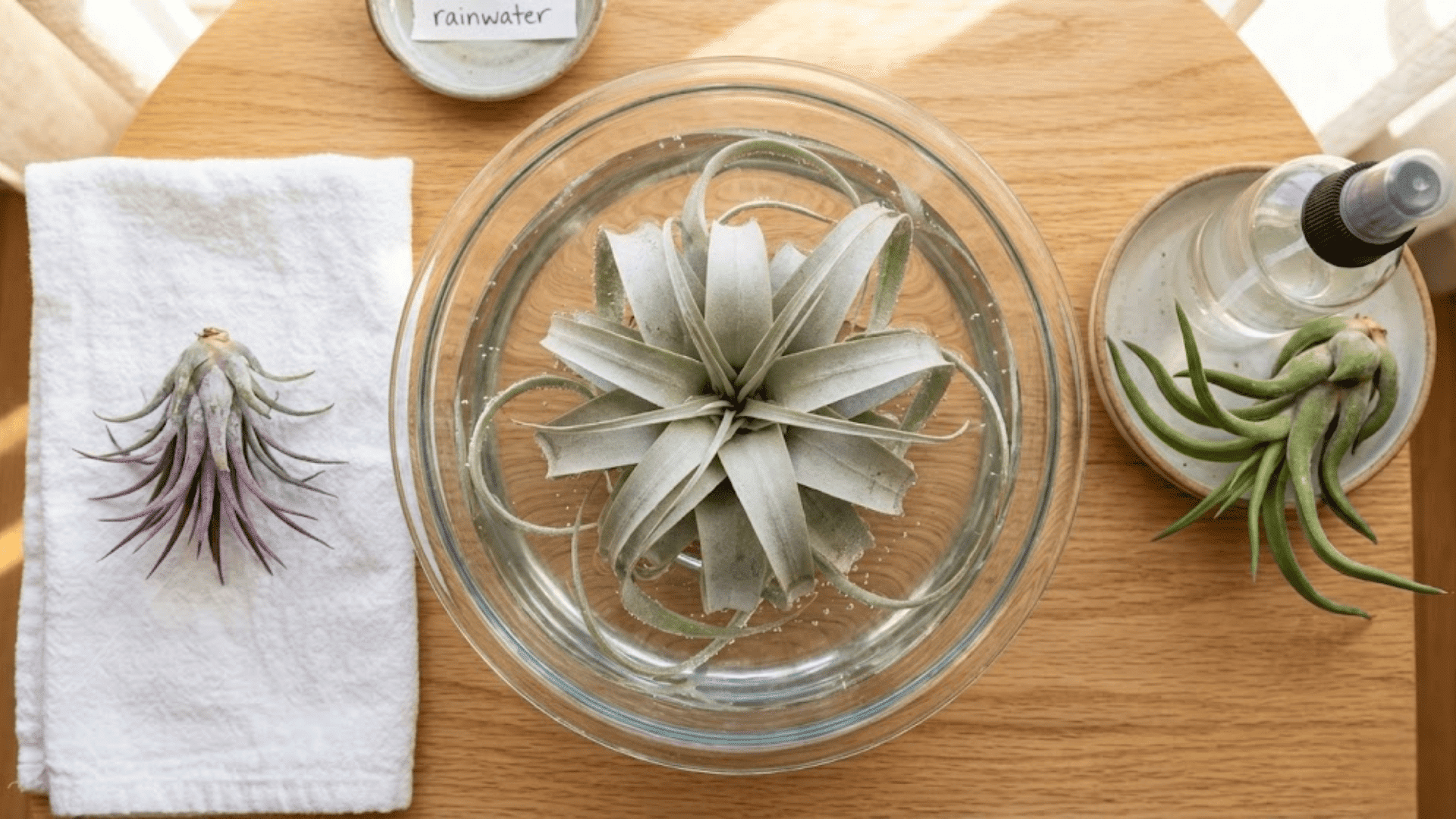
- Step 1: Fill a bowl with room-temperature, non-chlorinated water to avoid shocking or harming your plant.
- Step 2: Submerge your air plant completely for 20–30 minutes, extending up to an hour in arid climates.
- Step 3: Gently shake off excess water to prevent pooling in the plant’s center, where rot begins.
- Step 4: Place upside down on a towel in bright, airy conditions until completely dry within one to four hours.
- Step 5: Return to its display once no moisture remains trapped between the leaves.
3. How Often to Water?
Most air plants thrive with watering every one to two weeks in typical indoor environments.
Dry climates demand more attention; plan for two to three waterings weekly or supplement with frequent misting between soaks.
High-humidity areas require the opposite approach, with less frequent watering, preventing moisture overload that leads to rot.
3. Best Water to Use
Rainwater or filtered water gives air plants the purest hydration without harmful chemicals.
If using tap water, let it sit uncovered overnight so chlorine can evaporate naturally. Avoid softened or distilled water entirely; the former contains damaging salts, while the latter lacks essential minerals your plants need to thrive.
4. Troubleshooting Watering Problems
Watch for these warning signs and adjust your care accordingly:
- Curled, wrinkled, or crispy leaves indicate underwatering; your plant desperately needs a good soak.
- A mushy, darkened base signals overwatering and the beginning of rot; reduce frequency immediately.
- Yellowing leaves often mean too much moisture is overwhelming the plant’s system.
- Leaves falling off easily suggest severe dehydration or root rot, depending on other symptoms.
Watering Air Plants: Temperature & Humidity
Air plants are surprisingly adaptable when it comes to their environment, but understanding their preferences helps them truly flourish.
| Factor | Ideal Range | Notes |
|---|---|---|
| Temperature | 50–90°F (10–32°C) | Most species tolerate this broad range comfortably |
| Humidity | Higher humidity preferred | Tropical varieties especially love moisture-rich air |
| Best Locations | Bathrooms, kitchens | Natural steam and humidity create perfect conditions |
Keep your air plants away from temperature extremes like heating vents or frigid windowsills.
Pairing the right humidity level with proper airflow prevents both dehydration and the stagnant moisture that invites rot.
Do Air Plants Need Fertilizer?
Air plants survive without fertilizer, but occasional feeding encourages vibrant color, stronger growth, and even blooms.
A monthly dose of bromeliad or epiphyte fertilizer keeps them thriving beyond basic survival, transforming them from simply alive to genuinely flourishing.
How to Fertilize?
Give your air plants an extra boost with these simple steps:
- Use a fertilizer formulated explicitly for bromeliads or epiphytes, diluted to quarter or half strength.
- Add the diluted solution to your soaking water once monthly during the growing season.
- Skip fertilizing in winter when growth naturally slows and plants enter a rest period.
- Rinse plants with plain water occasionally to prevent fertilizer buildup on the leaves.
How to Display Air Plants Creatively?
Air plants shine when displayed creatively, their sculptural forms becoming living art in your space. The key is balancing aesthetics with their need for proper airflow.
1. Glass Globes and Terrariums
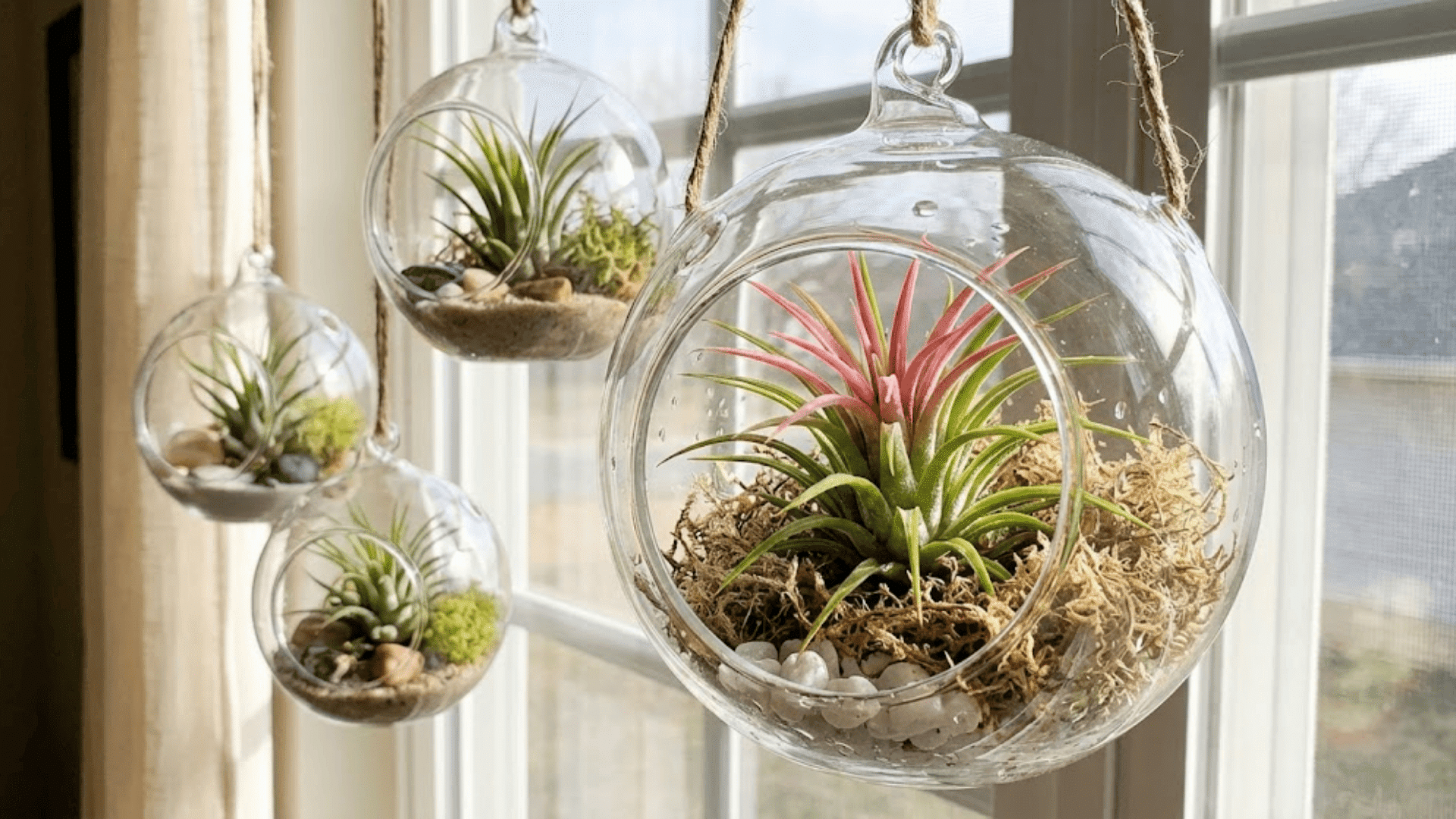
Open glass vessels create ethereal displays that showcase air plants like miniature ecosystems. Hang them at varying heights near windows or cluster several together for visual impact.
Choose globes with wide openings rather than narrow necks to ensure adequate ventilation.
Layer in decorative elements like sand, pebbles, or moss for added texture, keeping the overall design airy and uncluttered so moisture never gets trapped inside.
2. Natural Elements
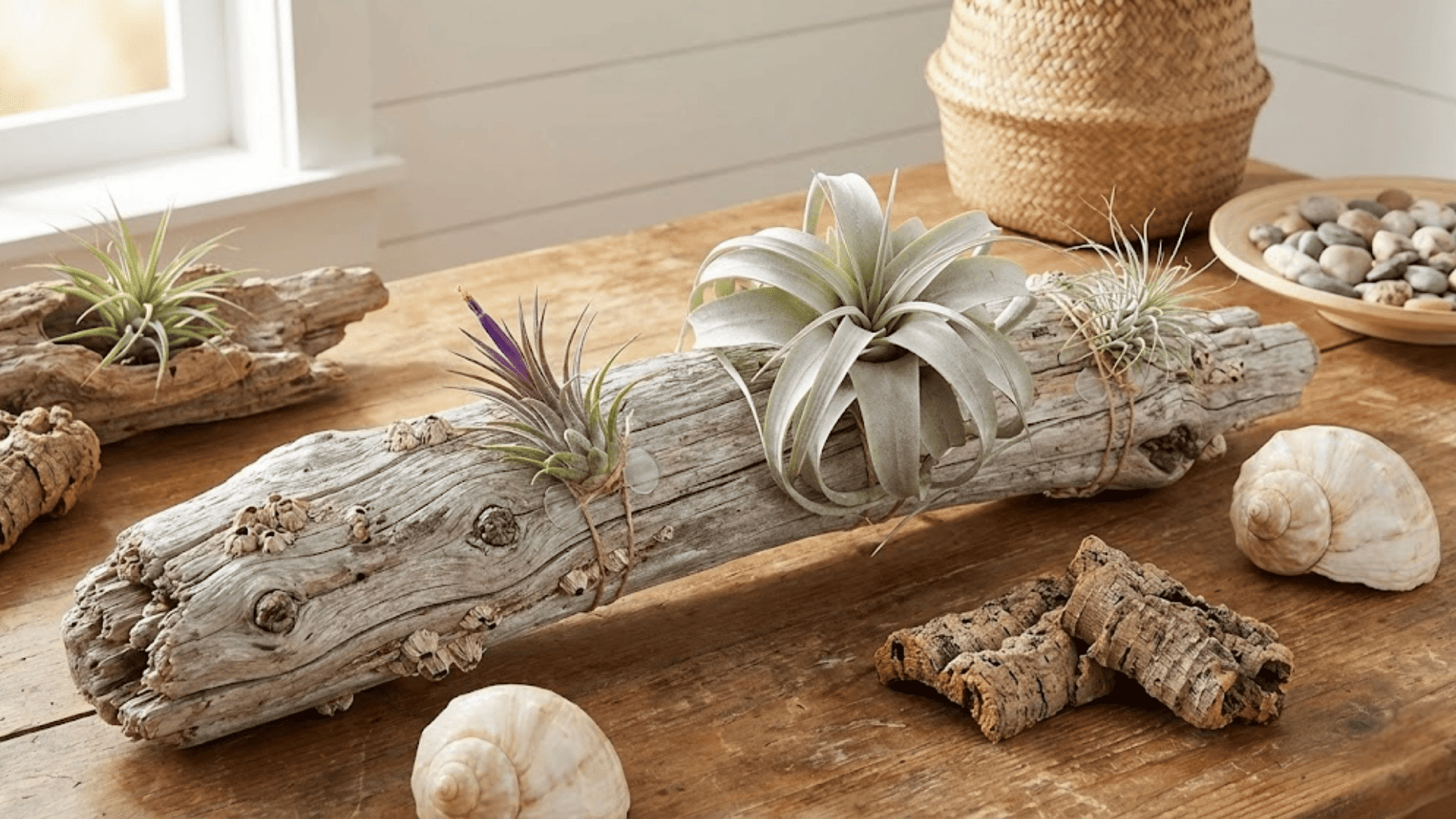
Driftwood, cork bark, and seashells bring organic texture that complements the air plants’ wild origins beautifully.
Secure plants with non-toxic glue or nestled wire, creating arrangements that look foraged from a coastal forest. These natural bases work exceptionally well for larger specimens that need stable support.
The porous surfaces also help wick away excess moisture while adding rustic charm to any room.
3. Modern and Geometric Holders
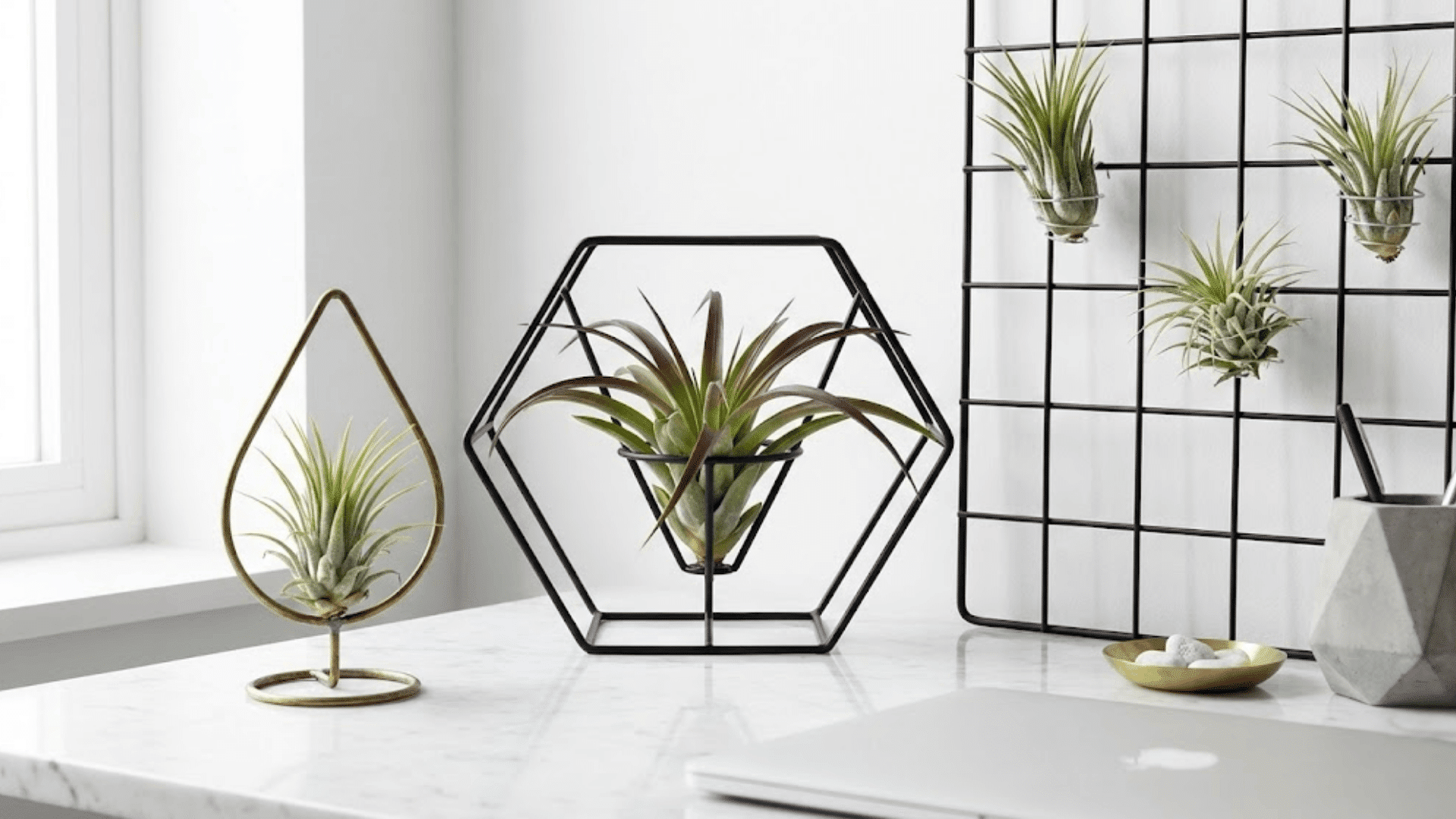
Wire frames, magnetic mounts, and sculptural metal stands give air plants a contemporary edge, perfect for minimalist spaces.
These designs prioritize clean lines and negative space, letting the plant’s architecture take center stage.
Wall-mounted grids turn air plants into living installations, while standing holders in brass or matte black add urbanity to desks and shelves without overwhelming smaller spaces.
Remember: No matter how beautiful the display, proper airflow always comes first; air plants need excellent circulation to dry completely after watering, preventing the rot that can quickly end their lives.
What Problems Do Air Plants Face and How to Fix Them?
Even low-maintenance air plants can run into trouble. Recognizing issues early and adjusting your care keeps them healthy and thriving.
Problem 1: Brown or Crispy Leaf Tips
Solution: This usually signals too much direct sunlight or underwatering. Move your plant to a spot with bright, indirect light and increase watering frequency, ensuring thorough soaks that fully hydrate the leaves.
Problem 2: Rotting Base or Mushy Leaves
Solution: Overwatering or poor drying conditions are the culprits here. Reduce watering frequency, always shake off excess water after soaking, and ensure plants dry completely upside down in a well-ventilated area within four hours.
Problem 3: Slow or Stunted Growth
Solution: Insufficient light or lack of nutrients typically causes sluggish growth. Relocate to a brighter spot and add diluted bromeliad fertilizer to your monthly soaking routine to encourage healthier development.
Problem 4: Pests Like Mealybugs or Scale
Solution: While rare, pests can appear on air plants. Rinse affected plants under lukewarm water, then treat with a diluted solution of rubbing alcohol applied with a cotton swab directly to visible pests.
Air Plant Lifecycle
Understanding how air plants bloom and reproduce helps you multiply your collection and keep these plants thriving for years.
| Stage | What Happens | Timeframe |
|---|---|---|
| Maturity | Plant reaches full size and prepares to bloom | Varies by species, typically 2-5 years |
| Flowering | Produces colorful blooms (often once in a lifetime) | Lasts several days to months, depending on the variety |
| Pup Production | Small offsets (“pups”) emerge from the base after flowering | Appears during or after the bloom cycle |
| Parent Decline | Mother plant slowly dies as pups mature | Occurs over several months to a year |
| New Generation | Pups grow into mature plants, continuing the cycle | Each pup takes 2-5 years to reach maturity |
Here’s how to help your air plant family flourish:
- Leave pups attached until they’re at least one-third the size of the mother plant for the strongest growth.
- Gently twist and pull pups away from the base once they’re large enough to survive independently.
- Care for separated pups exactly like mature plants, though they may need slightly more frequent misting initially.
The Closing Note
Caring for air plants really comes down to mastering a few simple habits: consistent watering, proper drying, and bright indirect light.
Once you understand how to care for air plants, you’ll find they’re some of the most forgiving and rewarding houseplants around. They’ll bloom, produce pups, and bring life to your space with minimal effort on your part.
As your collection grows and you experiment with creative displays, you’ll know just how adaptable these little plants can be.
Have questions or tips of your own? Drop a comment below and share your air plant experience with us.