A cluttered kitchen usually isn’t a storage problem. Most homeowners assume the fix is more — more cabinets, more shelves, more drawer organizers from the container store. Sometimes that helps. More often, the real trouble started much earlier, back when the kitchen was laid out without much thought for how it would actually be used.
When the storage, the layout, and the daily routines aren’t pulling in the same direction, clutter shows up no matter how often you wipe the counters down. Things pile up. The toaster never goes back in a cupboard because there isn’t a convenient one. The cabinets get crammed to the point where finding the right lid is a small daily ordeal.
Good planning changes all of that. A well-planned kitchen makes the everyday tasks easier and gives the things you reach for most an obvious home. The payoff isn’t just a tidier room — it’s a space that feels calmer, runs more smoothly, and is genuinely more pleasant to be in.
Clutter Usually Starts With Poor Workflow
Almost every kitchen supports the same loop: food comes in, gets stored, prepped, cooked, served, and cleaned up. When the layout interrupts that loop, clutter is the natural consequence.
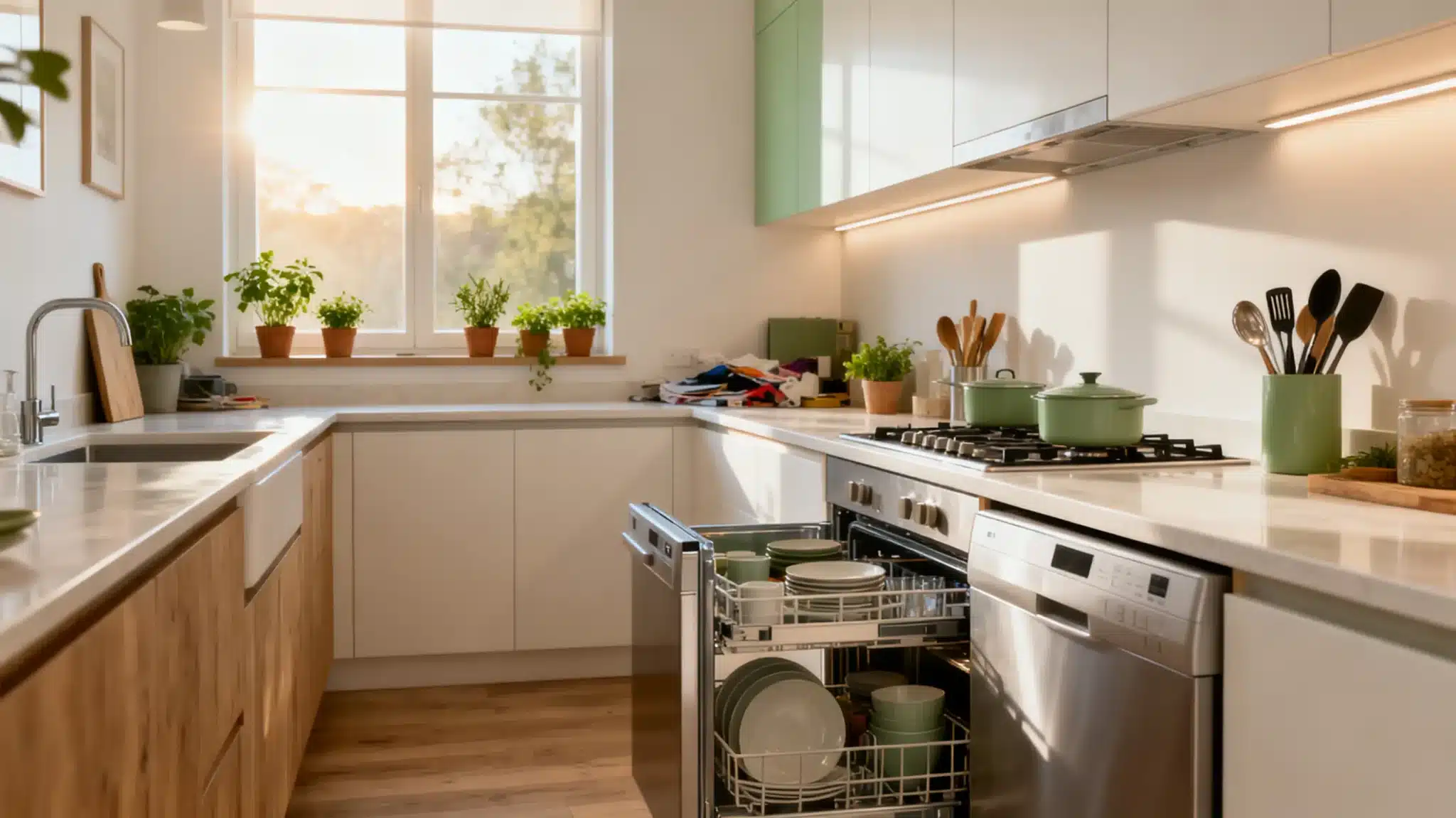
Picture a few common mismatches. Pantry items stored across the room from the prep counter, so ingredients end up scattered over three surfaces while you cook. A dishwasher that sits too far from the everyday plates, so clean dishes sit out on the counter for a day instead of going straight home. A bin tucked somewhere inconvenient, so peelings and packaging collect beside the chopping board because walking them over is a hassle.
Each of these feels trivial in isolation. Stacked up over weeks, they’re what make a whole kitchen feel perpetually disorganized. A thoughtful layout heads most of them off before they ever start.
Storage Works Best When It Follows Your Habits
One of the most common design mistakes is treating all storage as interchangeable. In practice, where something lives matters far more than how much cabinetry you have.
The things you use every day should be easy to grab without crouching or reaching past three other items. Cooking tools belong near the stove. Prep tools belong near the work surface. Everyday plates and glasses belong wherever unloading the dishwasher feels like a two-second job rather than a trek across the room. Open stainless steel shelves work well here because they keep frequently used items visible and within reach without requiring you to open a door or dig through a cabinet.
Get that right and you cut down on wasted movement, and — just as important — things actually make it back to their proper spot, because the proper spot is the convenient one. When the storage mirrors real habits, the kitchen stays tidy with far less effort.
Counters Shouldn’t Become Permanent Storage
he countertop is almost always where clutter lands first. The coffee machine, the toaster, a phone charger, the mail, a shopping list, a couple of small appliances that never get put away — they creep across the available space until the kitchen feels crowded even right after it’s been cleaned.
Clear work surfaces make a kitchen feel bigger, cleaner, and more capable than it actually is. It’s one of the cheapest upgrades in perceived quality you can buy.
The Pantry Deserves More Attention Than It Gets
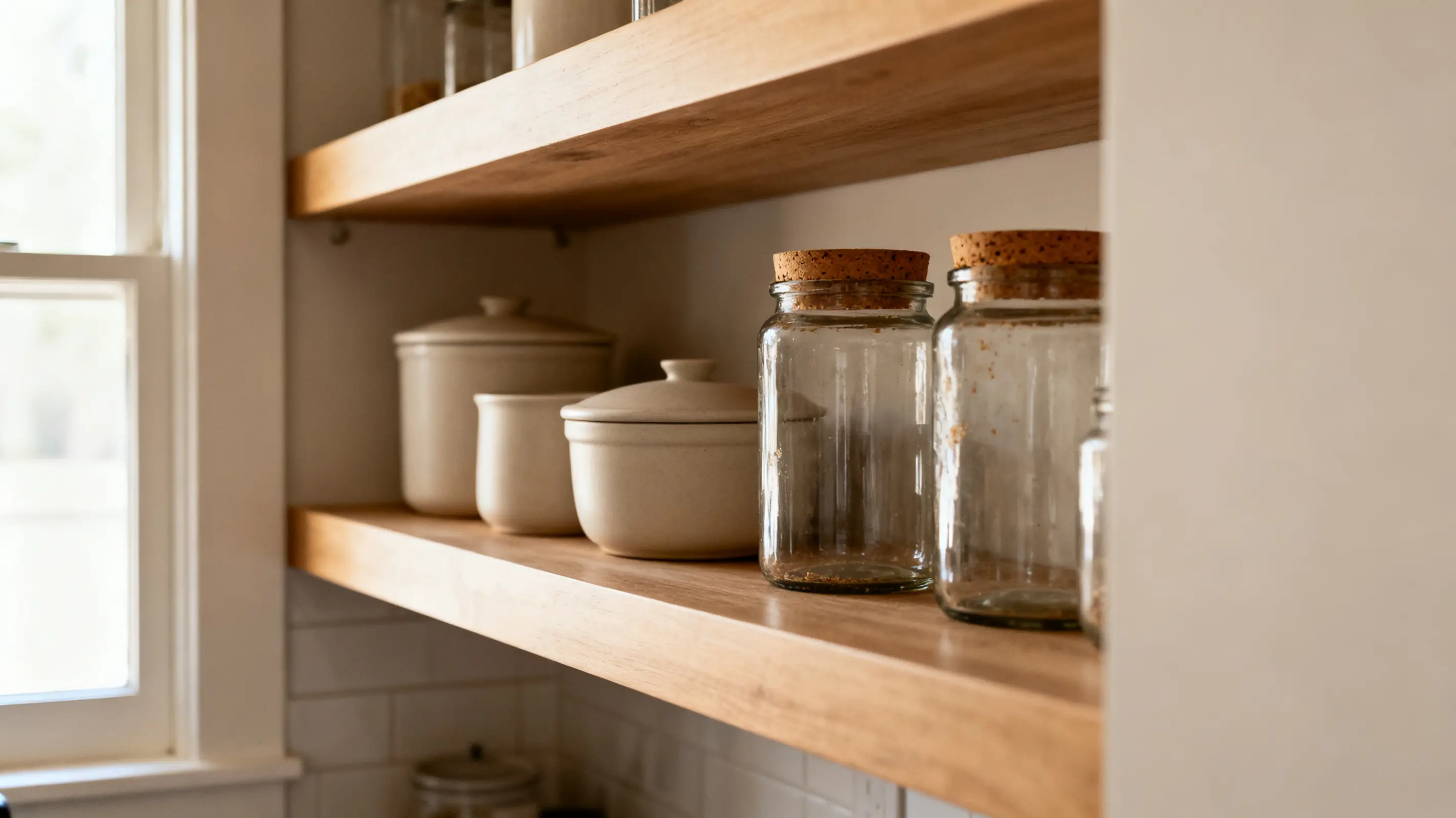
A badly planned pantry quietly creates clutter across the entire kitchen. When food storage is hard to see into and harder to dig through, you buy a second jar of cumin because you couldn’t find the first. Things get lost at the back of deep shelves. Half-open packages migrate onto the counter because there’s no obvious place for them to go.
Even a modest pantry works well when it’s organized around visibility and access. Shallow shelves you can actually see to the back of, pull-out storage, labeled containers, and logical groupings usually do more than simply adding square footage. Good pantry design takes a surprising amount of friction out of the rest of the room.
Lighting Plays a Part Too
Lighting isn’t the first thing anyone associates with clutter, but it shapes how organized a room feels. Dark corners collect things. Dim work areas make storage feel less convenient than it is. Poorly lit cabinets are harder to navigate, and small messes are easier to overlook until they’ve grown into big ones.
A kitchen with balanced lighting simply reads as clearer and more functional. Under-cabinet strips, dedicated task lighting over the prep zones, and well-placed overhead fixtures all help you see and use your storage properly. The room gets easier to maintain because everything in it feels accessible.
Planning Beats Products
Plenty of homeowners try to buy their way out of clutter. Drawer dividers, baskets, bins, modular storage systems — they can all help, no question. But they rarely fix the underlying problem when the kitchen itself isn’t working.
Organization products do their best work on top of a sound layout. Without that foundation, the clutter quietly returns a few weeks after the latest gadget goes in.
That’s why successful Kitchen Design and Build projects sort out how the room functions before anyone starts shopping for accessories. When the kitchen is planned around real needs, staying organized stops being a constant chore and starts being the default.
Multi-Purpose Kitchens Need Clear Zones
Kitchens do a lot more than cook these days. The same room might be a homework station, a remote-work desk, the family gathering spot, and the place everyone drifts through a dozen times a day. That flexibility is useful, but it also multiplies the ways clutter can build.
Clear zones keep it in check. A dedicated charging spot stops devices and cables from spreading across the counters. A small desk area keeps paperwork from mixing with dinner prep. A defined home for school supplies, pet things, or household odds and ends keeps unrelated stuff from migrating into the cooking space. Defining these areas brings order without making the room feel regimented.
Less Visual Noise Makes for a Calmer Room
Not all clutter is physical. Some of it is purely visual. Too many open shelves, a parade of countertop items, competing finishes, or an overcrowded display can make a kitchen feel busy even when everything is technically in its place.
A calmer visual field reads as cleaner and more comfortable. That doesn’t mean stripping the personality out of the room. It means choosing a few pieces that actually mean something instead of filling every surface because it’s there. Turn down the visual noise and the whole kitchen relaxes.
Good Planning Saves Time Every Single Day
One of the quiet benefits of a well-planned kitchen is how many small frustrations it removes. You spend less time hunting for things. Cleanup goes faster. Cooking feels more efficient. The groceries get put away in one pass instead of three. The daily routines just flow.
Each of those might only save a few minutes. But a few minutes, several times a day, across months and years, adds up to a kitchen that’s working for you instead of generating extra work. That’s the real return on good planning.
Final Thought
A clutter-free kitchen isn’t built out of storage products. It starts with thoughtful planning. Layout, storage placement, workflow, lighting, and your own daily habits all feed into how organized the room feels, and when they line up, clutter becomes easy to control because the kitchen was designed to support real life in the first place.
The best kitchens aren’t necessarily the biggest or the most expensive. They’re the ones that make ordinary tasks feel effortless. Good planning lays that foundation, and the benefits keep paying out long after the renovation is finished.