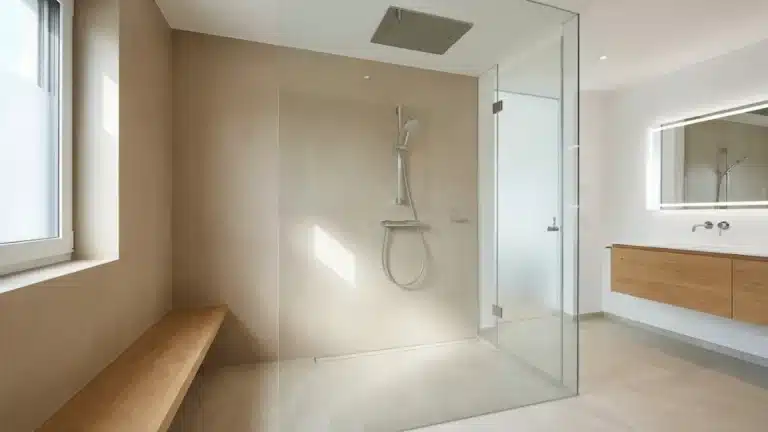
Groutless showers have become the darling of bathroom renovations, capturing attention with their sleek surfaces and whispered promises of effortless upkeep.
A shower that sparkles without the weekend scrubbing sessions, where mold doesn’t creep into stubborn lines, and cleaning feels less like a chore and more like a quick wipe-down.
It sounds like the answer to every homeowner’s prayer, and honestly, who wouldn’t be tempted?
But before you tear out those tiles and commit to the groutless dream, let’s pause for a reality check. Lower maintenance doesn’t quite translate to a maintenance-free paradise.
We’re unpacking what lies beneath that glossy surface: the hidden costs, the durability questions, and what future buyers might actually think.
What is a Groutless Shower?
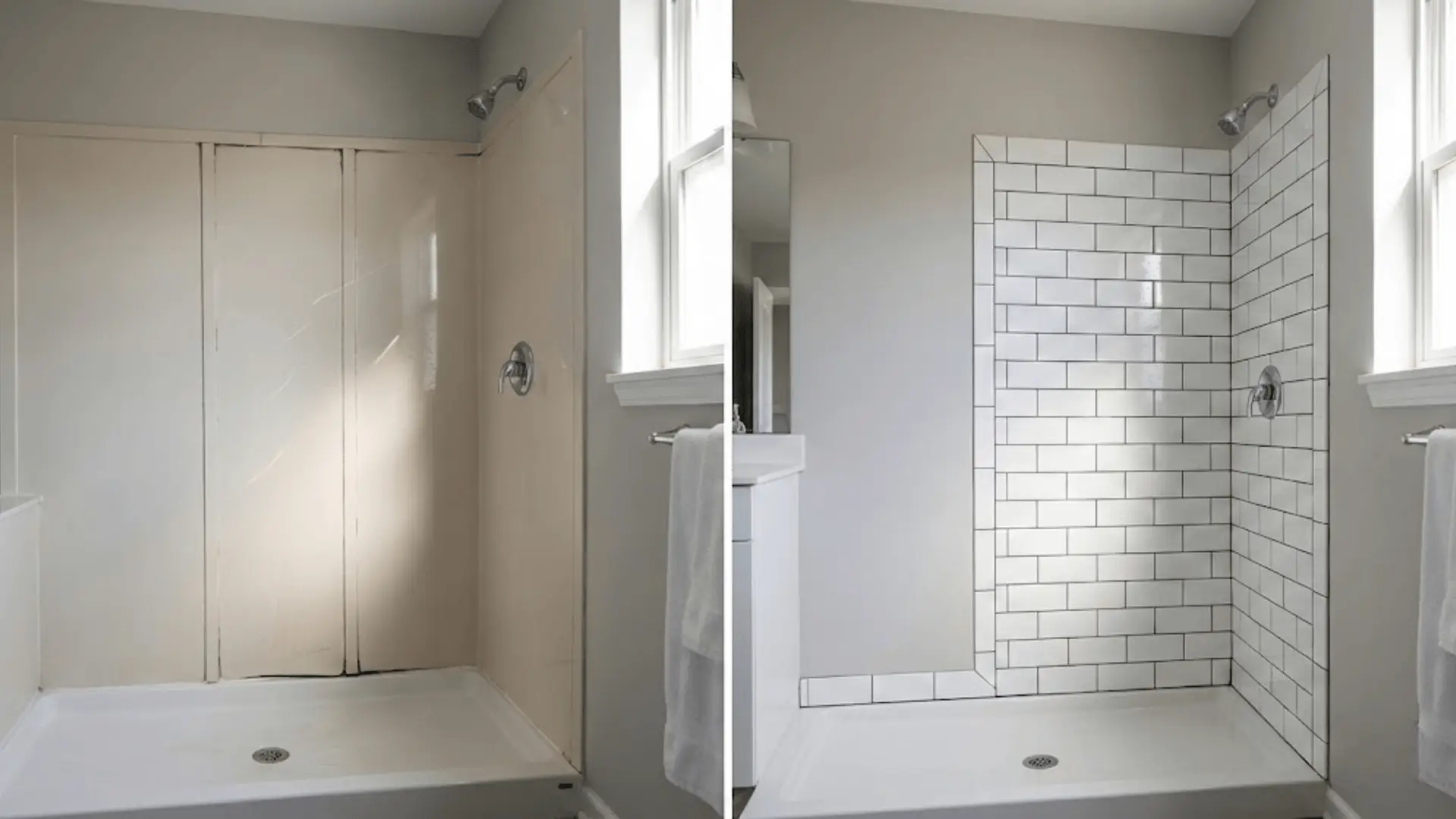
A groutless shower skips the traditional tile-and-grout setup in favor of large, continuous panels that cover your walls without those tiny crevices where grime loves to hide.
Instead of individual tiles held together by grout lines, you get smooth surfaces made from materials like acrylic panels, PVC composite, fiberglass surrounds, solid surface options, or oversized wall panels that minimize seams.
Homeowners gravitate toward groutless systems for one main reason: less scrubbing, less mold. The appeal is straightforward.
Fewer seams mean fewer places for mildew to take hold, and cleaning becomes a faster, simpler routine.
For busy households or anyone who dreads bathroom maintenance, that streamlined approach feels like a small luxury worth considering.
The Real Downsides of Groutless Showers
Groutless showers sound like the ultimate low-maintenance solution, but they come with trade-offs that don’t always make it into the sales pitch.
Before you commit, here’s what you need to know about the real-world challenges.
1. Higher Upfront Cost
Groutless systems typically cost more than standard tile installations. Premium acrylic or solid surface panels can run significantly higher than ceramic or porcelain tiles, and installation often requires specialized skills.
Custom panel systems add even more to the bill, especially if your bathroom has unusual dimensions or angles.
While you might save on grout maintenance down the line, that initial investment can be a tough pill to swallow for budget-conscious renovators.
2. Limited Design Flexibility
Tile gives you endless creative freedom with patterns, colors, and layouts. Groutless panels don’t. You’re working with pre-fabricated sheets that limit intricate designs or custom arrangements.
Want a herringbone pattern or mosaic accent wall? You’re out of luck. Plus, seams between panels can be visible depending on the system you choose, which disrupts that smooth, polished look you were hoping for.
If you’re drawn to open, airy bathroom layouts, doorless walk-in showers offer flexibility that groutless systems sometimes struggle to accommodate.
3. Can Look “Builder-Grade”
There’s a perception problem here. Budget groutless systems can read as cheap or contractor-basic, especially to potential buyers. Premium versions exist, but they come with premium price tags.
In resale markets, some buyers associate groutless showers with quick flips or low-end builds rather than thoughtful design. That visual stigma can affect your home’s perceived value, even if the shower functions perfectly.
Pairing groutless panels with frameless shower doors can upgrade the look, though those come with their own maintenance considerations.
4. Expansion & Warping Risks
Heat and humidity make materials expand and contract. Acrylic and PVC panels are particularly susceptible to warping under temperature fluctuations.
If installation wasn’t done perfectly, with proper expansion gaps and secure fastening, you might notice buckling or bowing over time.
Once warping starts, it’s not just unsightly. It compromises water barriers and creates gaps where moisture can sneak through.
5. Scratching & Surface Damage
Acrylic and fiberglass panels scratch more easily than tile. Drop a shampoo bottle? You might end up with a permanent mark.
Surface damage is harder to repair than replacing a single cracked tile. You can’t just swap out one panel without creating noticeable color or texture differences.
Deep scratches or cracks often mean living with the flaw or replacing entire sections at considerable expense.
6. Seam & Caulk Maintenance Still Required
Here’s the kicker: groutless doesn’t mean seam-free. Panels still meet at corners and edges, and those junctions need caulking.
Over time, caulk degrades, shrinks, or peels away from temperature changes and water exposure.
You’ll need to scrape out old caulk and reapply it every few years, which is remarkably similar to the grout maintenance you were trying to avoid in the first place.
7. Moisture Trapping Behind Panels
Poor installation is where things get really messy. If panels aren’t properly sealed or if there are gaps in the backing, water can seep behind the surface and sit there unnoticed.
This creates a perfect breeding ground for mold and mildew that you can’t see or reach.
By the time you notice a musty smell or discoloration, the damage behind the panels could be extensive and expensive to fix.
Groutless Shower vs. Tile Shower: Honest Comparison
Choosing between groutless and tile showers isn’t just about picking a material. It’s about deciding what trade-offs you’re willing to live with.
Here’s the honest breakdown.
| Feature | Groutless Shower | Tile Shower |
|---|---|---|
| Cleaning | Quick wipe-downs, fewer mold hotspots | Grout lines trap soap scum and need regular scrubbing |
| Cost | Higher upfront; premium panels rival quality tile | Budget-friendly options exist, but custom work adds up fast |
| Customization | Stuck with what’s available in stock panel designs | Total creative control over layout, color, and texture |
| Repair | Scratches and cracks mean replacing whole sections | Swap out a single cracked tile without redoing the wall |
| Resale Appeal | Buyers split on this; cheap panels hurt your home, quality ones help | Custom tile work usually wins over future buyers |
Do Groutless Showers Affect Home Value?
Groutless showers walk a fine line when it comes to home value. Buyer perception hinges entirely on quality.
Luxury solid surface systems can boost appeal, especially for buyers craving low-maintenance living. They look polished, modern, and thoughtfully chosen.
Budget surrounds tell a different story. Thin acrylic or fiberglass panels often read as builder-grade shortcuts, which can actually hurt your perceived value. Buyers might wonder what other corners were cut during the renovation.
Groutless showers help resale when they’re part of a cohesive, high-end bathroom design. They hurt when they look cheap or feel like an afterthought compared to the rest of your home’s finishes.
Installation Mistakes That Cause Problems
Even the best groutless shower system can fail if installation goes wrong. Here’s where things typically fall apart.
- Skipping proper waterproofing behind panels creates hidden moisture traps that breed mold you won’t see until it’s too late.
- Rushing wall prep or ignoring uneven surfaces leads to gaps, buckling, and panels that don’t sit flush against the structure.
- Inadequate sealing at seams and corners lets water seep through, defeating the entire purpose of going groutless.
- DIY attempts without experience often miss critical steps that professionals know by heart, turning your money-saving project into an expensive redo.
Getting installation right the first time matters more than the material itself. Cut corners here, and you’ll pay for it later.
Final Verdict
Groutless showers aren’t the miracle solution they’re marketed as but aren’t a disaster either. They work well with quality materials, skilled installers, and proper maintenance.
If you’re chasing that sleek, low-fuss bathroom vibe and your budget allows for premium systems, they can absolutely deliver.
Just go in with your eyes open. Weigh the trade-offs, consider your home’s resale potential, and don’t fall for the “zero maintenance” myth.
Have experience with groutless showers in your own home? Drop a comment below and share what worked or what you wish you’d known sooner.