You step into your bathroom, and instead of a chunky metal frame breaking up the view, there’s just seamless glass that makes the whole space feel twice as big.
That’s the allure of frameless shower doors, and it’s why they’ve become the darling of bathroom renovations across the country. These sleek installations promise a spa-like vibe and can genuinely boost your home’s value.
But between the price tags and whispers about potential leaks, you’re probably wondering if they’re actually worth it.
Let’s walk through everything you need to know about costs, durability, styles, and whether this upgrade makes sense for your space and budget.
What are Frameless Shower Doors?
Frameless shower doors are exactly what they sound like: glass panels without metal framing around the edges.
Unlike traditional framed doors that rely on aluminum or steel to hold everything together, these use thick tempered glass (usually 3/8 to 1/2 inch) that’s strong enough to stand on its own.
You’ll still see some hardware like hinges and handles, but it’s minimal and often barely noticeable.
This clean, uninterrupted look is why they’ve become a go-to choice for modern and luxury bathrooms. They let light flow freely, make small spaces feel more open, and give off that high-end hotel aesthetic everyone’s after.
Some homeowners skip doors entirely with doorless walk-in designs for an even more open feel.
Types of Frameless Shower Doors
Frameless shower doors come in different configurations, each designed to work with specific bathroom layouts and spatial constraints. Your door style depends on available space and functionality.
Here’s a breakdown of the most common types and what makes each one worth considering.
1. Frameless Hinged Shower Doors
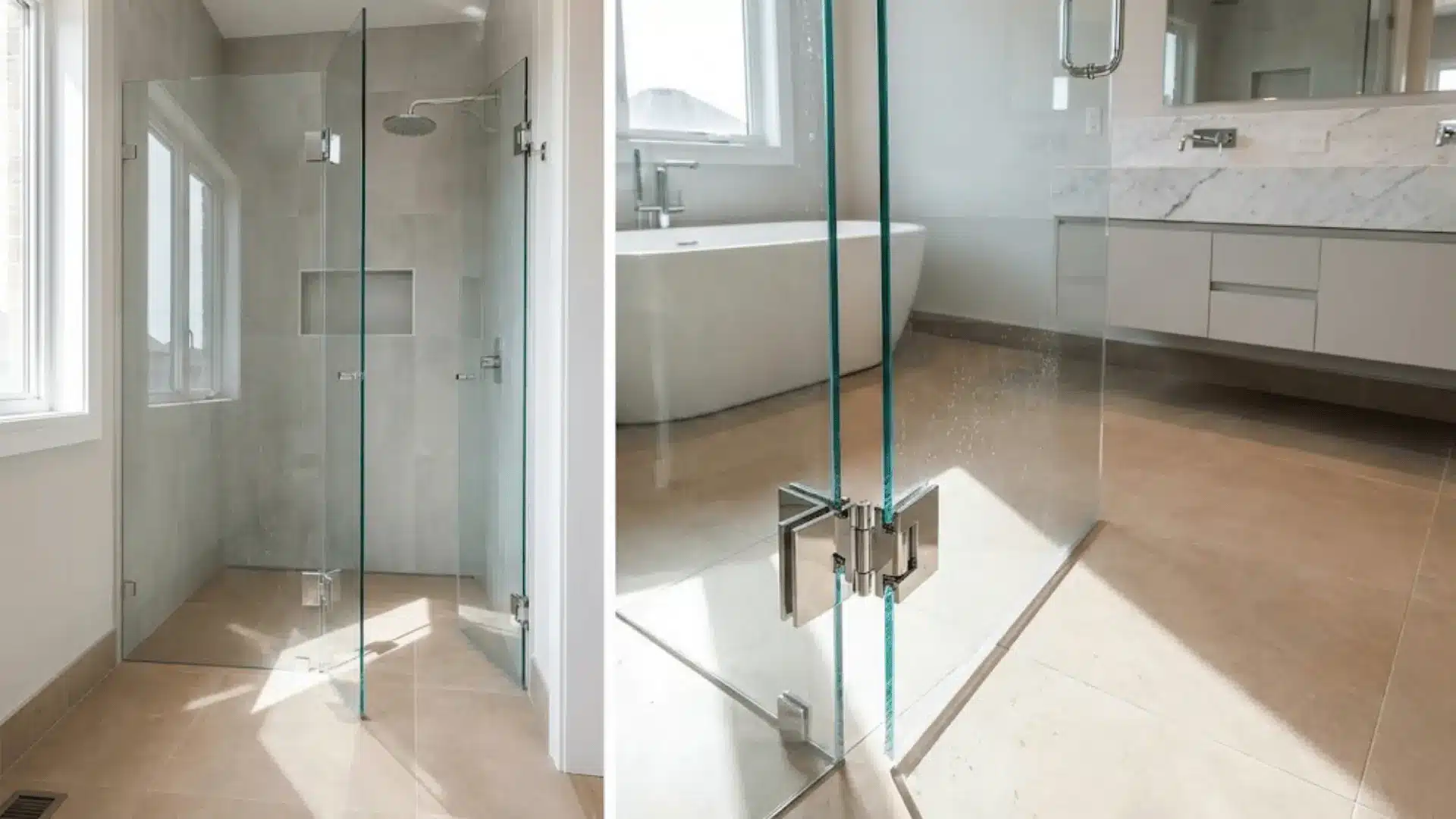
Cost Range: $800–$2,500+
Best suited for larger bathrooms where you have room for the door to swing outward. The wide opening makes getting in and out easy, and you won’t feel cramped while showering.
These use side-mounted hinges that attach directly to the glass, giving you that clean, uninterrupted look. They’re popular in master bathrooms where space isn’t an issue.
2. Frameless Sliding Doors
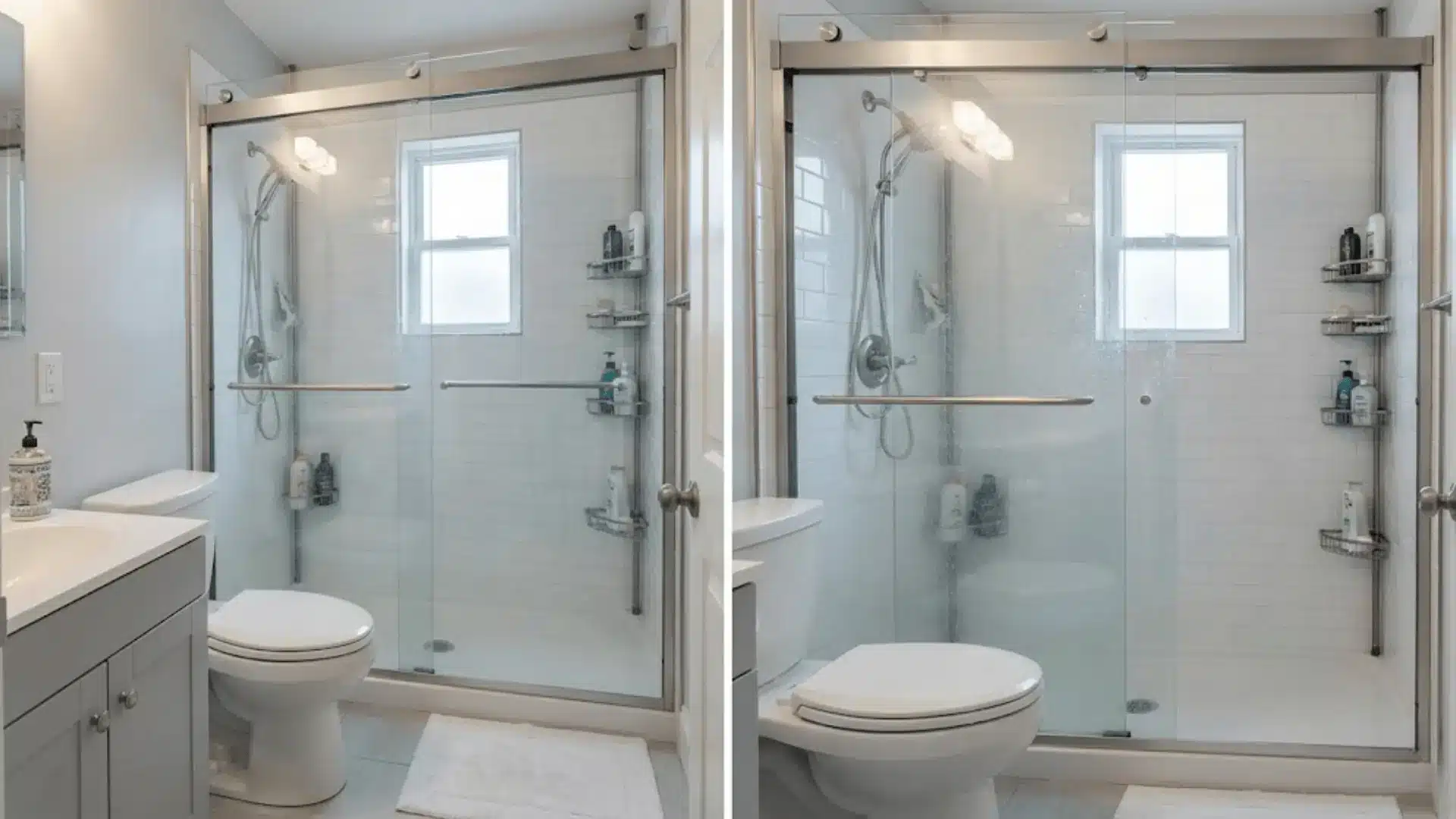
Cost Range: $700–$2,000+
Perfect for tighter bathrooms where a swinging door would hit the toilet or vanity. Two glass panels slide past each other on a track, so nothing juts out into your space.
Keep in mind the track does need regular cleaning to prevent buildup, but the space-saving benefit usually outweighs that minor maintenance.
3. Frameless Pivot Doors
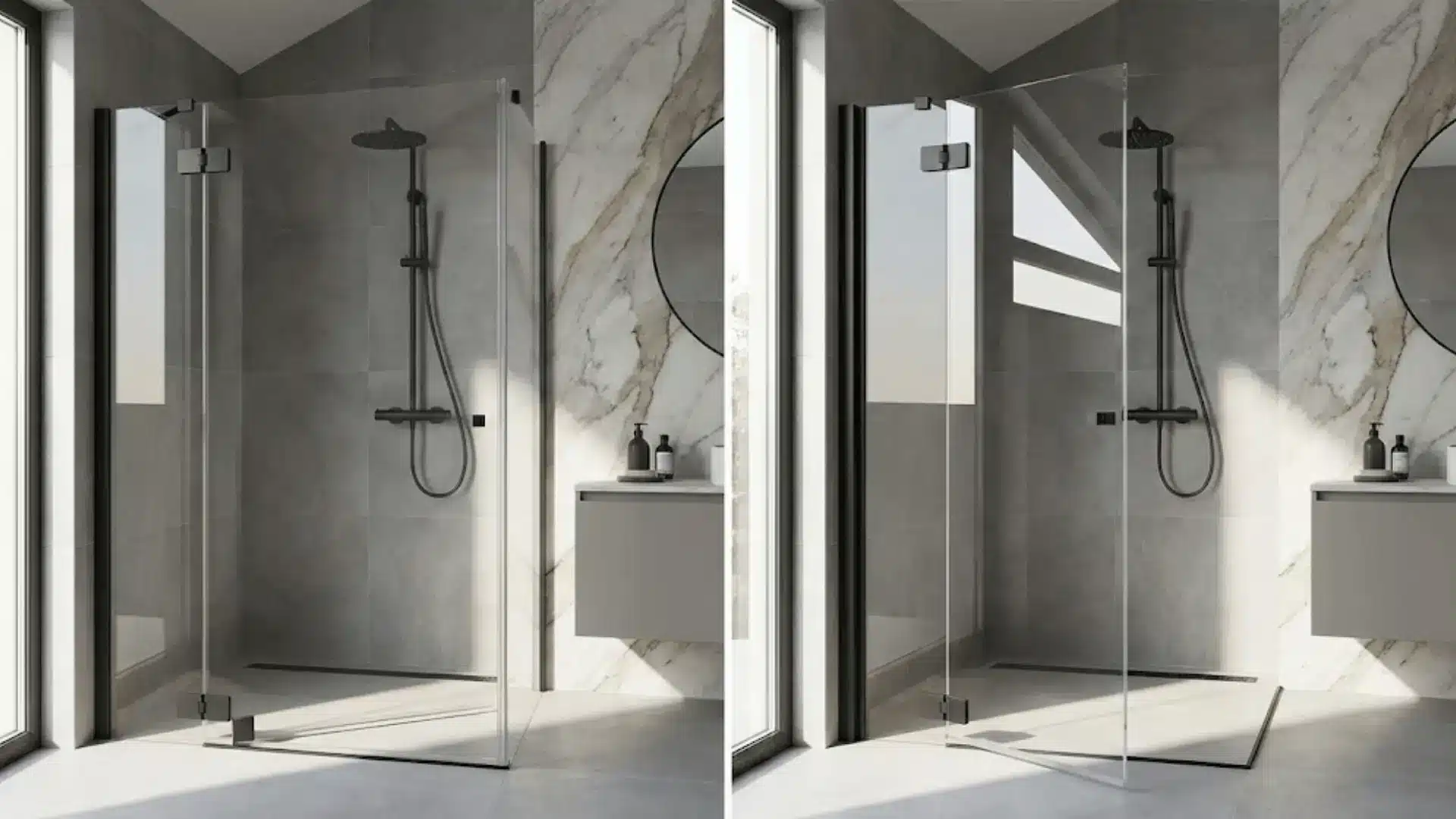
Cost Range: $900–$2,800+
These swing open from a central pivot point instead of side hinges, which gives you flexibility in positioning. You can install the pivot anywhere along the door’s edge, making them great for awkward layouts.
They offer a bit more design drama, too, since the door can swing both inward and outward depending on how you set it up.
4. Frameless Neo-Angle Doors
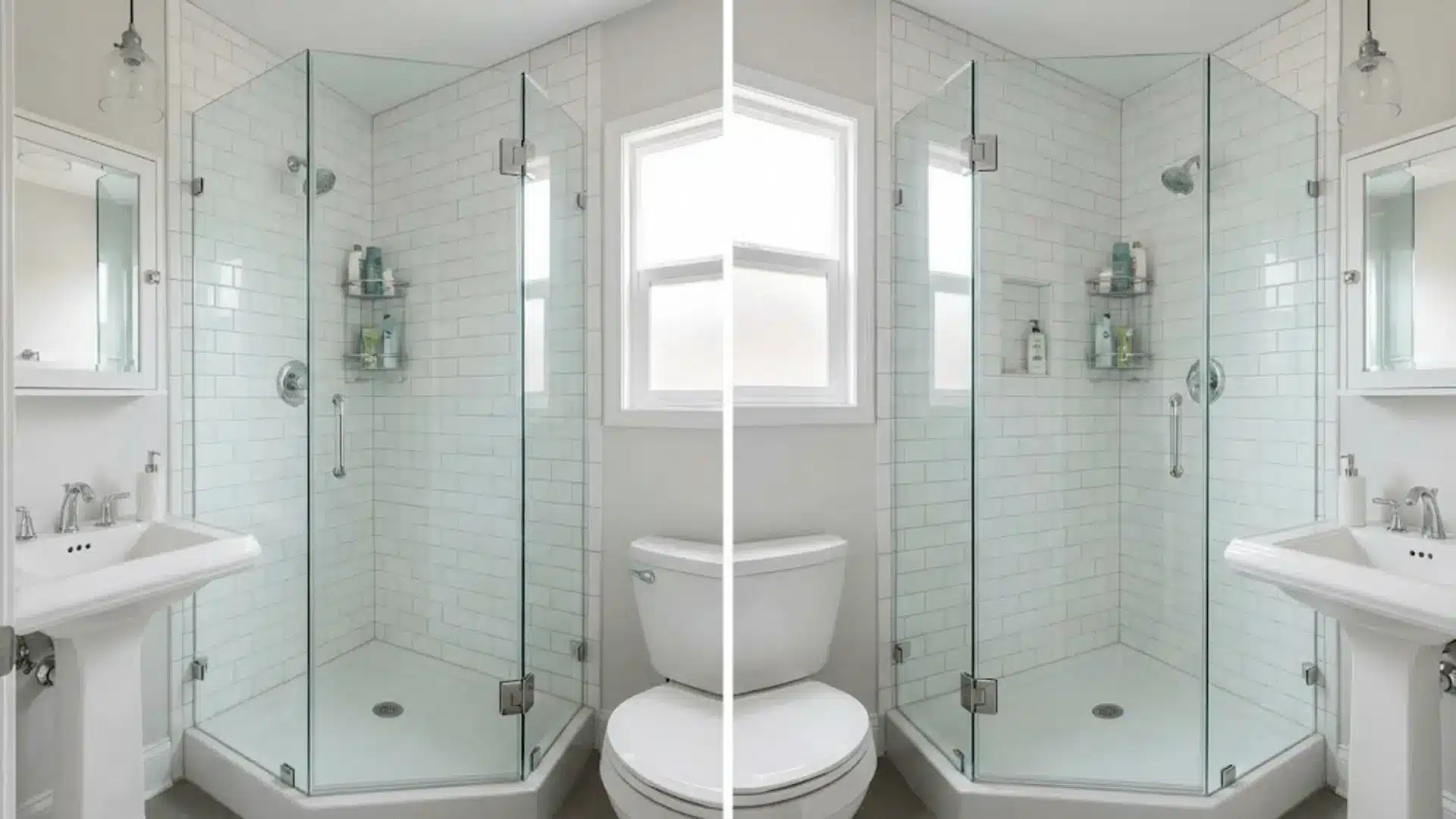
Cost Range: $1,000–$3,000+
Designed specifically for corner showers with angled glass panels that maximize space.
If you’re working with a smaller bathroom but still want that frameless look, this style fits snugly into a corner without taking up much floor space. The angled design also adds visual interest compared to standard rectangular enclosures.
5. Custom Frameless Enclosures
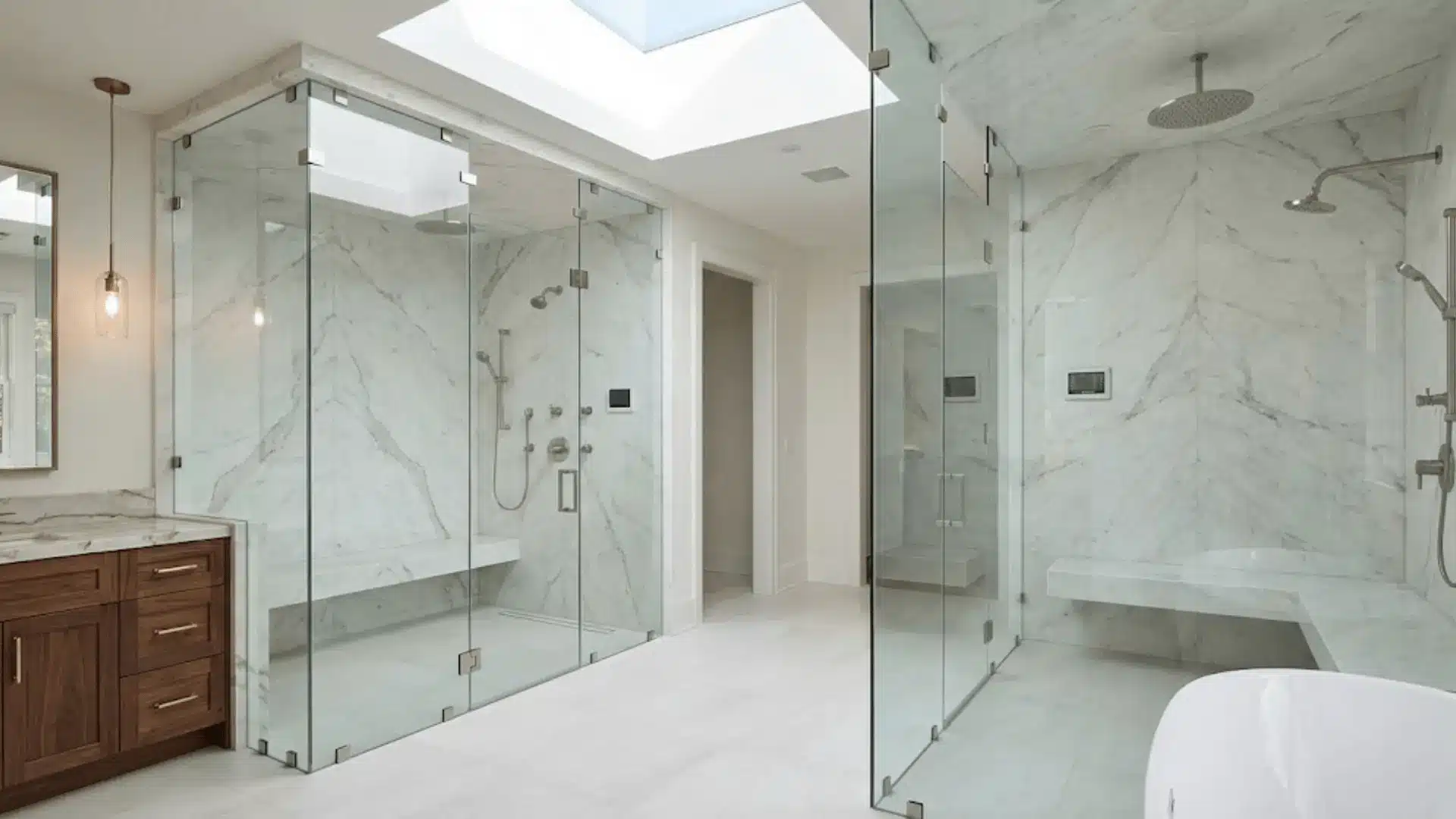
Cost Range: $2,500–$6,000+
When standard sizes won’t cut it, custom enclosures let you design around your exact bathroom dimensions.
These can include floor-to-ceiling glass panels, walk-in configurations, or setups for steam showers that need to be completely sealed. They’re the priciest option but give you total control over the final look and functionality.
Pros and Cons of Frameless Shower Doors
Before you commit to this upgrade, it helps to see both sides clearly. Frameless shower doors bring undeniable style and practical perks, but they also come with considerations that might affect your decision.
Here’s an honest look at what you’re gaining and what you need to watch out for.
| Pros | Cons |
|---|---|
| Sleek, uninterrupted glass makes bathrooms feel more spacious and open | Higher upfront investment, typically $1,500–$3,000 more than framed doors |
| No metal tracks means less scrubbing and no rust or corrosion over time | Professional installation is essential; poor precision leads to water leaks |
| Clean, modern aesthetic that works across design styles | Glass panels are heavy (60+ lbs), requiring solid wall support |
| Recognized as a premium upgrade that appeals to future buyers | Floors and walls need to be level, or you’ll need prep work first |
| Easier maintenance with fewer crevices for soap scum buildup | Modifications after installation are costly and complicated |
Common Concerns: Leaks and Safety
Leaks aren’t inevitable with frameless doors, but they do require proper installation and sloped thresholds to direct water toward the drain.
Quality seals and splash guards handle the rest. If your installer skips precision measurements or ignores your shower’s spray pattern, you might see puddles.
Modern groutless shower options can reduce maintenance concerns further. As for safety, frameless doors use tempered glass that’s four times stronger than standard glass.
Most installations range from 3/8 to 1/2 inch thick, meeting building codes that ensure the glass won’t shatter into sharp shards if broken. When installed correctly by professionals, both concerns become non-issues.
Installation Guide: What to Expect?
Getting frameless shower doors installed isn’t as simple as ordering and hanging them the next day. There’s a process involved, and knowing what’s ahead helps you plan better and avoid surprises.
- Precise measurements are taken on-site since even 1/8 inch off can cause alignment issues and leaks.
- Custom glass fabrication typically takes 2–4 weeks from measurement to delivery.
- Wall reinforcement may be needed if your studs can’t support the heavy glass panels.
- Actual installation usually wraps up in 4–6 hours once the glass arrives.
Once everything’s in place, you’ll have a few days of curing time before using the shower fully. Your installer will walk you through care instructions and what to watch for during those first few weeks.
Do Frameless Shower Doors Increase Home Value?
They can, but it depends on your market and the rest of your bathroom. Buyers do notice frameless doors as a luxury touch that signals quality, especially in updated master bathrooms.
Real estate agents often highlight them in listings because they photograph well and appeal to buyers looking for move-in-ready homes.
However, the ROI isn’t always dollar-for-dollar. You might recoup 60–80% of your investment at resale, which is decent for a bathroom upgrade. The home value impact varies by region and buyer preferences.
It makes the most sense when you’re already renovating and want something that elevates the space while you’re living there, with resale being a bonus rather than the sole reason.
Final Thoughts
Choosing frameless shower doors comes down to what you value in your bathroom and how long you plan to stay in your home.
If you love the clean, open look and don’t mind the higher price tag, they’re absolutely worth considering.
They do require thoughtful installation and a bit more upfront investment, but the payoff in daily aesthetics and ease of maintenance can be significant.
Hinged, sliding, or custom configurations all bring that same elevated feel to an ordinary bathroom, turning it into something that feels intentionally designed.
What’s your biggest hesitation about making the switch? Drop a comment below and let’s talk through it.