
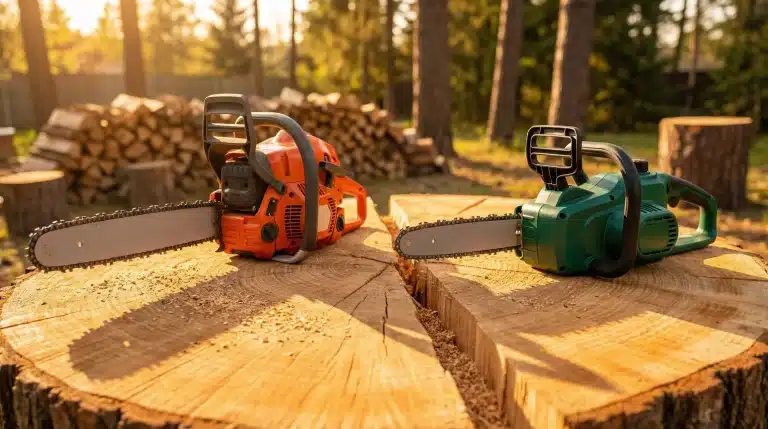
Petrol and electric chainsaws each provide distinct advantages for different types of work. Petrol models deliver more power and work well for heavy tasks like felling large trees or cutting thick timber. Electric chainsaws are lighter, quieter, and need less upkeep, which makes them better for smaller jobs around the home.
The best chainsaw for your needs depends on what you plan to cut, how often you will use it, and where you will work. If you need to tackle big projects in remote areas without power access, petrol is likely your answer. However, if you mainly trim branches, cut firewood near your house, or prefer a tool that starts easily without petrol and oil mixing, an electric tool might suit you better.
This article breaks down the core differences between these two types of chainsaws. You will learn about power output, portability, maintenance requirements, and running costs. By the end, you will have a clear idea of which option matches your specific situation.
Electric Chainsaw vs Petrol Chainsaw: Key Differences
Electric and petrol chainsaws differ significantly in how they deliver power, how easily you can move them around, and how much effort they require to operate and maintain. These differences affect which type works best for specific jobs and users.
Portability and Mobility
Petrol chainsaws provide an unlimited range because they don’t need electrical outlets or charging stations. You can work deep in forests or on large properties without worrying about power sources. This makes them ideal for professional users and property owners with extensive land.
Cordless electric chainsaws provide decent mobility, but battery life limits how long you can work. Most batteries last 30 to 60 minutes of continuous use. You need spare batteries to extend your work time, which adds cost and weight to your kit. To learn more about petrol chainsaws and their advantages for larger properties, consider how often you’ll need extended mobility.
Corded electric models provide the least mobility. The power cord restricts you to about 30 meters from an outlet, even with extension leads. This works fine for small yards but becomes impractical for larger areas.
Petrol chainsaws weigh more than electric models due to their engines and fuel tanks. However, this extra weight becomes less important for big jobs where power matters more than ease of handling.
Power and Performance
Petrol chainsaws generate more cutting power than electric models. They use two-stroke engines that produce higher torque, which makes them better suited for thick wood and heavy-duty jobs. You can cut through large logs and dense hardwood without the engine bogging down.
Electric chainsaws rely on motors powered by batteries or mains electricity. Battery models have improved with lithium-ion technology, but they still can’t match the raw power of petrol engines. Corded electric chainsaws provide consistent power as long as they stay plugged in, though they typically provide less cutting force than petrol versions.
The bar length on both types varies, but petrol models commonly come with longer bars. This allows you to tackle bigger jobs in one pass. Electric chainsaws usually feature shorter bars, which limit the size of wood you can cut efficiently.
Petrol engines maintain consistent performance regardless of weather conditions or job duration. Battery-powered models lose power as the charge drops, and you need to stop work to recharge or swap batteries.
Ease of Use and Maintenance
Electric chainsaws start with the push of a button. You don’t need to pull starter cords or prime engines. This makes them much easier for beginners and occasional users who want simple operation.
Petrol chainsaws require more steps to start. You need to check fuel levels, prime the engine, set the choke, and pull the starter cord multiple times. Cold weather and old fuel can make starts even harder. Once you master the technique, though, starts become routine.
Maintenance demands differ greatly between the two types. Petrol models need regular fuel mixing, air filter cleaning, spark plug replacement, and carburettor adjustments. You must drain fuel for long-term storage and check the engine regularly. Electric chainsaws need minimal maintenance beyond chain sharpening and bar oil refills.
Noise levels favour electric models significantly. Battery and corded versions run quietly compared to the loud roar of petrol engines. This matters in residential areas with noise restrictions or for users who want to protect their hearing.
Electric chainsaws produce no direct emissions during use. Petrol engines release exhaust fumes that smell strongly and contribute to air pollution. You need to work in well-ventilated areas with petrol models.
Choosing the Right Chainsaw for Your Needs
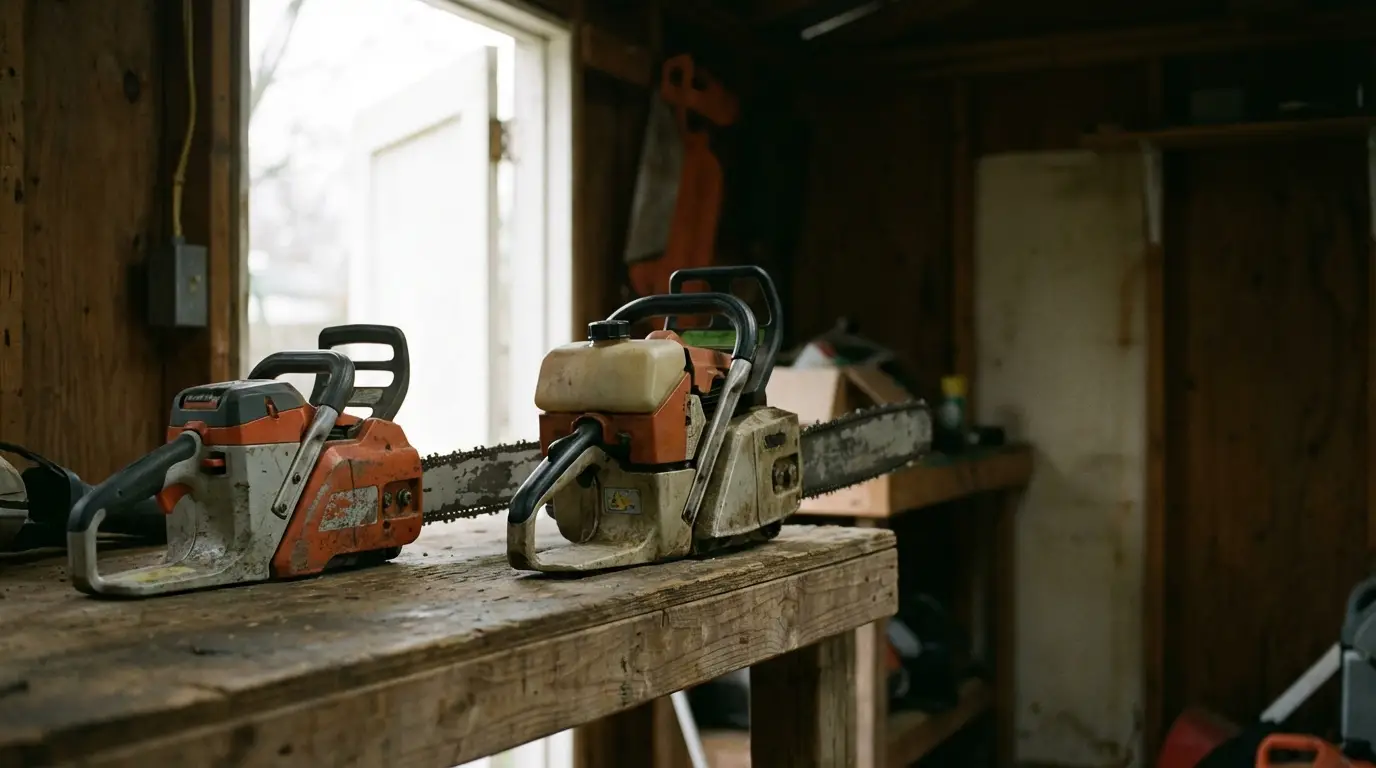
Electric and petrol chainsaws each serve different purposes based on power needs, work location, and budget. The right choice depends on how often you plan to use the saw, what size trees you cut, and whether you need to work far from power sources.
Best Applications for Electric Chainsaws
Electric chainsaws work best for light to medium-duty tasks around your property. You can use them to prune branches up to 30 cm thick, trim hedges, and cut firewood for home use.
Battery-powered models give you the freedom to move around your yard without cords. They handle small trees and branch removal quite well. Corded electric models suit fixed work areas close to power outlets.
These saws are perfect for suburban gardens where you need to keep noise levels down. Your neighbors will appreciate the quieter operation during weekend projects. Electric models also start instantly with the press of a button, which saves time on quick jobs.
You should choose an electric chainsaw if you cut wood less than once per week. They require less maintenance than petrol models and store easily in your shed or garage. Most homeowners find them powerful enough for regular yard maintenance.
Ideal Uses for Petrol Chainsaws
Petrol chainsaws deliver the power needed for heavy-duty cutting tasks. You can fell large trees, clear land, and cut through hardwood with ease. These saws handle logs over 40 cm in diameter without strain.
Professional tree surgeons and landscapers rely on petrol models for all-day work. The engines range from 30cc for light work to 60cc or more for serious timber cutting. You can work in remote locations without access to electricity.
Farm owners and rural property managers benefit most from petrol chainsaws. You can clear fence lines, process firewood in bulk, and manage storm damage efficiently. The refueling process takes just minutes, so you spend less time waiting.
Consider a petrol chainsaw if you cut wood regularly or tackle large projects. These models come with better bar-oiling systems that keep the chain lubricated during extended use. You’ll need to maintain the engine and keep spare fuel on hand.
Cost Considerations
Electric chainsaws typically cost between $150 and $600 for quality models. Battery-powered versions require extra investment in spare batteries, which add $100 to $300 to your total cost. However, you’ll spend very little on maintenance and fuel over time.
Petrol chainsaws start around $300 and can exceed $1,000 for professional-grade equipment. You need to budget for petrol, brake oil, spark plugs, and air filter replacements throughout the year. Servicing costs add up if you use the saw frequently.
The initial price difference narrows over time due to fuel and maintenance expenses. Calculate your expected usage to determine the true cost of ownership. Electric models save money for occasional users, while petrol saws justify their cost through heavy use.
Environmental Impact
Electric chainsaws produce zero direct emissions at the point of use. Battery models are particularly clean and reduce your carbon footprint significantly. You contribute to better air quality in your neighborhood and reduce noise pollution.
Petrol chainsaws emit exhaust fumes that contain carbon monoxide and hydrocarbons. Modern two-stroke engines have improved, but they still release pollutants into the air. The noise levels can disturb wildlife and people nearby.
Battery disposal requires proper recycling to prevent environmental harm. Most retailers provide take-back programs for old batteries. Petrol saws need careful fuel storage and disposal of oil-contaminated materials.
You should factor in your environmental values alongside practical needs. Electric options suit those who prioritize sustainability. However, petrol chainsaws remain necessary for certain applications where electric power falls short.
Conclusion
The right chainsaw for you depends on what tasks you need to complete. Electric chainsaws work well for light to medium jobs around your property, and they cost less to run and maintain. They also produce less noise and no exhaust fumes.
Petrol chainsaws deliver more power for heavy-duty work and remote locations. However, they require more maintenance and create louder noise levels. Consider how often you’ll use your chainsaw, where you’ll work, and what size trees or wood you need to cut before you make your choice.