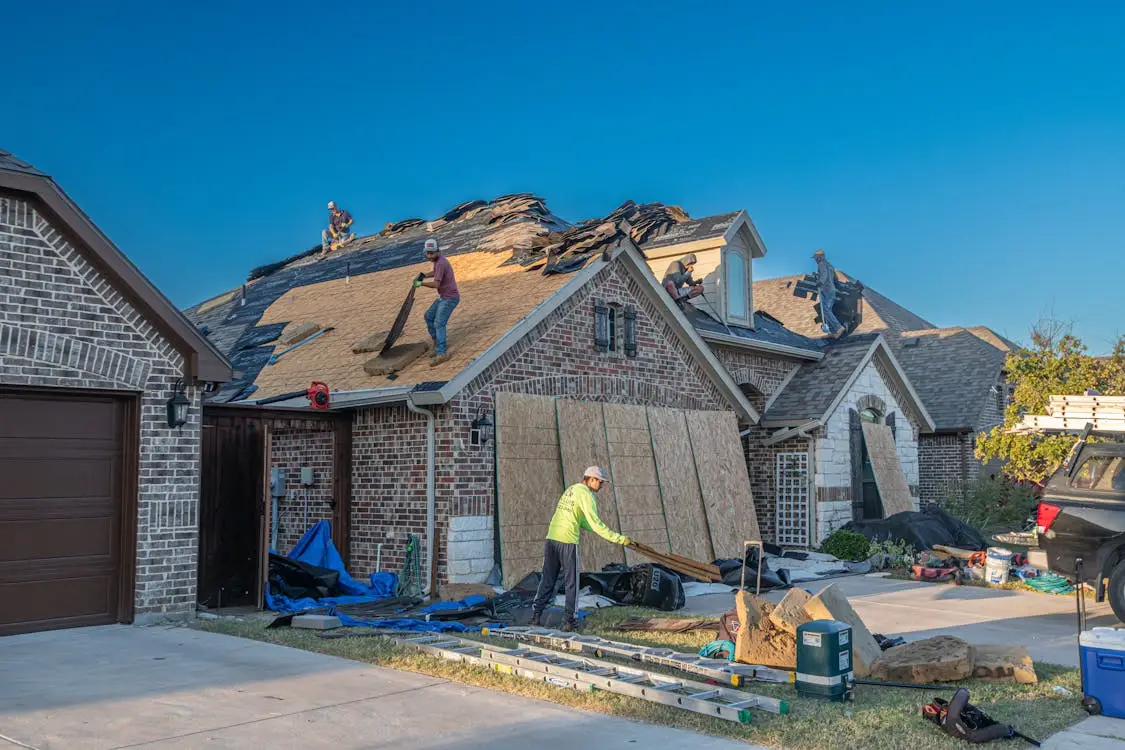
What a Covered Porch Really Costs (And Where You Can Save Without Regretting Everything)
If you’ve been daydreaming about a covered porch—coffee in the rain, zero sunburn, a place for your packages to stop getting drop kicked by the weather—welcome. It’s one of those upgrades that makes your house feel finished.
It’s also one of those projects where the quotes can make you blink like a confused owl.
For a pretty standard 200 sq ft covered porch, you’re usually looking at $8,000 to $24,000 (about $40 to $120 per square foot), with a “middle of the road” average around $14,400.
And yes, that range is dramatic. But it’s not random. Your roof choice alone can swing the total by $10,000+, and that’s before your yard decides to be… spicy.
Let’s make this feel less like gambling and more like planning.
The 2 minute way to get a realistic porch number (before you talk to anyone)
Here’s the quickest method I use when I’m trying to sanity check porch dreams:
- Pick your porch size
- Pick your “tier” (budget / mid-range / premium)
- Add 10-15% because houses love surprises
A quick size + cost cheat sheet
These are rough but useful working numbers:
| Size | Sq Ft | Budget | Mid-range | Premium |
|---|---|---|---|---|
| 10×10 | 100 | $4,000 | $7,200 | $12,000 |
| 12×12 | 144 | $5,760 | $10,400 | $17,300 |
| 20×10 | 200 | $8,000 | $14,400 | $24,000 |
| 20×15 | 300 | $12,000 | $21,600 | $36,000 |
| 20×20 | 400 | $16,000 | $28,800 | $48,000 |
Before you ask: no, porches do not magically get cheaper per square foot when they get bigger. There’s no “Costco porch discount.” Bigger = more foundation, more framing, more roof, more everything.
How big should your porch be (aka don’t build a football field you’ll never sit on)
I’m going to say something mildly controversial: a lot of people oversize porches because they measure the whole front of the house and think, “Well, I guess we need a porch the size of Nebraska.”
You don’t. You need the space you’ll actually use.
Here’s what I’d consider when you’re measuring:
- Furniture footprint: two chairs + a little table is usually 80-100 sq ft
- Walking space: you want to pass someone sitting down without doing that awkward sideways crab shuffle
- Door swing: make sure the door can open fully and people can step out without immediately stepping on a chair
- Steps + landing: stairs need breathing room (and you do too)
My favorite “real life” measuring trick: take a tape measure outside and mark off your dream setup with anything handy—pots, a broom, your kid’s soccer cones. If it feels tight now, it’ll feel tight later… except later you’ll have spent $18,000.
What your budget actually gets you (in normal people terms)
These tiers aren’t about size they’re about materials, roof complexity, and finishing details.
Budget build: $40-$60/sq ft
Think: “I just need cover and I don’t need it to be fancy.”
- Simple foundation (often a slab where allowed)
- Shed/flat style roof tends to show up here
- Pressure treated wood flooring or basic concrete
- Minimal/no electrical
200 sq ft: roughly $8,000-$12,000
Mid-range: $60-$90/sq ft
This is the “sweet spot” for most people, especially if you hate constant maintenance (hi, it’s me).
- Foundation appropriate to your climate/soil
- Roof that matches the house (usually shingles)
- Composite or upgraded wood flooring
- Basic electrical: light, maybe a fan, outlet
200 sq ft: roughly $12,000-$18,000
Premium: $90-$120+/sq ft
This is where porches start acting like a magazine spread.
- Upgraded structure and finishes
- Higher end roof material (metal, architectural details)
- Custom railings, lighting packages, fancy extras (motorized screens, etc.)
200 sq ft: roughly $18,000-$24,000+
The 4 biggest things that make porch costs jump (or behave)
1) Roof style: the #1 budget bully
If you want to save big money, this is where you do it.
- Shed/flat roof: $20-$60/sq ft (for the roof portion)
- On a 200 sq ft porch: $4,000-$12,000
- Simple framing, faster build, cheaper labor
- Gable roof: $70-$155/sq ft (for the roof portion)
- On a 200 sq ft porch: $14,000-$31,000
- More framing complexity + trickier tie ins
My opinion (which you’re free to ignore, but you’ll think of me):
If you care most about the porch looking like it was always part of the house, gable is gorgeous. If you care most about the price tag and function, a well designed shed roof is the unsung hero.
2) Flooring: wood vs composite vs concrete
- Pressure treated wood: $4-$8/sq ft upfront… but you’ll be sealing it and maintaining it. (If you love weekend projects, congrats. If you don’t, this is a trap.)
- Composite: $4-$13/sq ft upfront, very low maintenance. Often breaks even around year 6-8 depending on what you’d spend maintaining wood.
- Concrete: $2-$8/sq ft and honestly? Under a covered porch, it’s kind of fantastic. Seal it every few years and it just keeps on living.
3) Back porches can cost more than front porches
This surprises people. A lot.
A back porch often costs about 50% more than a similar front porch because attaching to the house usually means more detail work ledger boards, flashing, waterproofing, and “please don’t let water destroy my house” engineering.
If your budget is tight and you’re choosing one: front porches often give you more square footage per dollar.
4) Foundation: don’t cheap out here (future you will cry)
- Slab: $2-$10/sq ft, great in warm climates with stable ground—but not always allowed where frost lines are deep.
- Pier and beam: $7-$12/sq ft, common where frost depth, slope, or moisture is a concern.
This is one of those “listen to the pro” situations. A bad foundation is the kind of mistake that looks fine… until it doesn’t.
Porch styles (and what they typically cost)
Just so you’re not comparing apples to a screened in orange:
- Standard covered porch: roughly $6,000 to $27,000 total (varies wildly with roof + finishes)
- Screened porch (new build): $50-$175/sq ft (about $10,000-$35,000)
- Screening in an existing covered porch: $10-$25/sq ft (about $2,000-$5,800) — fastest “wow” upgrade if you already have a roof
- Wraparound porch: $60-$150/sq ft (about $27,000-$67,500) — corners and roof angles = money
If you’re getting quotes, make sure the contractor labels it clearly as new construction vs screening an existing structure, because those are basically different planets.
The sneaky costs that love to show up uninvited
These are the line items that wander into your project like they pay rent:
- Permits/inspections: usually $100-$500, but can be $1,000-$3,900 in pricier areas
(Ask if permits are included. Don’t assume.) - Site prep: $500-$5,000 for grading, clearing, drainage adjustments
- Electrical: $500-$2,000 for basics like a fan/light/outlet (GFCI, please electricity should not be spicy)
- Drainage: $600-$2,000 now… or $5,000-$25,000 later if water starts pooling where it shouldn’t
- Structural surprises: very common when attaching to an older house (rot, settling, weird framing classic house shenanigans)
My rule: add 10-15% contingency to whatever number you think you’re spending. If you don’t need it, you get to feel smug and maybe buy outdoor pillows.
Can you DIY a covered porch?
Sometimes yes! Sometimes no! Sometimes “yes” but also “please don’t.”
Good DIY candidates:
- Prefab porch kits: roughly $2,500-$10,000 and can save 30-50% vs contractor pricing (best for simple rectangular designs)
- Screening in an existing porch: materials around $4-$7/sq ft (labor is what bumps it up)
Things I personally wouldn’t DIY unless you’re experienced (and your permit office requirements aren’t terrifying):
- Foundations
- Roof tie ins to the house
- Electrical
- Anything that needs serious inspection sign off
Roof/waterproofing mistakes can take years to reveal themselves—and then they reveal themselves in the form of rot. Lovely.
How to save money without doing something you’ll regret by next spring
These actually work:
- Pick a simpler roof (shed roofs are budget friendly legends)
- Build in phases: structure now, screens later, electrical later—so you can still use it
- Schedule off-season: late fall through early spring can sometimes shave 10-15% off labor costs (depending on your area)
- Choose low maintenance materials where it counts: composite can cost more upfront, but it saves you years of sealing and sighing
Will you get your money back when you sell?
Usually a covered porch returns about 50-70% of its cost at resale.
So if you spend $15,000, you might see around $7,500-$10,500 in added value. It varies by market (porch loving suburbs vs dense urban areas where nobody has time to sit outside).
But the real return is: you actually use your house more with real outdoor comfort ideas. If a porch gets you outside 200 days a year, that’s not nothing.
My simple 4 step plan (so you don’t spiral)
- Measure the porch you’ll actually use (chairs, walking room, door swing, steps—be honest)
- Decide your tier (budget / mid / premium) based on how long you’ll stay and how much maintenance you can tolerate
- Pick your roof style early because it’s the biggest cost lever
- Get 3 itemized quotes and confirm what’s included (permits, site prep, drainage, electrical) + add 10-15% contingency
If you do nothing else today: go measure your space and pick whether you’re a “shed roof pragmatist” or a “gable roof romantic.” Both are valid. One is just… cheaper.