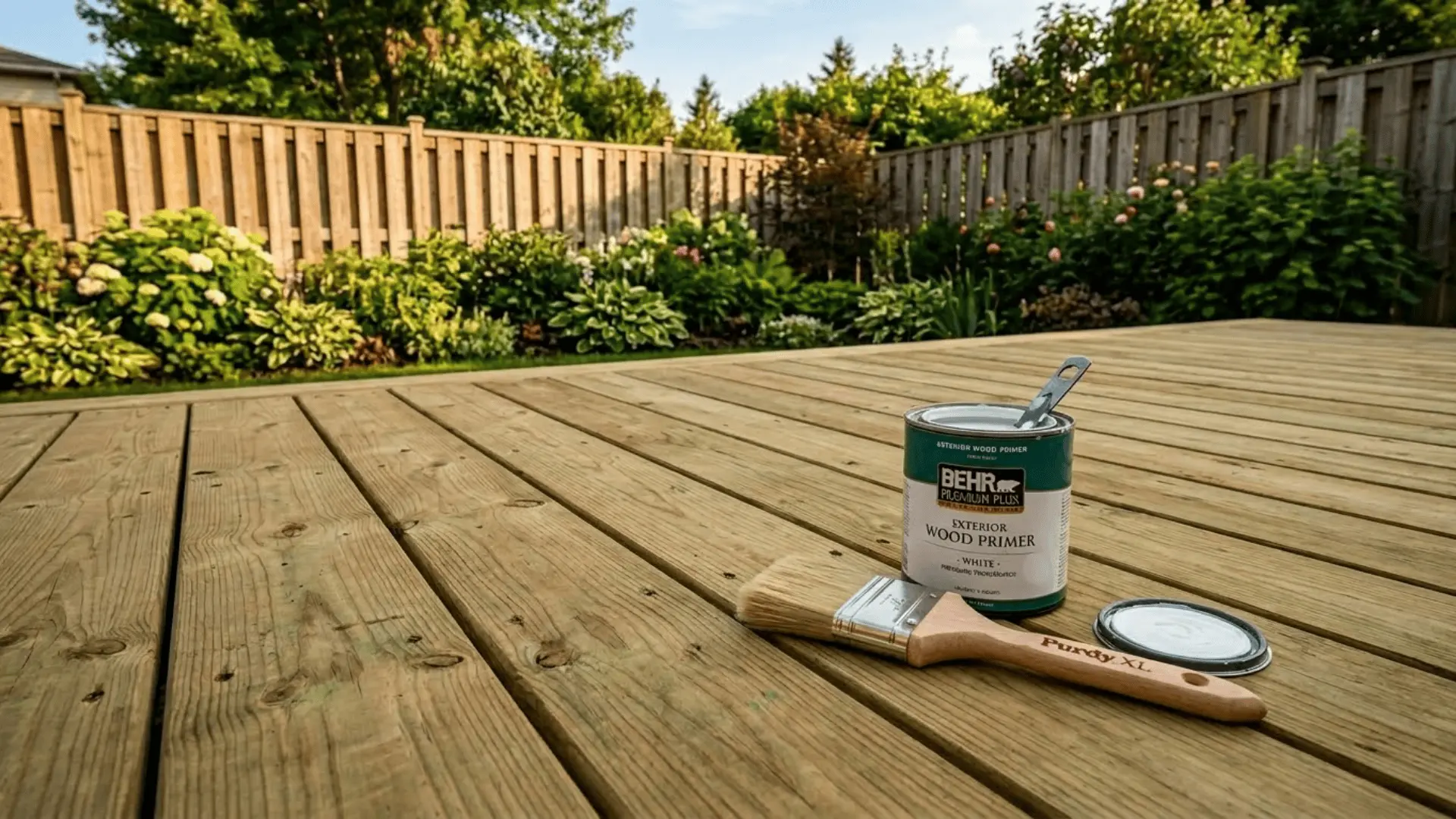
That leftover can of exterior paint in your garage is looking pretty tempting right now, isn’t it?
The short answer is yes, you can use it indoors, but most experts would nudge you toward thinking twice before you crack that lid open.
Stronger fumes, a rougher finish, and a few safety concerns make it worth pausing on.
Stick around, because we’re walking you through everything you need to know before you make that call.
What Makes Exterior Paint So Different Anyway?
Exterior paint is specifically formulated to survive the outdoors, think harsh sunlight, rain, and shifting temperatures.
It contains stronger chemicals and additives like fungicides and UV stabilizers that help it hold up against the elements.
Interior paint, on the other hand, is designed with indoor air quality in mind, keeping finishes smooth and cleanable without the heavy-duty chemical load.
That extra durability exterior paint carries is impressive, but those same ingredients are exactly what make it a complicated choice when you bring it inside.
Can You Use Exterior Paint Indoors?
Technically, yes. But “can you” and “should you” are two very different questions here, and the answer to the second one gets a little more complicated.
It Works, But Only in Specific Situations
Exterior paint can go on indoor walls, but the conditions have to be just right. Think spaces with strong ventilation, low foot traffic, or areas where durability genuinely matters more than air quality.
For most standard indoor projects, though, it is rarely the first choice professionals reach for.
Here is Why Most Experts Advise Against It
Before you pop that lid open, here is what you are actually signing up for:
- High VOC levels that linger long after the paint dries
- Stronger fumes that can cause headaches, dizziness, and irritation
- Longer curing time compared to regular interior paint
- Harder to clean due to its rougher, textured finish
- Potential health risks with prolonged exposure in enclosed spaces
Is Exterior Paint Actually Safe to Use Inside?
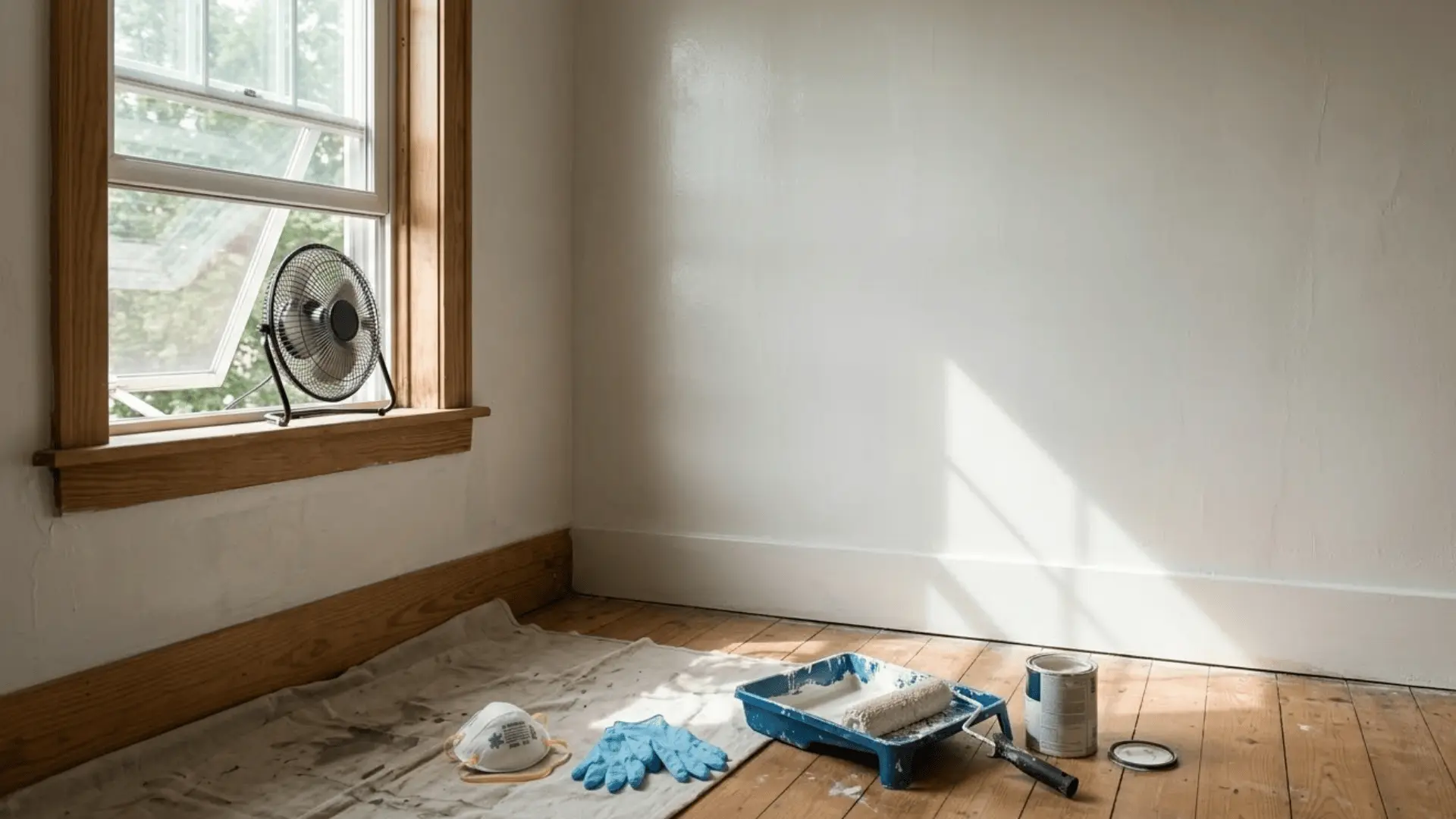
Safety is where things get a little more serious. Exterior paint brings some chemical heavyweights indoors, and not all spaces or people are equipped to handle that well.
VOCs and Indoor Air Quality
Exterior paint carries significantly higher VOC levels than its interior counterpart. These volatile organic compounds are released into the air as the paint dries, affecting the air you breathe daily.
Poor ventilation makes this worse, and the effects, such as irritation, headaches, and dizziness, can show up faster than you would expect in enclosed spaces.
Off-Gassing and Drying Time
Indoors, exterior paint takes its time. The curing process is slower, and the off-gassing that comes with it means that the sharp paint smell is not going anywhere quickly.
Depending on the space and airflow, the odor can linger anywhere from a few days to a couple of weeks, which is a long time to be living with it.
Who Should Avoid It Entirely?
Some people are more vulnerable to these effects than others. If any of the following apply to your household, it is best to skip exterior paint indoors altogether:
- Children and infants, whose developing systems are more sensitive to chemical exposure.
- Pets, especially birds, are highly reactive to airborne toxins.
- Anyone with asthma, allergies, or respiratory conditions whose symptoms can be easily aggravated.
The Honest Pros and Cons of Using Exterior Paint Indoors
It is not all bad news, and it is not a green light either. Here is a straightforward look at both sides so you can weigh it out for yourself.
| Factor | Pros | Cons |
|---|---|---|
| Durability | Lasts 10+ years indoors | Cracks on flexible drywall over time |
| Moisture Resistance | Handles spaces with 80%+ humidity | Traps moisture, risking mold in sealed walls |
| Air Quality | No advantage indoors | VOCs hit 150–300 g/L, far above the 50 g/L indoor safe limit |
| Aesthetics | Covers rough or uneven surfaces well | Leaves a chalky, coarse finish on smooth drywall |
| Maintenance | One coat, less frequent repainting | Touch-ups look uneven, paint does not blend back |
| Cost | Roughly $30–$60 per gallon if reusing | Prep and ventilation fixes push it to $80–$120 per gallon |
When It Might Actually Be OK to Use Exterior Paint Inside
There are a few exceptions to every rule, and this one is no different. In the right spaces, with the right precautions, exterior paint can genuinely work indoors.
Spaces Where It Makes More Sense
Not every room in your home needs the same standard. Exterior paint tends to fare better in utilitarian, low-traffic spaces that already deal with moisture, dirt, or heavy use:
- Garages where walls take a beating from dust, grease, and temperature swings.
- Basements that battle humidity and occasional moisture seepage.
- Workshops needing a tough, scrubbable surface that holds up to wear.
- Utility rooms where durability matters more than a polished aesthetic.
Conditions You Should Still Follow
Even in these spaces, a few ground rules keep things safe and functional.
| Condition | How to Do It | Why It Matters |
|---|---|---|
| Ventilation | Open windows, doors, and run exhaust fans throughout | Actively pulls fumes out and prevents VOC buildup indoors |
| Sealing Off Living Areas | Use plastic sheeting or door draft stoppers | Stops fumes from drifting into bedrooms, kitchens, or shared spaces |
| Curing Time | Stay out of the space for at least 3–7 days post-painting | Gives the paint adequate time to off-gas and fully cure |
| Protective Gear | Wear an N95 mask and gloves during application | Limits direct exposure to high VOC levels and skin irritants |
Where You Should Never Use Exterior Paint Indoors?
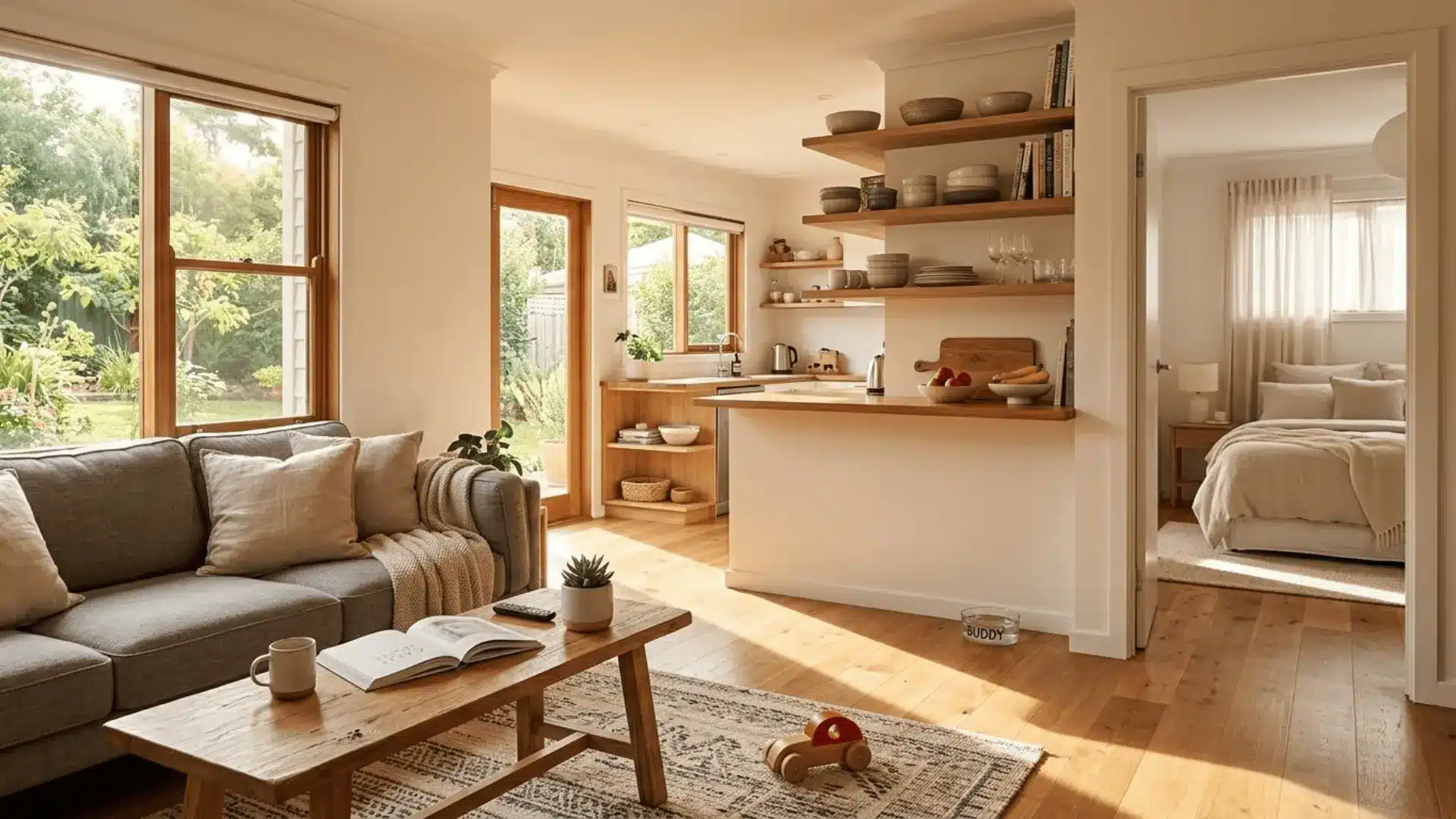
Some spaces simply are not built for the chemical load exterior paint carries. High-traffic, high-occupancy rooms where air quality directly affects your daily health and comfort should always be off-limits.
- Bedrooms where you spend 7-9 hours breathing in the same air every night.
- Living rooms that see constant occupancy with little room for continuous ventilation.
- Kitchens where fumes can settle into food prep surfaces and linger in enclosed cabinetry.
- Nurseries and children’s rooms where developing lungs are far more vulnerable to VOC exposure.
Indoor air quality in living spaces is not just a comfort factor; it is a health one.
The rooms you spend the most time in deserve paint that is specifically formulated to keep the air clean, the finish safe, and the environment breathable for everyone in the household.
Better Alternatives to Using Exterior Paint Indoors
You do not have to compromise on durability just because you are skipping exterior paint.
There are plenty of indoor-specific options that handle moisture, humidity, and heavy use just as well, without the chemical trade-offs.
| Paint Type | Best For | Top Pick |
|---|---|---|
| Bathroom & Kitchen Paint | Steam-heavy, high-moisture spaces | Zinsser Perma-White (mold-proof, self-priming, moisture-resistant) |
| Mold-Resistant Primer | Basements, humid utility rooms | KILZ Mold & Mildew Primer (EPA-registered, very low VOC, fast-drying) |
| Low-VOC Interior Paint | Living rooms, bedrooms | BEHR Premium Plus (zero VOC, mildew-resistant, widely available) |
| Zero-VOC Paint | Nurseries, allergy-prone households | Valspar Zero VOC (zero emissions, low chemical output, available at Lowe’s) |
Tips to Follow If You Do Decide to Use Exterior Paint Inside
If you have made up your mind and exterior paint is what you are working with, these precautions are non-negotiable.
- Open every window and run exhaust fans throughout the entire painting process and for several days after.
- Wear an N95 mask and gloves during application to limit direct exposure to high VOC levels.
- Keep the painted space off-limits until the paint has fully cured, ideally for at least 3–7 days.
- Seal off adjoining rooms with plastic sheeting to stop fumes from drifting into living areas.
- Choose the lowest-traffic, best-ventilated room in the house if you have any flexibility on where you are painting.
Taking these steps does not eliminate the risks entirely, but it goes a long way toward making the process safer for everyone in the household.
Exterior Paint vs. Interior Paint: How Do They Actually Compare?
Understanding what sets these two apart makes the decision a whole lot easier.
Here is a side-by-side breakdown of what you are really working with.
| Feature | Exterior Paint | Interior Paint |
|---|---|---|
| Durability | High, built to withstand weather and wear | Moderate, designed for indoor conditions |
| VOC Levels | Higher, often 150–300 g/L | Lower, typically under 50 g/L |
| Odor | Strong, lingers for days | Mild, dissipates quickly |
| Finish | Rough, chalky texture | Smooth, clean finish |
| Best Use | Outdoor surfaces and high-humidity utility spaces | All standard indoor living spaces |
| Safety Indoors | Requires heavy ventilation and protective gear | Safe for everyday indoor use |
The Bottom Line
Now that you know what goes into that can, the choice is really yours to make.
Can you use exterior paint inside? Technically, yes. But with better, safer alternatives available at almost every price point, it rarely makes sense to take that route, especially in spaces where you spend the most time.
When in doubt, always choose what keeps your home healthy, your air clean, and your walls looking their best for years to come.
Have questions or tried this yourself? Drop your experience in the comments below.