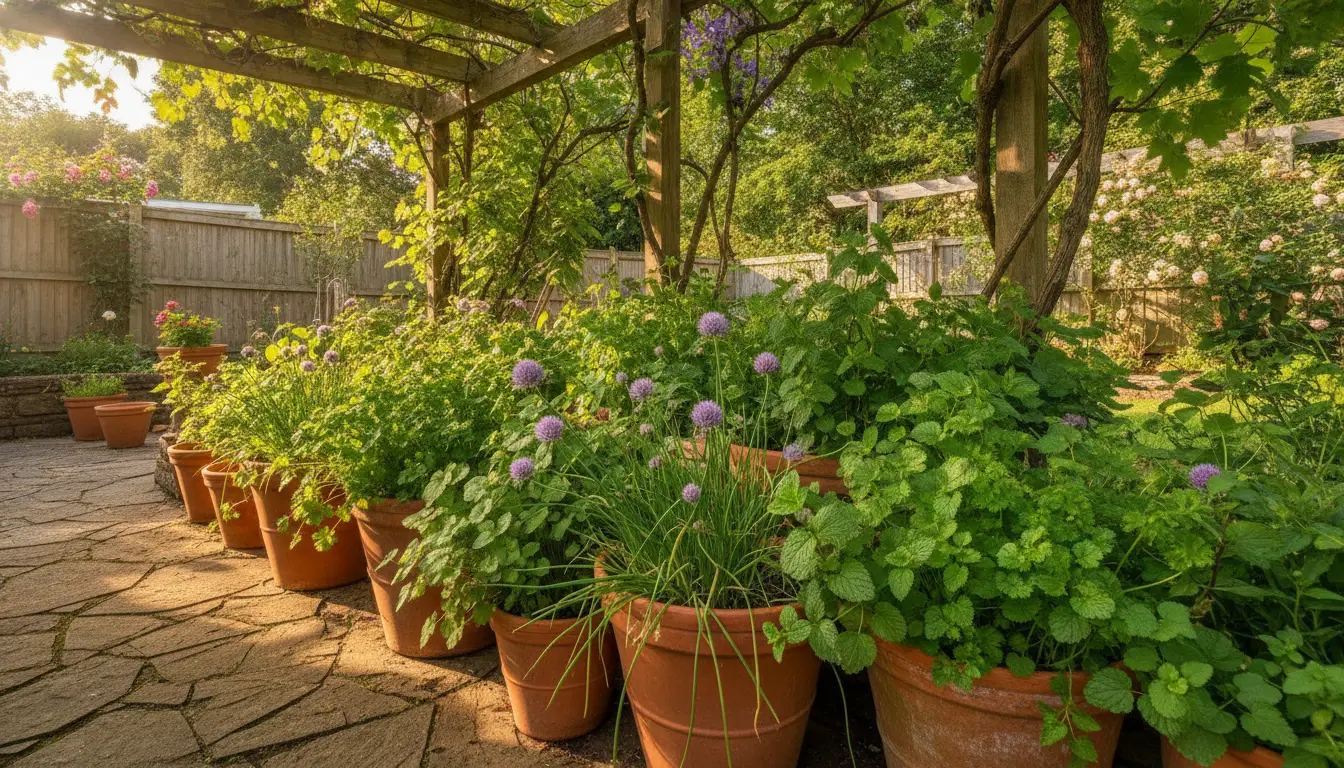
Most gardeners assume herbs need full sun, and for some that’s true. But a surprising number of kitchen herbs actually do better with a bit of shade. If you’ve got a pergola, covered patio or gazebo creating patches of dappled light in your garden, you’ve already got ideal conditions for growing several useful varieties.
The science behind it is fairly simple. Direct sunlight pushes herbs to bolt and flower quickly, which turns their leaves bitter. Filtered light slows that process down, giving the plant more time to develop the essential oils that carry flavour. That’s why a sprig of mint from a shaded corner often tastes stronger than one baked in full sun. Here’s a look at six herbs that’ll thrive under a canopy and how to get the best out of each one.
Mint: The One That Almost Grows Itself
Mint is probably the easiest shade-tolerant herb you can plant. It handles low light well and spreads fast, which is both a blessing and a problem. Grow it in pots or containers to stop it taking over your beds.
Spearmint and peppermint are the most common choices, but apple mint does particularly well in partial shade and has a softer flavour that works nicely in drinks and salads. Keep the soil consistently moist and cut it back regularly to encourage bushy, leafy growth instead of leggy stems.
Parsley: Flat-Leaf for Flavour, Curly for Hardiness
Parsley is a shade favourite and one of the most versatile herbs you can grow. Flat-leaf (Italian) parsley tends to have a stronger taste, while curly parsley is a bit hardier and holds up better in cooler weather.
Sow seeds directly into the ground or into deep pots, because parsley has a long taproot that doesn’t like being disturbed. It’s slow to germinate, sometimes taking three weeks or more, so don’t panic if nothing appears for a while. Once it’s established, you’ll get steady harvests for months.
Chives and Coriander: Two Different Personalities
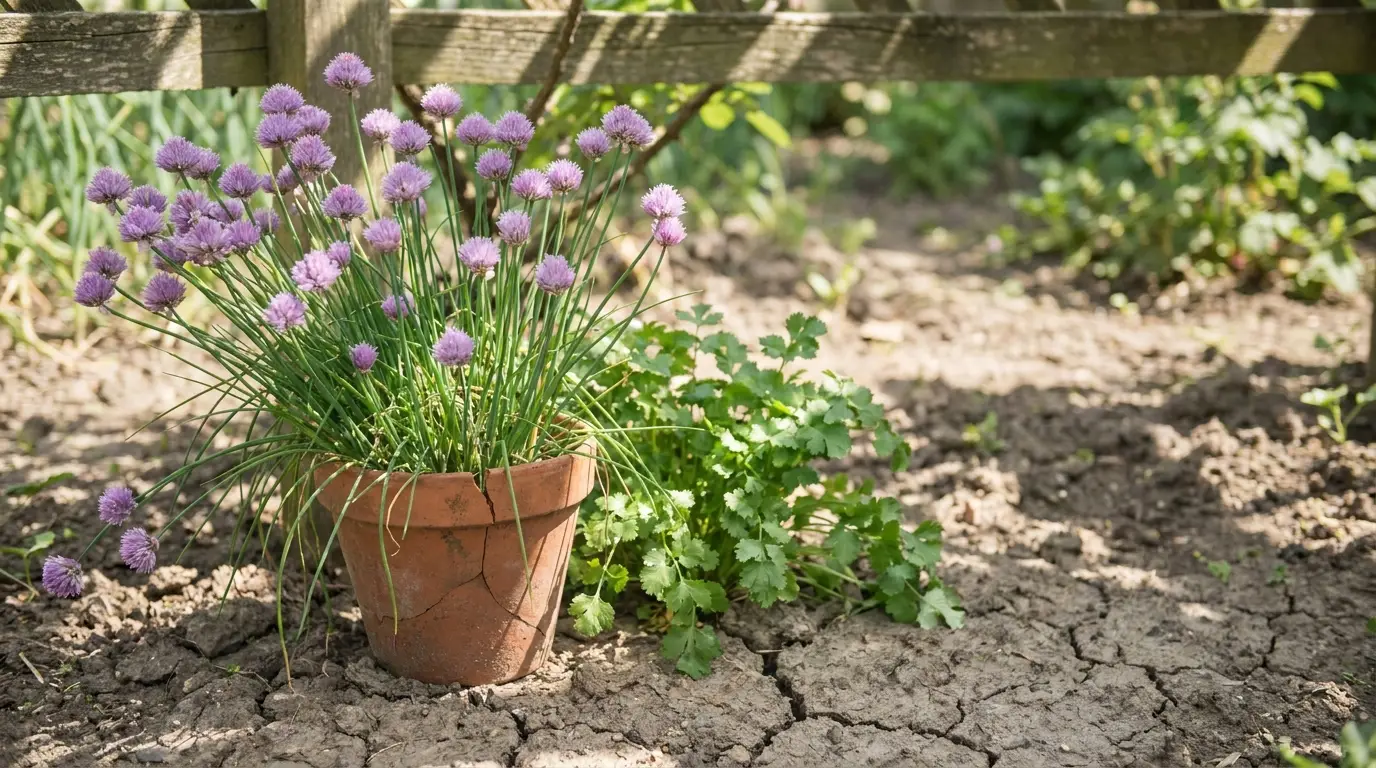
Chives are tough, low-maintenance and happy in almost any conditions. They’ll grow in full sun or partial shade, but filtered light helps keep the leaves tender. Cut them right down to the base when harvesting and they’ll bounce back quickly. The purple flowers are edible too and look great scattered over a salad.
Coriander is the opposite. It’s fussy, bolts at the first sign of heat and can be genuinely annoying to grow. That’s exactly why shade is your friend here. The cooler, sheltered conditions under outdoor gazebos, pergolas or similar canopy structures will slow bolting down and give you a much longer leaf harvest. Sow small batches every few weeks for a continuous supply.
Lemon Balm and Sorrel: The Underrated Pair
Lemon balm is a member of the mint family and shares its enthusiasm for spreading. It thrives in partial shade, produces fragrant lemon-scented leaves and is brilliant for teas, desserts and even cocktails. Like mint, keep it contained unless you want it everywhere.
Sorrel is one of those herbs that most people overlook, but it’s a real workhorse in the kitchen. The leaves have a sharp, lemony tang that works well in soups, sauces and salads. It’s a perennial, so once you plant it, it’ll come back year after year. Partial shade keeps the leaves large and tender instead of small and tough.
Quick Tips for a Shaded Herb Garden
A few things to keep in mind when planting under any canopy structure:
- Watering: Covered areas can be drier than open ground because rain doesn’t always reach the soil. Check moisture levels regularly.
- Soil: Most shade herbs prefer rich, well-drained soil. Mix in some compost before planting.
- Airflow: Structures can block wind, which increases humidity and the risk of fungal problems. Space your plants out and avoid overcrowding.
- Light check: Partial shade means roughly three to six hours of sunlight a day. If your spot gets less than that, stick with mint and lemon balm, which cope best in deeper shade.
Shade as a Secret Ingredient
Growing herbs under a canopy isn’t a compromise. For the varieties listed here, filtered light genuinely improves flavour and extends the growing season. You’ll get softer leaves, stronger essential oils and far less bolting than you would in an exposed, sun-baked bed. If you’ve got any kind of overhead structure in your garden, put it to work.