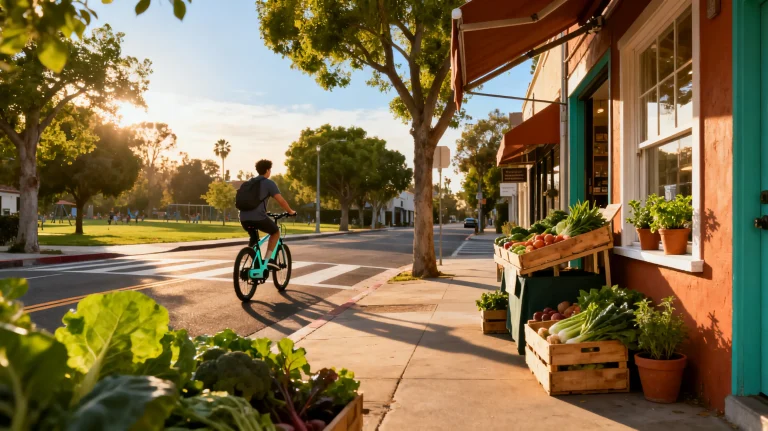
Green living often starts in the garden. Planting herbs, caring for a tomato plant, trying composting, cutting down on disposable packaging, or visiting a neighborhood market for fresh food are all small changes that feel easy to notice.
But a more sustainable lifestyle does not only happen in the garden, kitchen, or shopping basket. It also shows up in how people move through their neighborhood, how they handle short errands, and how they get to nearby stores, garden centers, coffee shops, markets, or a friend’s place. Many of these choices feel small on their own, but over time they can shape daily rhythm, energy use, and a stronger connection to the local community.
For young adults, green living does not have to feel like a heavy responsibility. It can start with easier everyday choices: driving a little less, walking a little more, riding to pick up a few things nearby, or turning a weekend errand into time outside. The most sustainable habits are often not the most extreme ones. They are the ones that feel natural enough to repeat.
1. Why Green Living Does Not Only Happen in the Garden
A garden makes sustainable living easy to understand. You can see seeds sprout, watch how soil, sunlight, and water affect plants, and feel a more direct connection between food and nature.
But if green living is only understood as planting or buying eco-friendly products, the idea becomes too narrow. In real life, many everyday choices matter: how often you shop, whether you choose a local store or a faraway one, whether every short trip is done by car, and whether you are willing to make neighborhood life a little slower and closer to home.
These choices may not feel dramatic, but they are real. Going to a garden center for seeds, stopping by a nearby market for vegetables, picking up a coffee, or grabbing a few household items from a local shop can all become part of a lower-impact routine. If every small trip depends on a car, convenience can slowly turn into dependence.
Green living is more like a set of daily habits than one single action. It includes how you eat, shop, grow, and move.
2. Why Short Local Trips Are Easy to Overlook
People often plan long trips carefully, but they rarely think as much about the short routes within a few miles of home. These routes feel too ordinary: the grocery store, a package pickup, soil or planters, a pharmacy, a park, or a nearby coffee shop.
Yet these are often the trips that default to the car. The distance may be short, but the routine still means getting in, starting the engine, pulling out, parking again, and walking from the car to the destination. Once in a while, it does not feel like much. Repeated several times a week, it becomes a steady use of time and energy.
Short local trips are easy to overlook because they do not always feel like “transportation decisions.” They seem like quick stops, last-minute errands, or casual weekend outings. But added together, they make up a large part of everyday movement.
Finding a lighter option for some of these routes can change the feel of daily life. It is not about giving up the car completely. It is about saving the car for trips that truly need it and using simpler tools for short, light, familiar routes.
3. How an Ebike Can Become a Lighter Way to Move Around the Neighborhood
For short neighborhood trips, an ebike has a clear advantage. It reaches farther than walking, requires less effort than a regular bicycle, and is easier to stop and park than a car. For routes that are too far to walk but feel excessive to drive, it offers a lighter middle ground.
Weekend life for young adults rarely happens in only one place. Someone might stop at a coffee shop, visit a market, pick up a few gardening supplies, then head to a friend’s place or a park. Each stop may be close, but walking the full route can be tiring, while driving can mean constant parking.
An e-bike fits this loose but realistic kind of everyday movement. It does not ask you to turn every outing into exercise, and it does not require starting the car for a small errand. It lets you move through the neighborhood more naturally and notice the small shops, green spaces, and street-level changes along the way.
For green living, that matters beyond replacing one short car trip. A lighter way to move can change the relationship people have with their neighborhood. When movement feels easier, people are more likely to stop nearby, discover local options, and bring daily life closer to home.
4. How an Electric Bike With Throttle Helps Low-Stress Errands
Some people enjoy riding a regular bicycle, but not every short trip is ideal for full physical effort. Carrying a bag, bringing home a few small purchases, dealing with a slight hill, riding in warm weather, or stopping and starting often can make a simple route feel harder than expected.
That is where an electric bike with throttle can help. It can support starts, restarts after short stops, small slopes, or moments when the rider wants the trip to feel easier and more controlled.
The point is not speed. It is convenience and control. For example, after leaving a garden center with seeds, small tools, or light supplies, or after leaving a market with fresh food, throttle support can make the next short ride feel less tiring.
For young adults, low stress matters. Green living is harder to maintain when every step feels inconvenient. A transportation option that is easier to use, better for stop-and-go movement, and more comfortable for short errands can make “driving less” feel natural instead of like an extra burden.
Of course, any e-bike should still be used with local rules, riding areas, and safety habits in mind. Convenience should not become risk. It should make everyday routes smoother and more manageable.
5. What Green Errands Need in the Real World
Not every neighborhood errand is a good fit for an e-bike. Practical green living has to recognize real limits.
Start with distance. If the destination is within a few miles, the route is familiar, and the roads are calm enough, lighter transportation is easier to make work. If the route is too far, traffic is too fast, or there is no safe place to ride, it should not be forced.
Next, consider what you are carrying. Picking up seeds, a few small tools, vegetables, or light household items is very different from buying heavy bags of soil, large planters, lumber, or a large grocery load. The first group can fit lighter transportation. The second may still call for a car.
Weather matters too. A mild day is perfect for a slow ride to the market. Heavy rain, strong wind, extreme heat, or slick roads can make riding uncomfortable or unsafe.
Parking and security also make a difference. If there is no safe place to park near the neighborhood shop, market, garden center, or coffee shop, the trip becomes harder to repeat.
Green living does not mean making the same choice every time. It means making a better choice for the situation. Ride when it makes sense, walk when it is easy, and use the car when the trip truly calls for it.
6. How to Turn Lower-Impact Short Trips Into a Habit
Building a low-impact transportation habit does not require changing everything at once. The easiest way to begin is once a week.
Choose one familiar weekend route. Maybe it includes a neighborhood market, coffee, a quick look around the garden center, and a stop at a park or a friend’s place. The route does not need to be formal or far. It simply turns scattered errands into a lighter local outing.
You can also start with the easiest trip to replace: one that does not require heavy cargo, does not involve a tight schedule, has good weather, and follows a safe route. After a few successful trips, it becomes clearer which routes are good for lighter transportation and which ones still need a car.
The key is repetition, not perfection. One short ride will not transform an entire lifestyle, but it can show another possibility: nearby places may be easier to reach than expected, weekend errands can feel more relaxed, and local shops or community spaces can become a more natural part of daily life.
When green living extends beyond the garden into movement, shopping, and community routines, it becomes more complete. Driving less often, choosing a lighter way to move, and spending more time nearby are all small decisions that can bring daily life closer to a sustainable rhythm.
Lasting green living is rarely one big change. It is usually many smaller choices, repeated often enough to become normal.