In the world of kitchen design, there is an inverse relationship between the size of a detail and its ability to define a space. Countertops are large and expensive and immediately obvious — yet it is often the smallest decisions that leave the most lasting impression. The profile of a tap. The texture of a backsplash tile. The weight of a cabinet knob turning in the hand.
That last one is the one designers talk about most, among themselves, when clients aren’t in the room. Because the cabinet knob — that small, seemingly inconsequential disc or sphere of metal on the face of every door and drawer — is the element a person touches more than any other surface in the kitchen. It is the punctuation mark of the cabinetry, present on every sentence. And like all punctuation, when it’s wrong, the whole composition suffers.
Luxury cabinet knobs are not an extravagance in a well-designed kitchen. They are, in a very practical sense, the finish line.
Why Cabinet Knobs Deserve More Design Attention than They Get
The average kitchen renovation budget allocates significant resources to cabinetry, appliances, and countertops — and then, frequently, treats hardware as a residual decision. This is a structural error in how renovations are sequenced, and it produces a particular kind of disappointment: spaces that are technically complete but somehow don’t feel it.
The reason is tactile and visual in equal measure. Visually, cabinet knobs read as a repeated motif across the entire face of a kitchen. A run of twelve upper cabinets means twelve knobs — twelve points at which the material quality and design intention of your hardware choice either supports or undermines the broader composition. Standard zinc-alloy knobs with plated finishes do the latter. Their proportions are rarely considered, their weight is negligible, and their finish, under the scrutiny of a well-lit kitchen, reads as thin.
Luxury cabinet knobs in solid brass, bronze, or nickel read differently — immediately and unmistakably. The proportions are designed, not engineered to a price point. The weight in the hand communicates material integrity before the eye has even registered what it’s looking at. And the finish, whether the warm glow of natural brass or the cooler restraint of satin nickel, holds up under direct light in a way that plated surfaces simply cannot replicate.
The Material Hierarchy: Solid Brass and Why It Matters
Not all metal hardware is created equal, and understanding the material hierarchy is essential to making a sound investment in kitchen hardware.
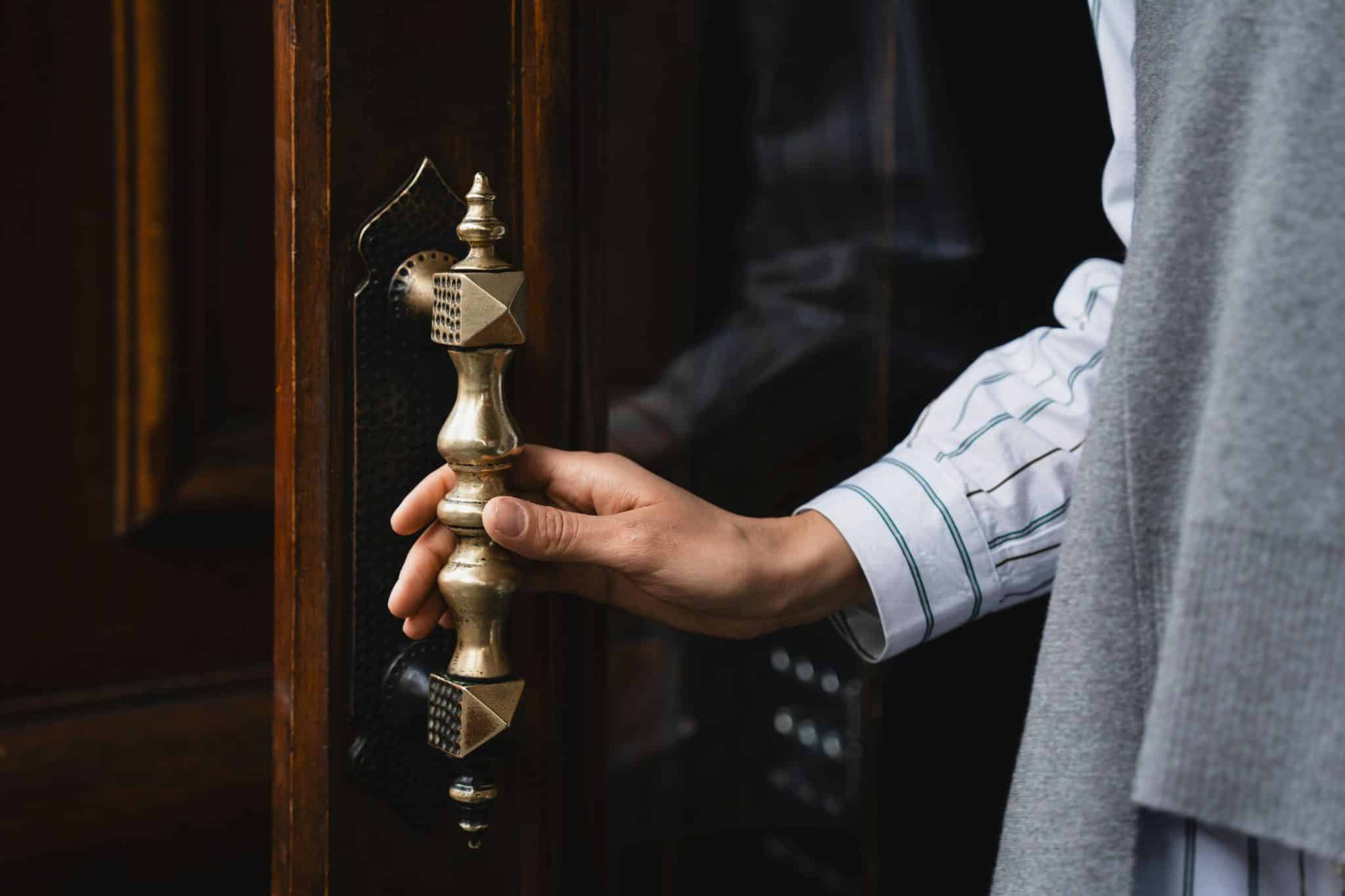
At the top sits solid brass — a copper-zinc alloy that has been the material of choice for architectural hardware for centuries, and for good reason. It is dense, workable, corrosion-resistant, and uniquely capable of taking a range of surface treatments. Unlacquered brass develops a living patina over time, responding to light and handling in ways that make each piece increasingly individual. Lacquered brass maintains its original finish for longer, making it a better choice in kitchens where consistency of appearance is the priority.
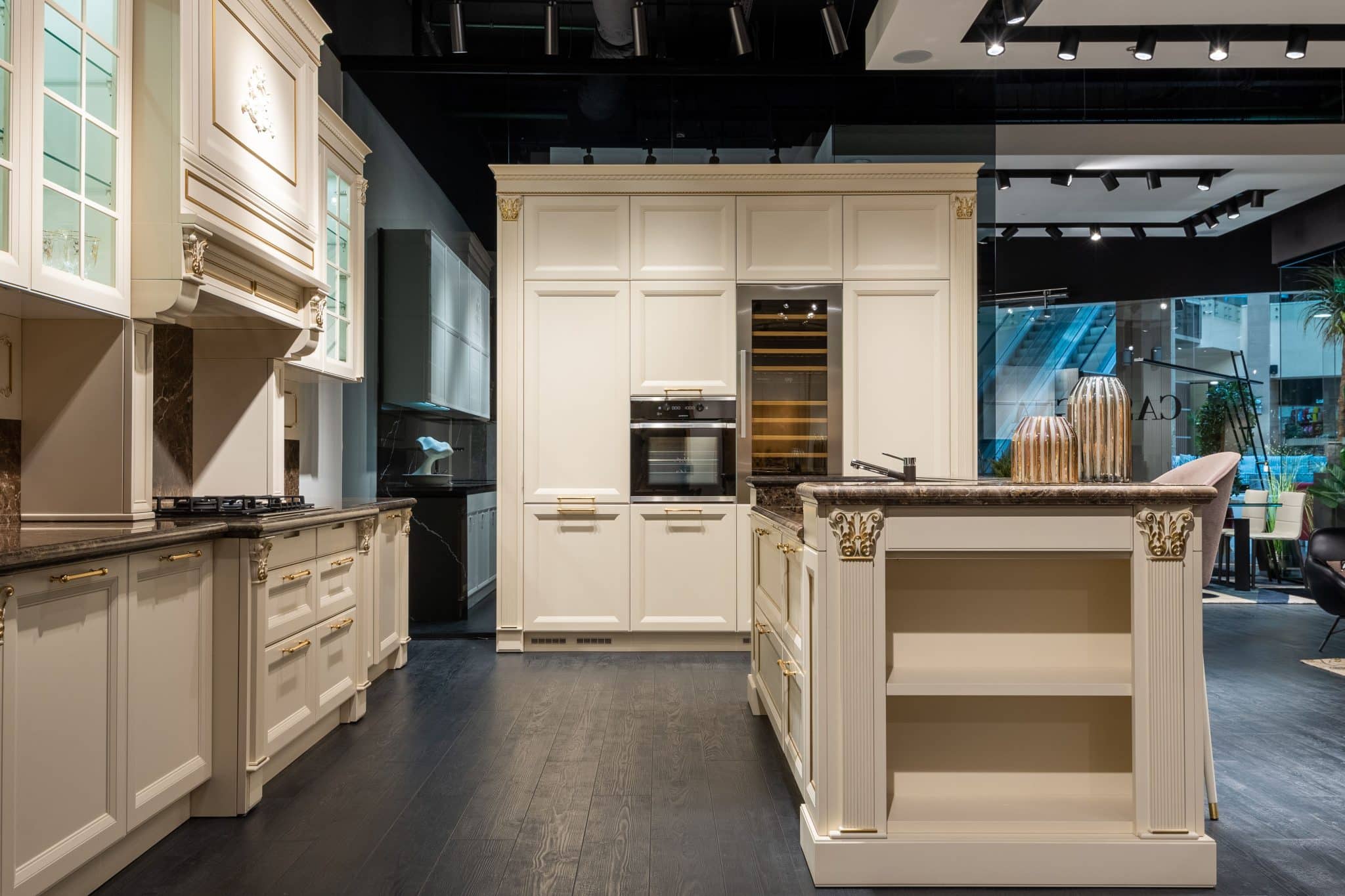
Bronze occupies a similar tier. Richer and darker in tone than brass, with an earthier, more antique character, it suits kitchens with a classical or heritage sensibility — cabinetry with raised panels, kitchens in older homes, or spaces where warmth and depth of material are the design strategy. Nickel finishes — satin or polished — sit at the cooler end of the spectrum and pair naturally with more contemporary cabinetry profiles: flat-fronts, handleless doors, or kitchens where the hardware is intended to read as crisp and architectural rather than decorative.
What all of these materials share, at the luxury tier, is the absence of compromise. The base material is not zinc. The finish is not a coating applied to disguise a cheaper substrate. What you see is what the object is made of — and that honesty of material is precisely what gives luxury cabinet knobs their authority in a space.
Knobs vs. Pulls: When To Choose Each
The choice between knobs and pulls is one of the most common questions in kitchen hardware specification, and the answer is more nuanced than personal preference alone.
Knobs are best suited to cabinet doors rather than drawers. The pulling action of a drawer benefits from the grip length of a bar or cup pull; a knob on a wide, heavy drawer requires awkward finger positioning and places uneven stress on the cabinet face over time. On cabinet doors, however, knobs excel — their compact footprint suits a wide range of door widths, they require only a single fixing point (simplifying installation), and in profile they read as quietly decorative, adding dimension to an otherwise flat surface.
Many of the most considered kitchens use a combination: knobs on upper and lower cabinet doors, bar pulls on drawers. This layering of forms — one compact and rounded, one linear and extended — creates visual rhythm across the cabinetry without introducing inconsistency, provided both pieces share the same finish and design family.
For those who want to explore this combination approach at the top of the market,Mi & Gei‘s luxury kitchen hardware collection offers both sculptural cabinet knobs and a full range of coordinating pulls in solid brass, bronze, champagne bronze, satin nickel, polished nickel, and carbon black — designed as a coherent system that works across the entirety of a kitchen rather than piece by piece.
Matching Knobs to Your Kitchen’s Design Language
The most important principle in selecting luxury cabinet knobs is coherence with the broader material palette. A knob is not chosen in isolation; it is chosen in relation to the countertop, the cabinetry finish, the flooring, and the lighting.
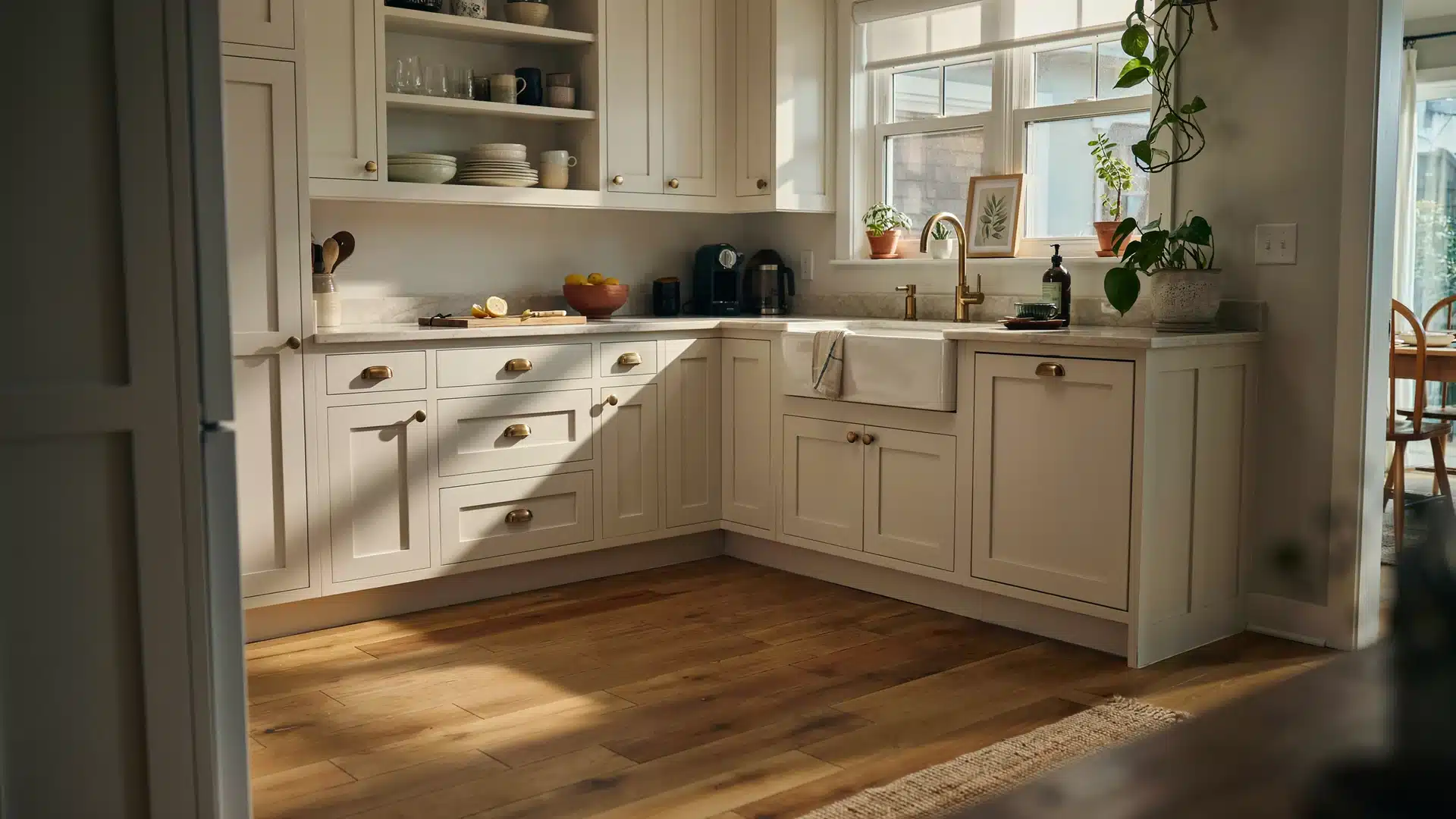
Brass knobs on white shaker cabinets remain one of the most enduring pairings in kitchen design — warm metal against cool white, traditional form against a clean ground. Brass against dark cabinetry reads as more dramatic and jewel-like. Bronze on natural timber cabinetry creates a harmonious tonal relationship, both materials occupying the warm, earthy register. Satin nickel on grey or sage cabinetry produces a more restrained, Scandinavian-influenced result. Carbon black knobs against white or off-white cabinets create graphic contrast that reads as bold and modern.
None of these is categorically correct — all depend on the full context of the space. What matters is that the decision is made in that context, with physical samples wherever possible, rather than from a product image viewed in isolation.
Frequently Asked Questions About Luxury Cabinet Knobs
What are luxury cabinet knobs made from? The finest luxury cabinet knobs are made from solid brass, solid bronze, or solid nickel — dense, corrosion-resistant metals that maintain their integrity over decades of use. Unlike standard hardware made from zinc alloys with plated finishes, solid metal knobs develop character with age rather than showing wear. Solid brass is particularly prized for its warmth, workability, and ability to take a range of beautiful hand-applied finishes.
Are cabinet knobs better than pulls for kitchen cabinetry? Both have their place, and the best kitchens often use both. Knobs are ideal for cabinet doors — they require only a single fixing point, suit a wide range of door widths, and add a compact decorative element to the cabinetry face. Pulls are generally better suited to drawers, where the additional grip length makes opening wide or heavy drawers more comfortable and ergonomic. Using knobs on doors and bar pulls on drawers within the same finish family is a time-tested approach in high-end kitchen design.
What finish should I choose for luxury cabinet knobs? The right finish depends entirely on the material palette of your kitchen. Brass suits warm-toned interiors with timber, stone, and soft whites. Bronze works well in kitchens with a classical or heritage sensibility. Satin nickel and polished nickel read as cooler and more contemporary, pairing naturally with grey, blue, or sage cabinetry. Carbon black creates bold graphic contrast, particularly against light-coloured cabinets. The most important rule is consistency — carrying a single finish throughout the kitchen creates cohesion and design intention.
How do I know if cabinet knobs are good quality? Weight is the most immediate indicator. Solid brass and bronze knobs have a noticeable density in the hand that zinc-alloy alternatives cannot replicate. Look also at the finish quality under direct light — premium finishes are even in tone and texture, without pitting or inconsistency. The fixing screw and thread quality matters too: a well-made knob will sit flush and stable on the cabinet face with no wobble. Finally, check whether the manufacturer specifies the base material explicitly; reputable luxury hardware studios are transparent about solid brass or solid bronze construction.
Can I mix cabinet knobs and pulls in the same kitchen? Yes — and in well-designed kitchens this is common practice. The key is to ensure that the knobs and pulls share the same finish and are drawn from the same design family, so they read as a considered system rather than mismatched pieces. A sculptural brass knob paired with a slender brass bar pull from the same collection creates visual rhythm and hierarchy across the cabinetry without producing inconsistency.
How many cabinet knobs do I need for a kitchen? Count the number of cabinet doors in your kitchen — each requires one knob or pull. Drawers are typically fitted with pulls rather than knobs, so count those separately. For a medium-sized kitchen with twelve cabinet doors and six drawers, you would typically need twelve knobs and six pulls. Ordering ten to fifteen percent extra is advisable to allow for any breakage during installation or future replacements.