What Your Backyard Layout Does to Pollinators Without You Realizing It
The neighbor’s yard is right next to yours, and it seems pollinators love that guy. They’re always in his yard.
And no, that’s not crazy, because what other reason would there be for the bugs to forget your yard exists and spend all their time in his?
A daffodil is a daffodil, right?
The thing is, pollinators won’t just fly on ANY daffodil they see. If you have a stone path that gets scalding hot by noon, the bee will feel that heat when it gets close to the flower, so it will avoid it.
Your backyard might actually be repelling pollinators, no matter how beautiful it looks and how many flowers it has. It’s not you, it’s your backyard.
Why Pollinators Avoid Some Parts of the Yard
Wow, that’s some backyard you have there. The grass is so full and green, the flower beds with all their colors, it kind oflooks like it belongs in a magazine.
You even built a porch! Not just any porch, though!
Yours is high-quality and perfectly in line with the weather and the climate.
You’re aware of the fact that a porch builder in Spring Hill TN will have to adjust/build your porch for hot and humid summers, which means rot/water-resistant materials, and the footings won’t have to be deep since there isn’t a major frost-related risk. The porch will also need to be designed for airflow and shade, and will ideally have to be closed off to help deal with insects.
But a porch builder in Anchorage AK, will have to account for extremely cold and long winters, which means the footings will need to be frost-protected and deep. The porch will need to be designed in a certain way to deal with snow loads, and materials used will need to be ice-resistant to deal with freeze-thaw damage each year. The porch will also have to be enclosed and properly insulated to deal with the freezing Alaskan winds.
But with all the bad, there are a few (or no) termites/insects to deal with; so yeah, that’s something.
|
But don’t worry, there are bees in Alaska; both native wild bees and managed honey bees; but the seasons are shorter here. |
|---|
So, why can’t bees appreciate all you have, too?
As it turns out, bees and pollinators don’t care that your backyard looks great in pictures.
You know, since they aren’t on Instagram or Pinterest.
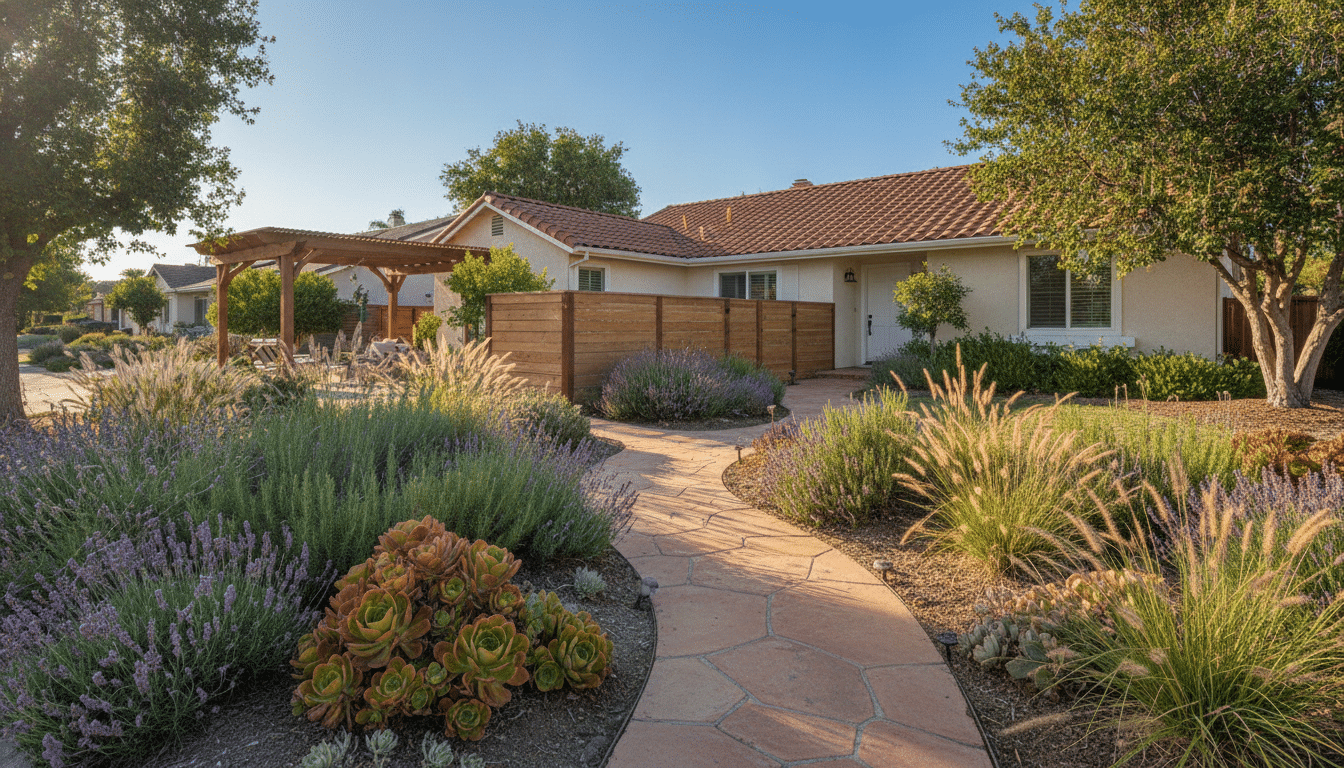
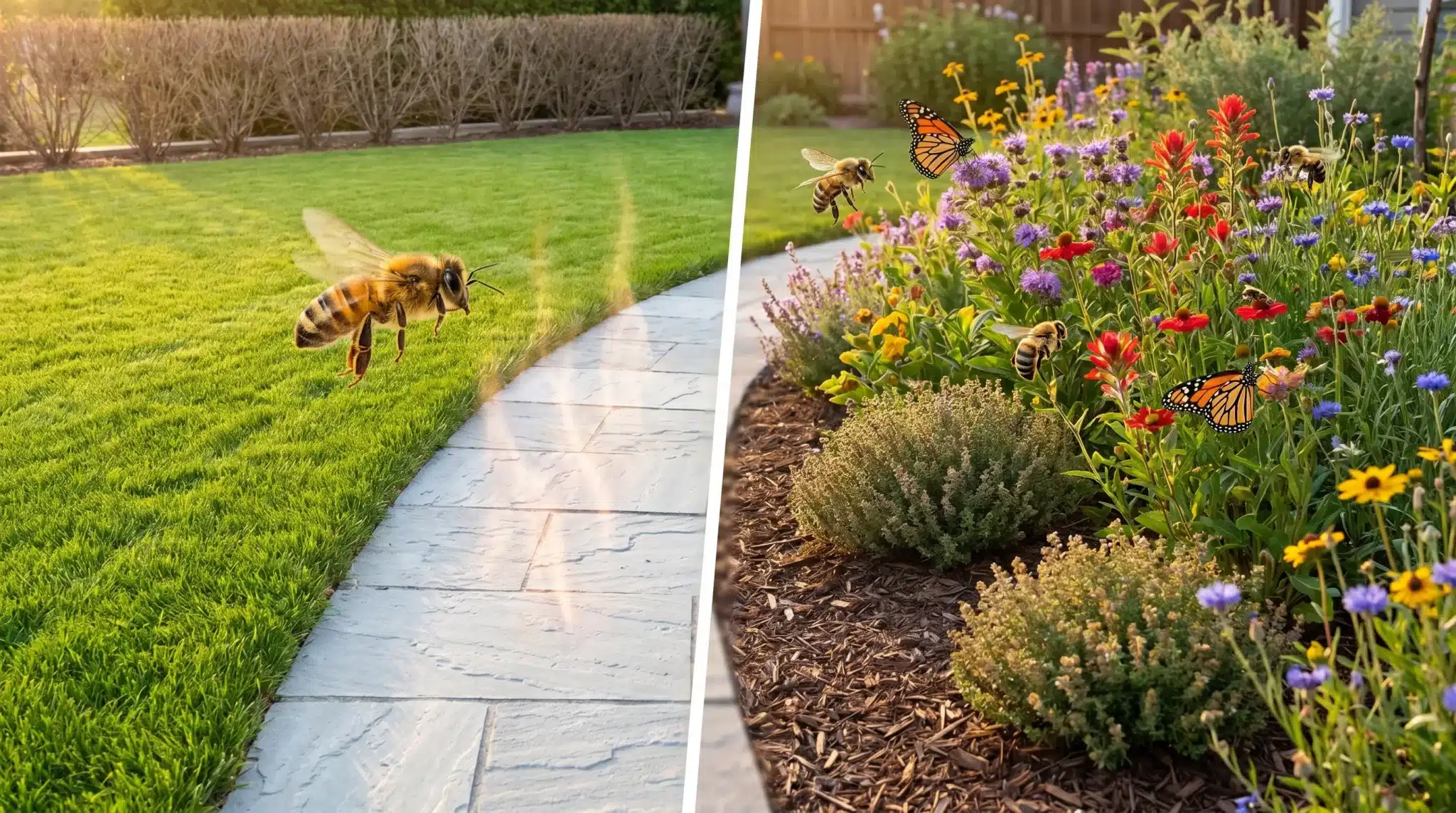
What they care about is that your stone path is too hot for them to get close to. That heat that rises off the ground creates a wall of hot air, and many pollinators won’t go near it. It’s the same with gravel walkways and artificial turf. Even if you have a big area of exposed hardscape, it’s enough to make the pollinators hate your backyard.
But the surface isn’t the only issue.
That heat reflecting off them hits the flowers that are close by, so they dry out faster than the rest of your garden. As the season goes on, pollinators figure out that flowers that are next to hot surfaces aren’t as tasty, so they start avoiding them.
Wide open spaces are also an issue.
If you’ve got a huge lawn or a part that’s covered with gravel, a bee has to travel a long distance before it has a chance to rest and get away from direct sunlight. You wouldn’t want to bake in the scorching sun, right? Well, pollinators don’t like that, either.
They’ll always go for a space that has some soft shade, where they can be comfortable and eat in peace.
A flower bed that’s surrounded by mulch or some low shrubs is excellent because there’s nothing there to reflect heat, and there’s enough shade to make the bugs happy.
Features in Your Backyard That Break Pollinators’ Paths
Look at the bugs flying around. It looks random, doesn’t it?
Like they’re just out there, flying around happily, and if they happen to stumble upon a flower, great!
That’s lunch.
But believe it or not, none of this flying about is random. Those little bugs have actual routes they follow day after day, and once they figure out which route works, they stick to it.
That is, until something in somebody’s yard breaks that path, like a tall fence, for example.
Most pollinators fly low to the ground because that’s where they’re the safest from birds and wind.
If you put up a tall fence, it’ll block them, and they’ll either have to turn around or fly up. Neither is great. Scattered flower beds are also an issue. If you have big blobs of grass between flower beds, that’s another thing that breaks the paths for pollinators. A butterfly might absolutely love the flowers in your flower beds, but it’s not likely that it’ll risk flying 20 feet across the lawn for them.
A bird could easily come along and snatch it, so it’s not worth it.
Speaking of large patches of grass, lawns are a huge issue. Native plants are the main source of food for pollinators, and turf grass is anything but native.
Conclusion
What do you do now? Tear out your fence? Rip out the stone path?
You don’t have to do anything that drastic, but look around your yard and see where you can make small changes. If you have several flower pots in every corner, move them together so they create a path. Add some shade in spots where there isn’t any, and turn off that porch light so moths don’t go crazy.
None of this will cost you money, and it’ll take minutes, if not seconds, to do.
Remember that, without pollinators, humans will go extinct because we won’t have anything to eat.
So, doesn’t it make sense to help them out?