We spend up to 45 minutes in our bathrooms every day, so adding greenery to this space makes sense. However, they are notoriously difficult spaces for standard houseplants.
While many people assume the high humidity mimics a lush rainforest, the reality is a chaotic cycle of intense heat, sudden drafts, dark corners, and stagnant air. Without a deliberate strategy, your green oasis will quickly turn into a collection of rotted roots and yellowing leaves.
Creating a successful indoor garden in your washroom requires balancing moisture levels with the specific botanical needs of the plants. If you match the right species to your light levels and configure your layout to protect your home infrastructure, you can maintain a stunning jungle that actually cleans your air.
Assessing Your Light and Humidity Microclimates
Before purchasing any common houseplants, you must realize that not all bathrooms share the same climate. A small, windowless powder room behaves differently from a master bath with a large frosted window.
Most tropical plants require bright, indirect sunlight to process moisture efficiently. If your space lacks natural light, you will need to supplement with water-resistant LED grow lights set on a tight timer to prevent soil from souring.
Humidity is excellent for certain flora, but persistent dampness without airflow is a death sentence. When warm steam settles on leaves without evaporating, it invites powdery mildew and fungal infections.
You can combat this by tracking how long moisture lingers on your mirrors after a shower. If your walls stay damp for more than thirty minutes, your plants will likely suffer from suffocating root systems long before they ever dry out.
Selecting Resilient Species and Upgrading Ventilation
Surviving the bathroom environment requires plants with specialized evolutionary traits. You want to avoid finicky varieties that drop leaves at the slightest temperature shift. Instead, focus on varieties that naturally thrive on forest floors where light is scarce and moisture is heavy.
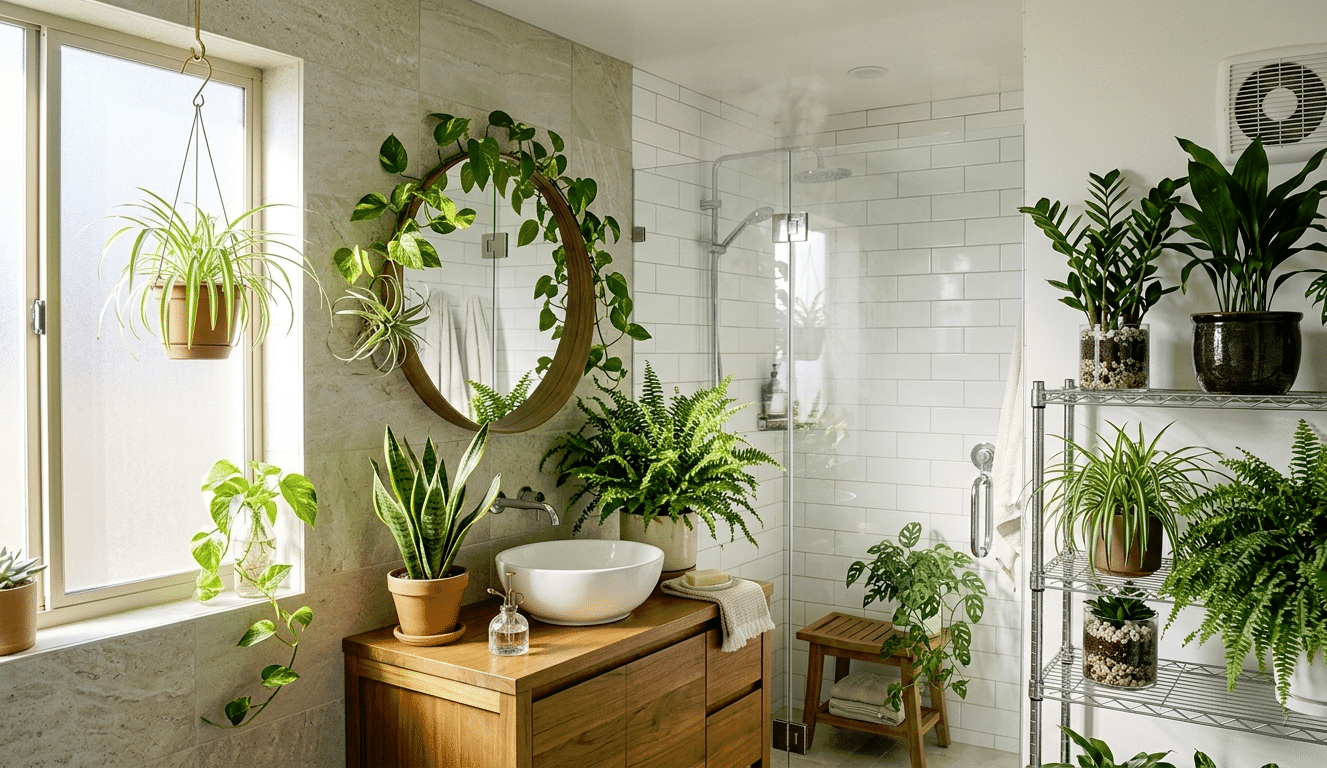
Excellent architectural choices include moisture-loving options like Boston ferns and spider plants, which handle steam beautifully. You can also rely on hardy vines and snake plants to tolerate rooms that lack large windows.
Proper mechanical ventilation is the most critical element of keeping these plants healthy while safeguarding your property. Stagnant, humid air trapped in tight spaces creates a breeding ground for structural rot and ruins your drywall. Running a high-efficiency exhaust fan during your shower and for 20 minutes afterward removes excess airborne moisture, keeping the environment perfectly balanced for both your leaves and your home.
If your current fan struggles to clear the steam or your tile shows signs of persistent dampness, reviewing a comprehensive bathroom remodeling guide can help you plan necessary upgrades like modern ventilation systems or moisture-resistant backing materials that protect your walls. These changes will benefit the greenery and make your bathroom better suited to its human occupants.
Windowless bathrooms often mean homeowners struggle to keep simple greenery alive, and poor environmental planning is to blame. If you are noticing peeling paint or mold along your grout lines, your plants are likely suffering right along with your home infrastructure. Upgrading your airflow layout instantly corrects this issue, giving your flora the fresh oxygen exchange it needs to process nutrients while keeping your bathroom structurally sound.
Smart Hardware Layouts and Soil Engineering
Standard indoor potting soil holds far too much water for a high-humidity room. To prevent the substrate from compacting and rotting your roots, you must manually adjust your media mix.
Blend your standard potting soil with 30% perlite or coarse orchid bark to accelerate drainage. This structural modification creates large oxygen pockets around the root systems, allowing them to breathe even when the bathroom air is thick with steam.
Your physical layout also dictates how well your plants and bathroom survive together. Never place drainage saucers directly onto wood vanities or unsealed stone counters, as trapped condensation will permanently discolor those surfaces. Instead, elevate your greenery safely by using smart hardware choices.
Consider these structural setup options for your greenery:
- Rustproof wire shelves allow maximum air circulation around the base of your pots
- Stainless steel ceiling hooks anchored directly into structural studs keep trailing vines clear of splash zones
- Suction cup window ledges maximize available light for smaller succulents without cluttering your countertop space
Long-Term Maintenance and Cleanliness Habits
Bathroom plants require a unique cleaning routine because of the aerosolized products we use daily. Airborne particles from hairspray, body wash overspray, and deodorant create a fine, sticky film on nearby surfaces. This film quickly coats your plant leaves, blocking their pores and stalling photosynthesis entirely.
Wipe the leaves of your plants with a damp microfiber cloth once every month to keep them clean. Additionally, always check the top two inches of soil with your finger rather than following a strict calendar watering schedule. The natural humidity from your daily shower routinely cuts your manual watering frequency in half, making overwatering the number one killer of bathroom greenery.
For more tips on optimizing small household spaces, explore our recent guides and posts on interior design, gardening, and much more besides.