I’ll be honest, my first tomato garden was a chaotic mess.
Plants crammed together, pests everywhere, and yields that made me question my entire life. Then I found a technique: layout companion planting tomatoes.
Turns out, where you position your tomatoes and what you plant alongside them can dramatically boost growth, naturally repel pests, and maximize your harvest without chemicals. It’s not just about throwing seeds in the ground and hoping for the best.
You need a strategy, a layout that works with nature instead of against it.
In this blog, you’ll learn how to design a companion planting layout that upgrades your tomato patch into a productive ecosystem.
What is Companion Planting?
Companion planting is the practice of growing specific plants together to benefit one another.
It’s based on the idea that certain plants, when positioned near each other, can enhance growth, repel pests, attract beneficial insects, or improve soil health naturally.
The core principle is simple: plants have different needs and offerings. Some pull nutrients from deep soil layers while others feed closer to the surface.
Some emit scents that confuse or repel pests, while others attract pollinators that help your entire garden thrive. When you pair them strategically, they work as a team rather than competitors.
Benefits of Tomato Companion Gardening
Tomato companion planting helps create a more balanced and productive garden by combining tomatoes with plants that support their growth.
But the right plant combinations can improve garden space usage, attract helpful insects, support soil health, and create better growing conditions.
- Pest control: Certain plants naturally deter insects that would otherwise destroy your tomatoes. No sprays needed.
- Improved pollination: Flowering companions attract bees and butterflies, which increases fruit set across your garden.
- Enhanced growth: Some plants fix nitrogen in the soil or provide shade and support, helping tomatoes grow stronger and healthier.
- Space efficiency: You can grow more in less space by layering plants with different root depths and growth habits.
I have seen companion planting turn struggling gardens into abundant ones. It’s not magic; it’s just smart positioning and understanding how plants naturally interact.
Best Companion Plants for Tomatoes
When I started pairing my tomatoes with the right companions, I noticed fewer pests, healthier plants, and bigger harvests.
Here’s what actually works.
Herbs: Basil, Thyme, Oregano
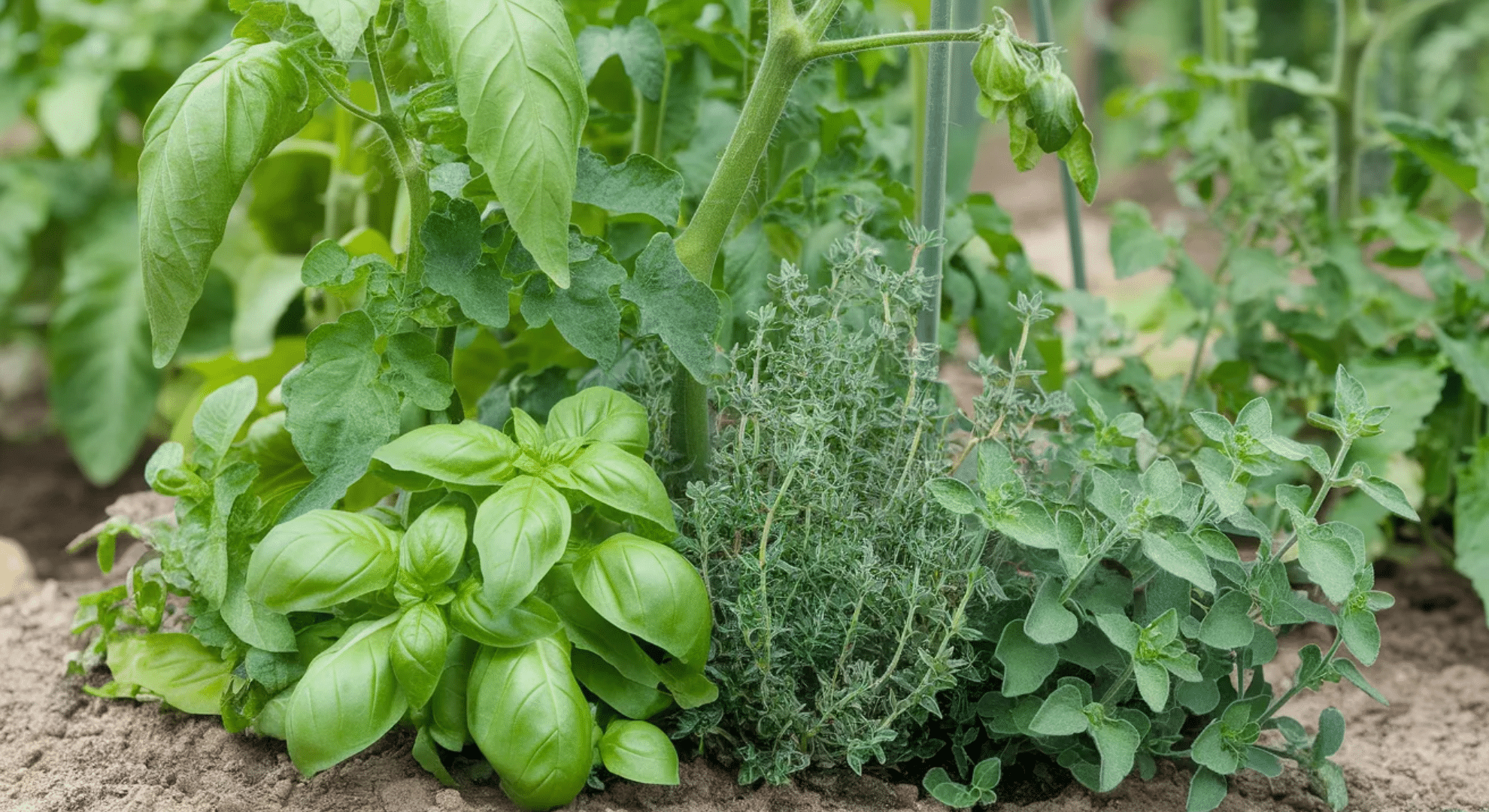
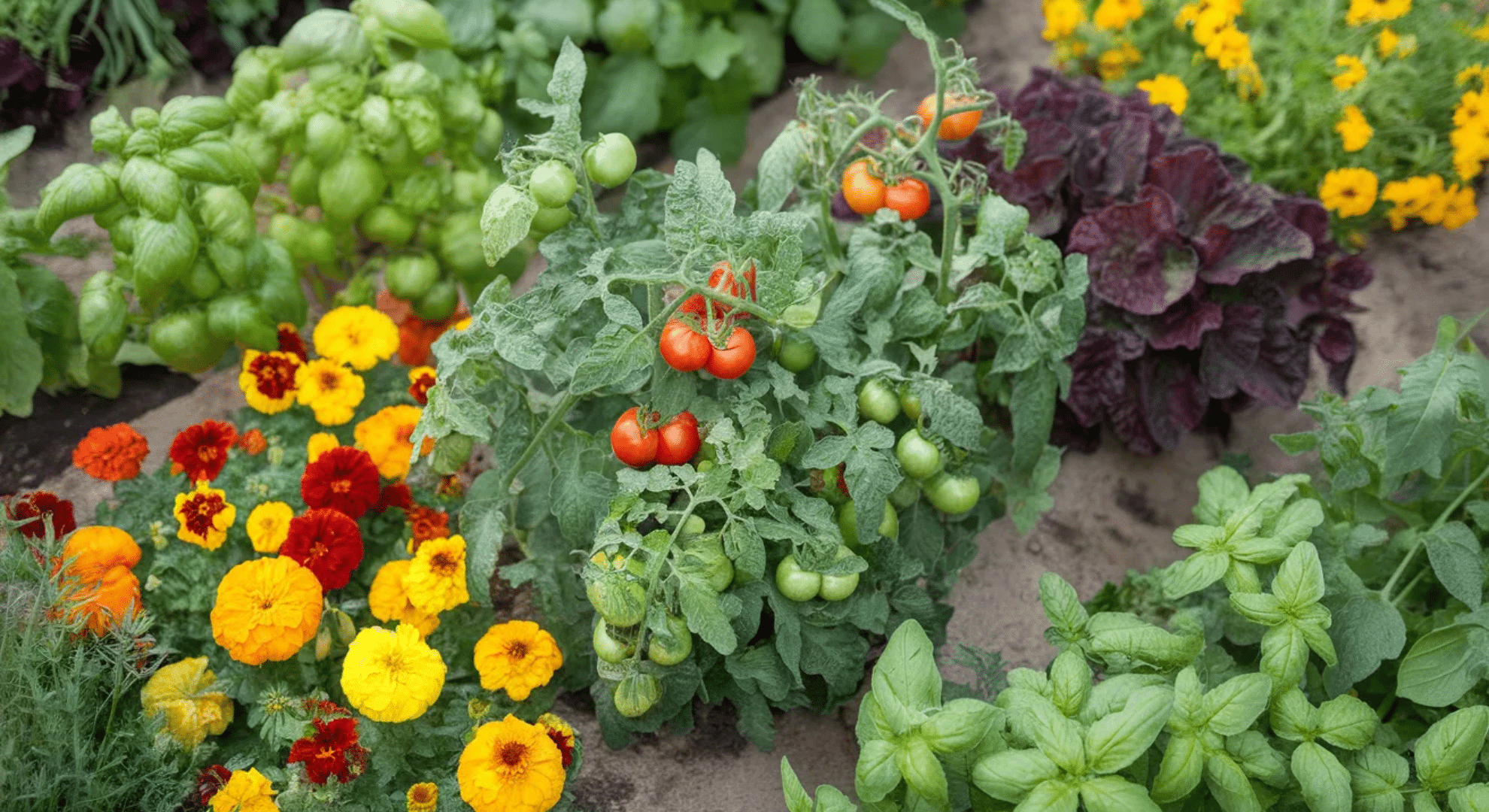
Basil is the classic tomato companion for good reason. It repels aphids, whiteflies, and hornworms with its strong scent.
Thyme works as ground cover and keeps away cabbage worms and tomato hornworms. Its low-growing habit means it won’t compete for sunlight.
Oregano attracts beneficial insects like lacewings and parasitic wasps that hunt down pests naturally. Plus, it’s a perennial that comes back year after year.
Flowers: Marigolds, Nasturtiums, Cosmos
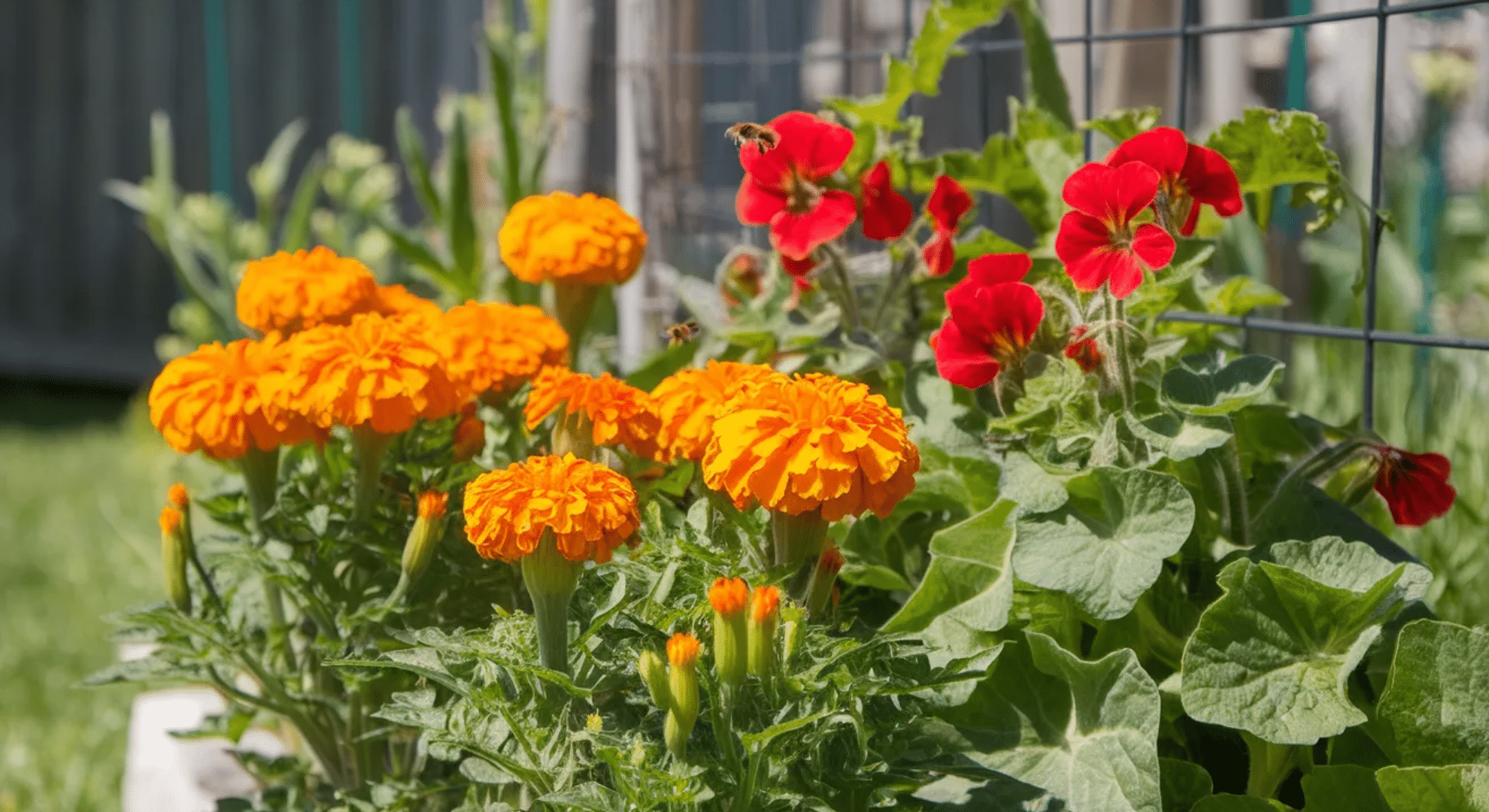
Marigolds are pest-fighting powerhouses. Their scent repels aphids, whiteflies, and nematodes in the soil. Plant them around your tomato bed as a protective barrier.
A 2019 Newcastle University trial found that tomatoes grown alongside French marigolds saw slower whitefly population growth, an effect tied to a compound called limonene that the marigolds release into the air.
Nasturtiums act as trap crops; aphids love them so much they’ll skip your tomatoes entirely. They’re essentially a sacrificial decoy.
Cosmos attract pollinators and beneficial predatory insects. Their tall, airy growth doesn’t shade tomatoes but brings in the good bugs you want patrolling your garden.
Vegetables: Beans, Onions, Carrots
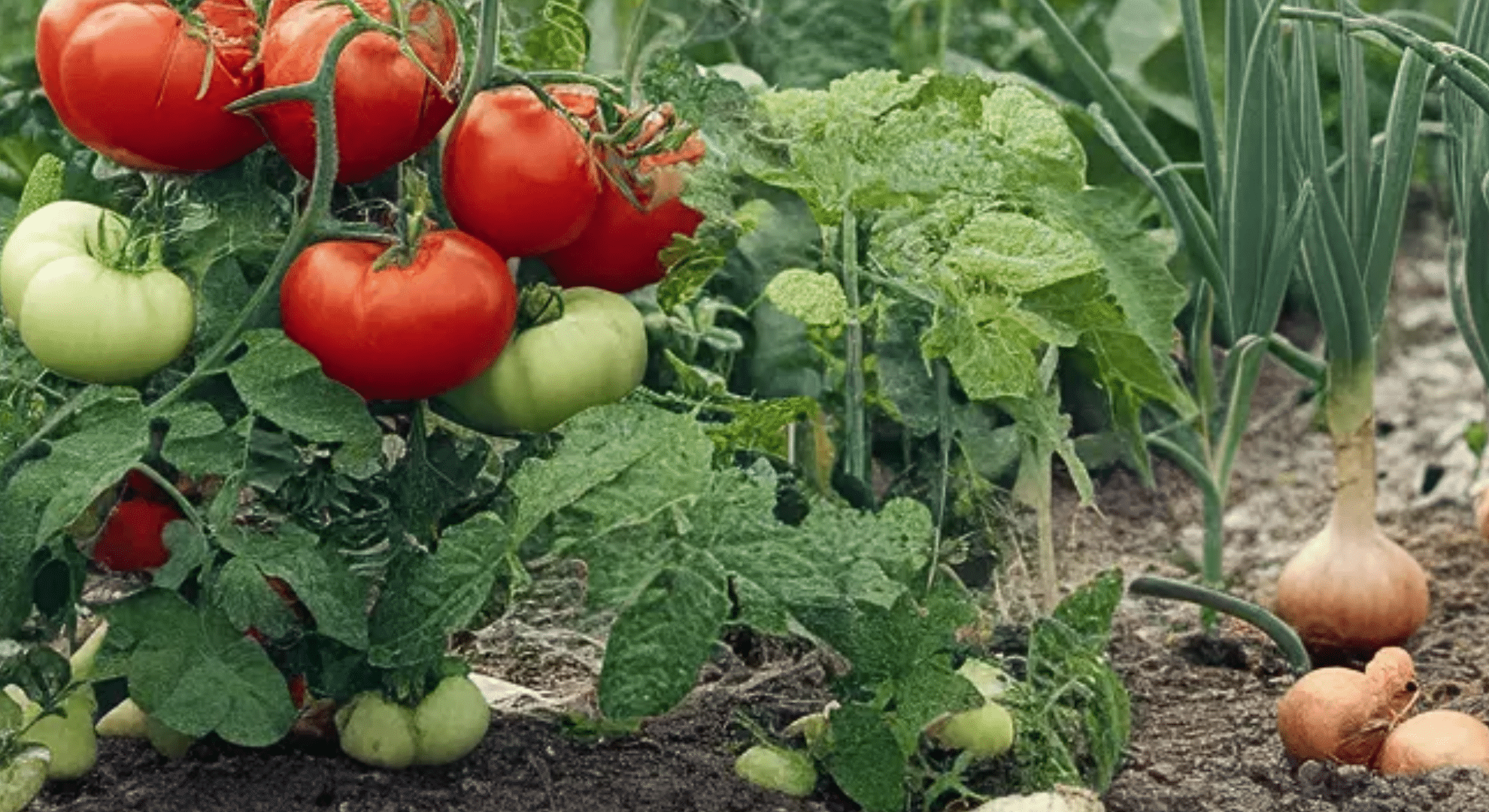
Beans fix nitrogen in the soil, which is helpful for tomatoes. Bush beans work better than pole beans since they won’t climb your tomato stakes.
Onions repel aphids and spider mites with their pungent smell. Their shallow roots won’t compete with tomato roots either.
Carrots grow deep while tomatoes grow wide, so they share space efficiently without fighting for nutrients. You maximize every square foot of garden bed.
Plants to Avoid Growing Near Tomatoes
Not every plant makes a good partner for tomatoes. Some can compete for nutrients, attract similar pests, or release compounds that may affect tomato growth.
So, just avoid placing these plants too close to tomato beds to maintain healthier plants and better harvests.
| Plants to Avoid | Why Avoid Growing Near Tomatoes |
|---|---|
| Fennel | Releases compounds that may slow the growth of nearby garden plants. |
| Walnut Trees | Produces juglone, a natural chemical that can affect tomato growth. |
| Corn | Shares pests with tomatoes, including tomato fruitworms and other insects. |
| Potatoes | Can spread similar diseases, especially fungal issues, between crops. |
| Cabbage Family Crops | May compete with tomatoes for nutrients and garden space. |
| Black Walnut Shrubs | Their roots can release growth-inhibiting chemicals into the soil. |
| Dill (when mature) | Large mature plants may compete for space and nutrients near tomatoes. |
Layout Companion Planting Tomatoes Techniques
The way you arrange your plants matters just as much as what you plant. I have tested different layouts over the years, and these strategies consistently give me the best results:
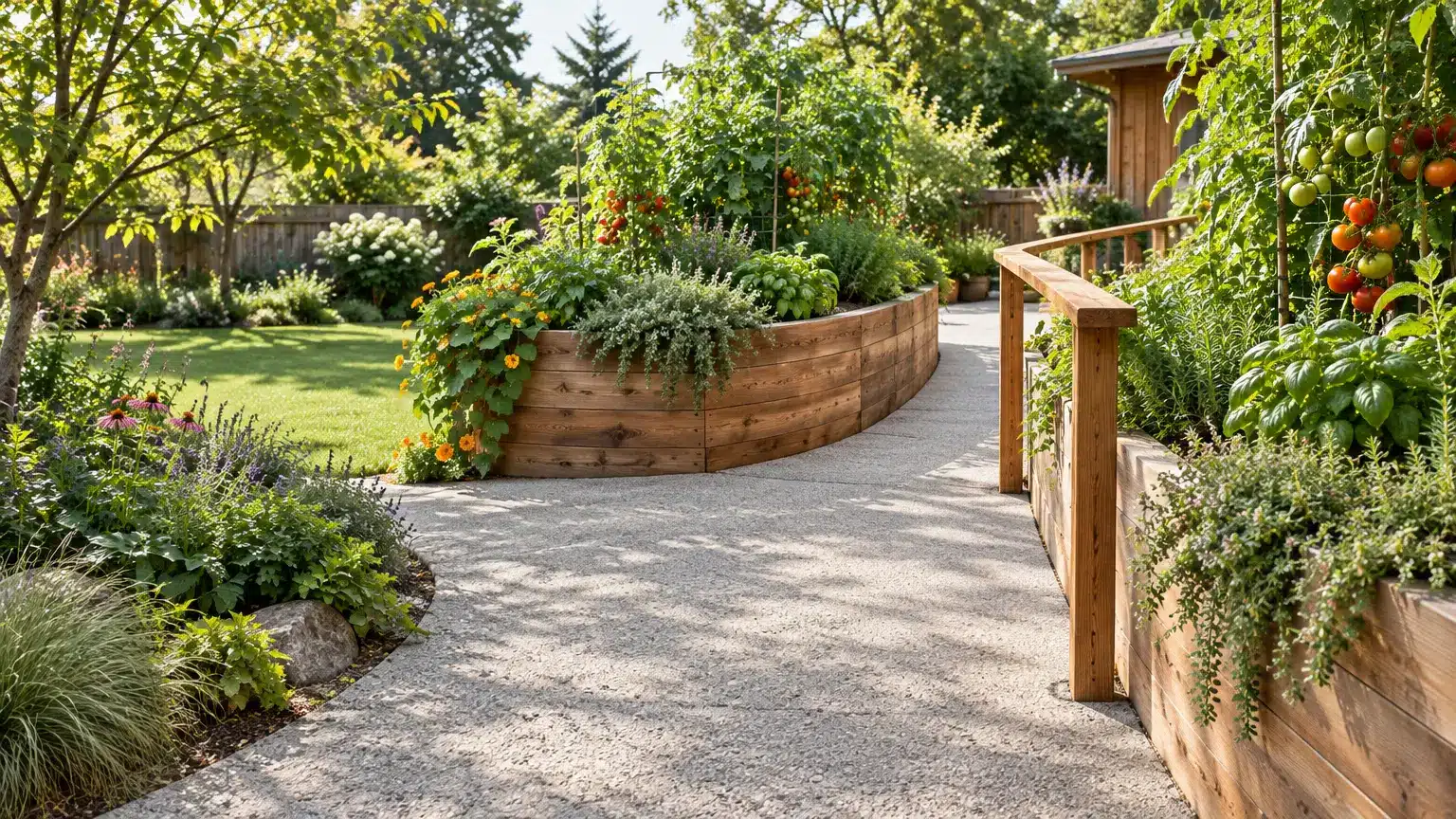
Raised Beds
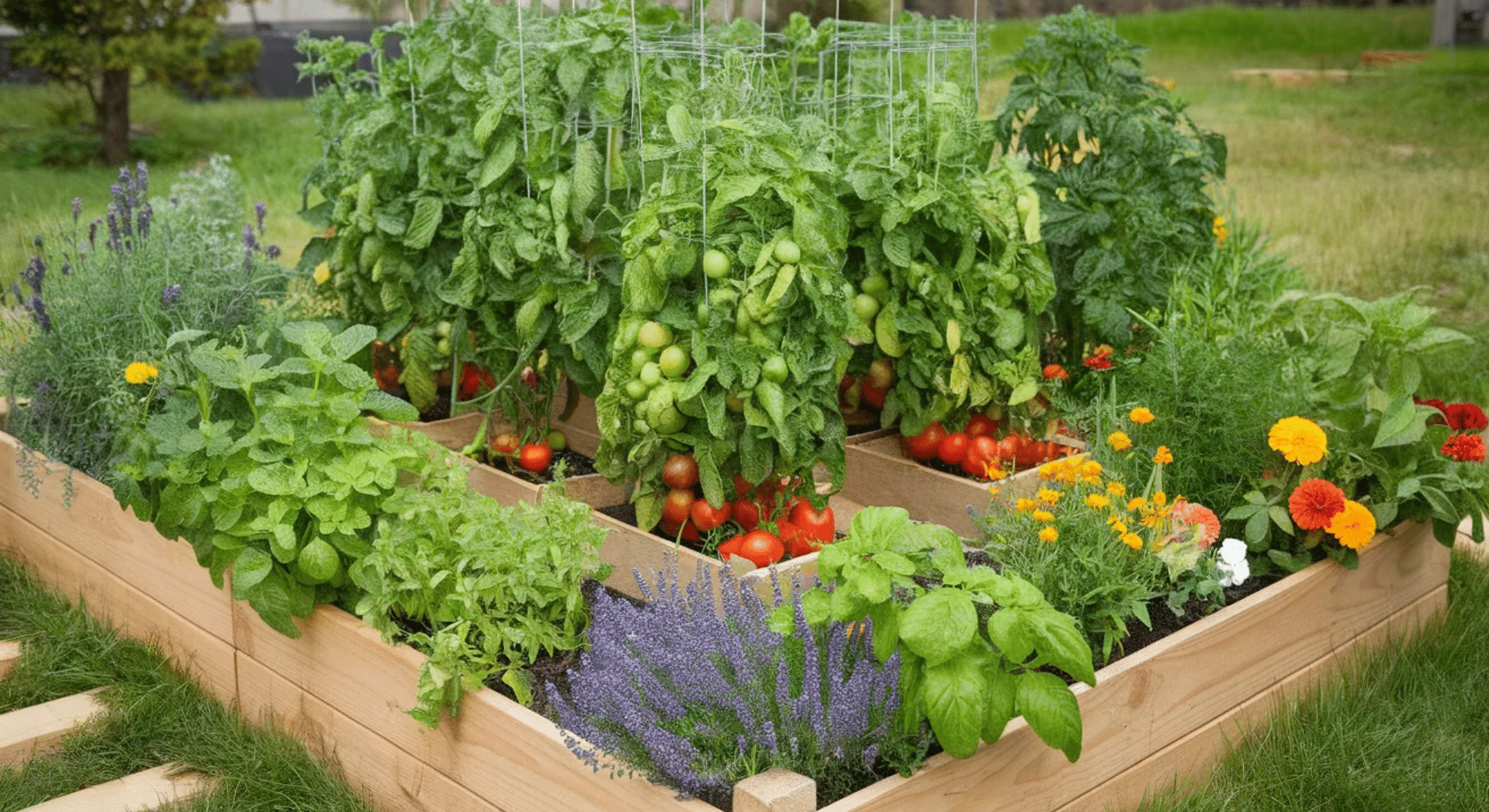
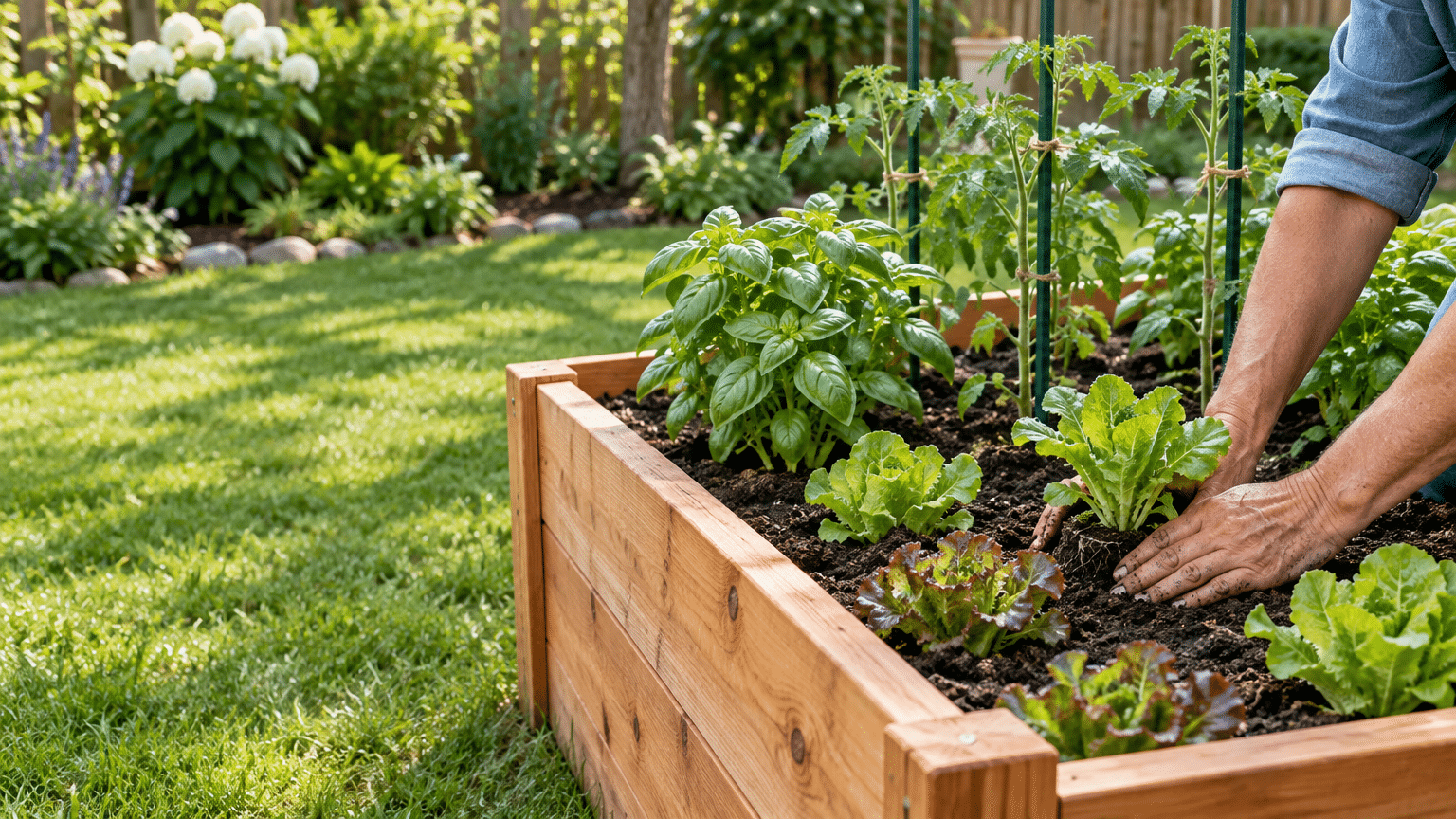
In raised beds, position tomatoes down the center or back if the bed is against a fence. This gives them height without shading other plants.
Plant basil and marigolds around the base of each tomato; they’ll fill the gaps and provide pest protection right where you need it.
Edge your raised bed with carrots or onions. Their shallow or narrow growth won’t compete with tomato roots, and you’re using space that would otherwise go to waste.
Row spacing guidelines for raised beds can help you decide how wide to make each section before you start placing companions.
Vertical Space
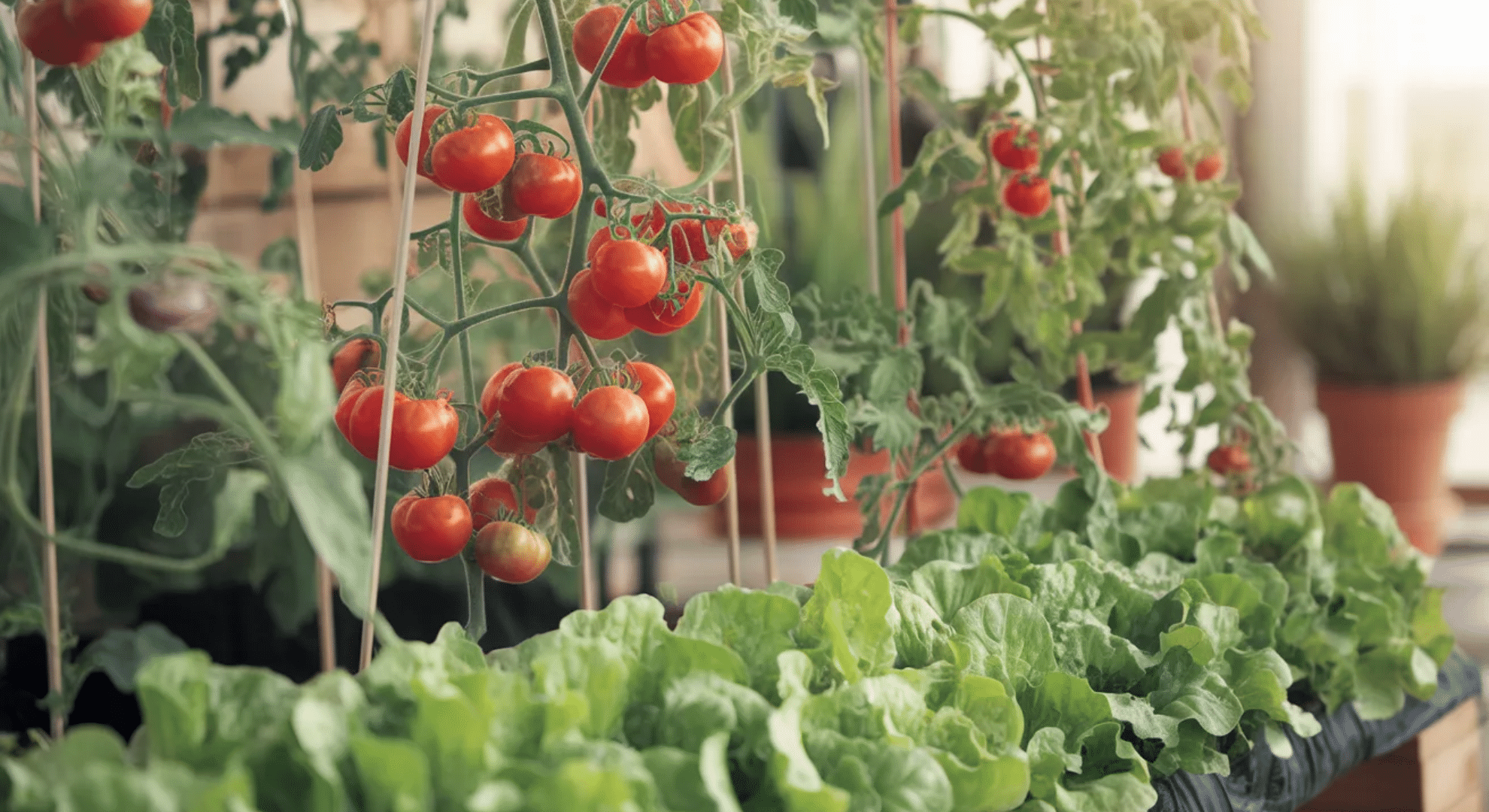
If you’re growing tomatoes on stakes or trellises, plant low-growing companions underneath.
Thyme, oregano, and lettuce work perfectly here; they benefit from the light shade tomatoes provide during hot afternoons.
Beans can grow on their own trellis next to tomatoes. Just keep them slightly lower so they don’t block sunlight from reaching your tomato leaves.
Triangular Planting

Instead of planting tomatoes in straight rows, arrange them in triangular patterns. This increases airflow between plants, reduces disease risk, and gives you more planting spots for companions.
Place one tomato at each point of the triangle, then fill the center with basil or marigolds. You get better coverage and healthier plants.
Shade Management
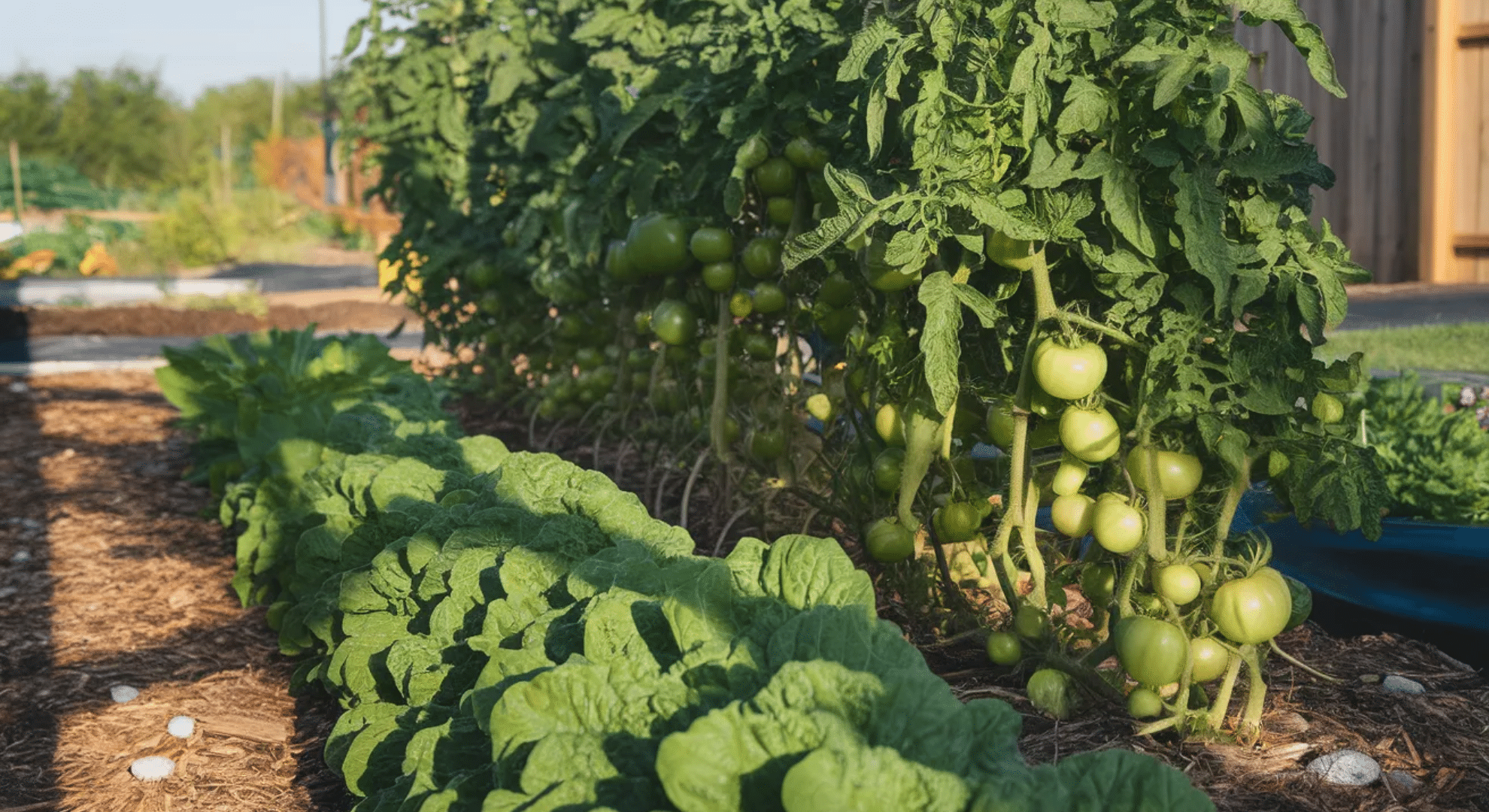
Tomatoes grow tall and create natural shade on their north side. Use this to your advantage: plant lettuce, spinach, or cilantro there during summer.
These cool-weather crops bolt quickly in full sun, but tomato shade extends their harvest window.
Position your tomatoes on the south side of the bed specifically for this reason. You’re essentially creating microclimates that let you grow more variety throughout the season.
How to Start Companion Planting
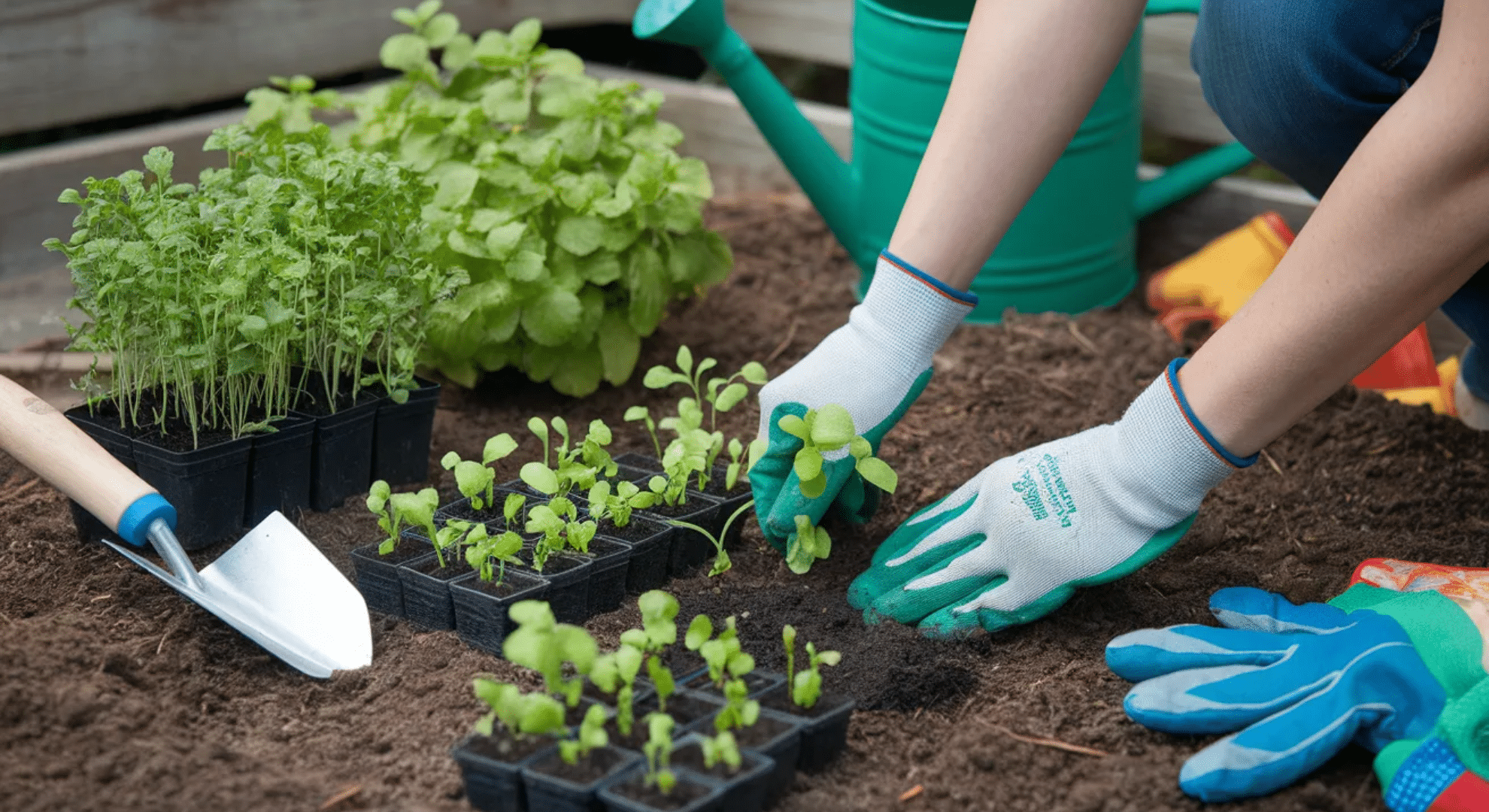
Starting a companion garden begins with understanding how different plants interact with each other.
So, follow these simple steps to choose the right companions, arrange your garden properly, and create a healthier growing environment.
- Choose the right companion plants: Select plants that grow well with tomatoes, such as basil, marigolds, carrots, lettuce, and onions. Consider their growth habits, sunlight needs, and space requirements before planting.
- Plan your garden layout: Map out where each plant will grow before adding them to the soil. Place tall tomato plants where they will not block sunlight.
- Check plant spacing requirements: Leave enough room between tomatoes and companion plants to improve airflow and reduce the risk of diseases.
- Group plants with similar needs: Combine plants that require similar amounts of sunlight, water, and soil conditions.
- Add flowers for beneficial insects: Include flowering companions like marigolds or nasturtiums to attract pollinators and helpful insects that support a balanced garden ecosystem.
- Prepare healthy soil: Improve the soil with compost or organic matter before planting. Nutrient-rich soil gives plants a stronger foundation for growth.
- Monitor plant growth regularly: Watch for signs of pests, diseases, or overcrowding throughout the season. Adjust watering, pruning, or plant placement when needed.
Working from a beginner-friendly raised bed layout first makes it easier to see where companion plants will actually fit once the main crops are in place.
Tomato Garden Companion Planting Guide by Space
The best tomato companion planting layout depends on the space available and the growing method you choose.
| Garden Space | Recommended Companion Planting Layout |
|---|---|
| Small Balcony or Patio | Grow tomatoes in containers with compact companions like basil, parsley, and marigolds to save space. |
| Small Backyard Garden | Use raised beds with tomatoes paired alongside lettuce, carrots, onions, and herbs for efficient planting. |
| Medium Garden Area | Create organized rows of tomatoes with flowers, herbs, and vegetables placed around them for better airflow. |
| Large Vegetable Garden | Combine tomatoes with multiple companion crops while rotating planting areas to maintain soil health. |
| Container Garden | Pair one tomato plant with small herbs or flowers that share similar sunlight and watering needs. |
Common Tomato Companion Gardening Problems and Fixes
Even with the best companion planting strategy for tomatoes, problems pop up. I have dealt with most of these issues myself, and here’s how you can fix them quickly.
- Yellowing tomato leaves: Check for nitrogen deficiency. Add compost tea or fish emulsion to boost nutrients without harming companions.
- Stunted growth despite good companions: Thin out plants to improve airflow and reduce root competition.
- Pests still attacking tomatoes: Some companion plants take time to establish their protective effects. Add row covers temporarily while companions mature.
- Companion plants overshadowing tomatoes: Prune aggressive growers like oregano and basil regularly to keep them from blocking sunlight.
- Wilting in hot weather: Companions like lettuce and spinach can’t handle extreme heat even with tomato shade. Replace them with heat-tolerant options like peppers or eggplant.
Don’t get discouraged if your first attempt isn’t perfect. Because companion planting improves as you learn what works in your specific climate and soil conditions.
Adjust your layout each season based on what you observe.
Conclusion
I have watched my tomato garden upgrade from a chaotic mess to a successful ecosystem using layout companion gardening strategies.
The difference is night and day when you position plants intentionally instead of randomly.
Start small if you need to. Pick three companions this season and see what happens. The beauty of this approach is that it gets better each year as you learn what thrives in your specific garden conditions.
Try these layout companion planting tomatoes in your own garden and share your results, favorite plant combinations, or growing tips in the comments below.
Frequently Asked Questions
Can Tomatoes and Cucumbers Grow Well Together?
Tomatoes and cucumbers can grow together, but they need enough spacing and airflow because both are heavy feeders and may share disease risks.
How Many Companion Plants Should I Grow Around One Tomato Plant?
A tomato plant can grow well with two to four compatible companions like basil, marigolds, or carrots without causing overcrowding.
Should Companion Plants Be Planted Before or After Tomatoes?
Most companion plants can be added at the same time as tomatoes, but some flowers and herbs can be started earlier for better establishment.
Can Companion Planting Improve Tomato Flavor?
Companion plants may support healthier tomato growth, but flavor depends mainly on variety, sunlight, watering, soil quality, and growing conditions.