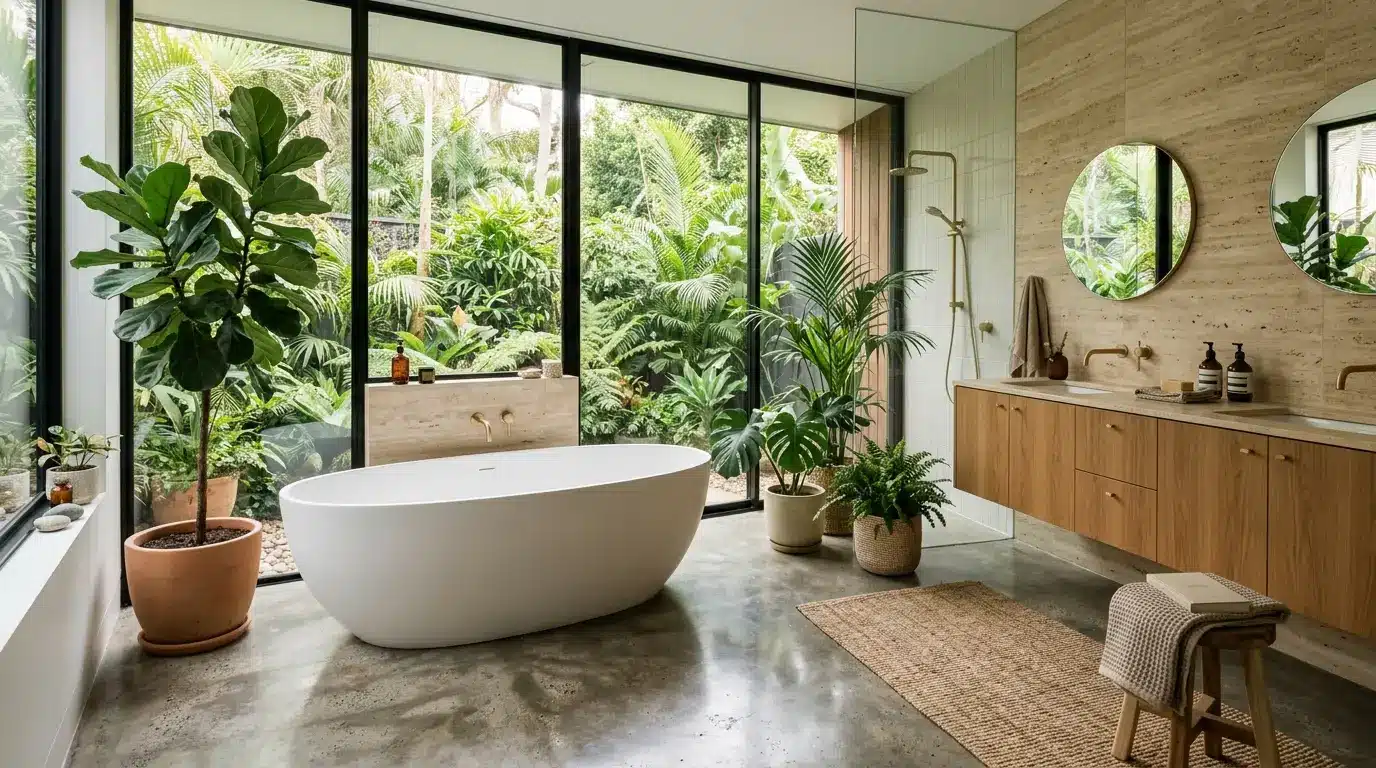
The bathroom can be more than just a space for all the functional stuff we do every day. When using the correct colours, materials, lighting and plants your garden can become a soothing space that mimics nature. A natural bathroom design takes ideational features from the outdoors, such as plants and stones, while still keeping safety, accessibility, durability and easy maintenance in mind.
Creating such an atmosphere does not require a spacious room or an expensive makeover. Using plants, colours from the earth or enhancing natural light can be small tweaks that make a huge difference. Bigger changes could include flooring, storage, shower design or ventilation. The balance is between materials and features that can cope with moisture (and people) but are still visually warm.
What Is Natural Bathroom Design?
Bathroom natural design is often found in biophilic or nature-inspired interiors. It has elements that are commonly found in nature even as trees and wood tones, stone textures, soft greens, natural light and organic shapes.
The idea is to not have your bathroom looking like a garden. The design should be able to create a comfortable connection without losing practicality. When it comes to the bathroom, a space is still required with cleanable surfaces, slip-resistant flooring, as well as fixtures to support daily habits.
In a good natural bathroom, the palette is simple and there are just a few chosen materials. An excessive amount of patterns or accents can lead to a cluttered atmosphere. Less is more – this approach generally results in a tranquil and timeless effect.
Working With Natural Colours to Create a Restful Space
One of the easiest ways to bring a feeling of outdoors into your bath area is through colour. Earthly colors, including warm beige, sand, and cream shades or neutral undertones of sage green, soft brown, muted terracotta add a calming touch.
Lighter tones are all the more useful in littler bathrooms, as they mirror light and make a feeling of spatial openness. Combined with warm wood or natural stone textures white can also be a winner. This keeps it from being too chilly or institutional in feel.
If you’re after a more grounded look, avoid white wall colour with a darker vanity or go with earthly floor tiles and green accessories. Your colours do not match perfectly. Some differences in tone can help make the room less sterile.
Another factor to pay attention to in the bathroom is the presence of natural light. So in a light room a soft & warm colour will appear pale, but the same colour in a dark room, with minimal windows may read too dark. Testing is best done in the actual lighting of the bathroom to avoid surprises.
Incorporate Natural Elements and Organic Textures
Earthy finishes deliver depth and character without need of high-maintenance materials. That includes porcelain that looks like stone, ceramic tile, wood-look flooring and texturized wall surfaces.
For bath rooms, porcelain and ceramic are more commonly essentials since they appear in numerous colours and textures. Stone look tiles can mimic the appearance of slate, limestone or marble while providing a surface generally lower maintenance than some natural stone.
Much like a fireplace or wood stove add warmth to a room, using wood on cabinetry, shelving, or decorative details in your bathroom renovation is another way to invoke warmth. However, untreated wood may not be ideal for places that will be in contact with water often. Materials like wood-look tile or moisture-resistant cabinetry can create a similar aesthetic with less hassle.
In addition, woven baskets provide an organic texture as well as linen-style shower curtains, cotton towels, and natural-fibre accessories. These materials, which may leak water when placed in proximity to a shower or bathtub, should be chosen with care.
Before choosing material for flooring application, always think of slip resistance, water exposure, cleaning needs and long term durability. If it is hard to clean and unsafe when wet, then a beautiful surface is not a good option. An experienced bathroom contractor can help you with many of these decisions.
Include Plants That Can Survive Bathroom Conditions
Plants can bring freshness and nature in an otherwise rather closed bathroom. They can also act to soften hard materials like tile, glass and metal. But, of course, not every plant is made for a bathroom.
Select the plants based on light level, humidity, space available in the room and ventilation system. No problem, some ferns and other moisture tolerant plants are excellent in brighter bathrooms. In lower-light conditions, the best choices can be pothos or spider plants (depending on other conditions).
Containers must drain properly and water should not be allowed to pool on the shelves or around the vanity.Crystal Stone is indoor fridges, fans and mirrors are all elements in real estate.Kiss a smoke detectorRossojujurb In a very humid room, if it is continuously over-watered, sooner or later your plant will be in trouble.
Humidity is not a replacement for ventilation. Bathrooms also require access to plenty of air, otherwise they can suffer condensation that causes issues with the walls and ceiling as well as broader damage to grout and cabinetry. Anything in a design environment, should not serve as a hindrance and better complement the cleaning process or movement and restricted access to fixtures or plants.
Enhance Natural Light and Ventilation
We all know how Natural light radically changes the game in a bathroom. If there is a window in the room, keeping surrounding areas open to light daylight can get into as much of the space as possible. Privacy glass, translucent window coverings or strategic mirrors have all been used to keep out prying eyes from the view outside.
If windows are scarce, layered lighting can offer a similar sense of breadth. A combination of ceiling lighting, vanity lighting, and soft accent lighting is usually more effective than a single bright fixture.
Ventilation is equally important. Steam coming off of showers can cause condensation, mold, paint peeling and materials damaged. Moisture can be controlled with use of a well-sized exhaust fan, ensuring that you turn it on every time the shower is in-use and a good distribution of air.
Natural toilets need to experience freshness, not dampness. Well ventilated spaces act as a safety net to your design selections and will protect the integrity of the room long term.
Opt for Fixtures and Layouts That Promote Daily Comfort
Just because a bathroom is designed with natural inspirations does not mean the human aspect is disregarded from it. If there is no space to store items, if the available movement is restricted, and if frequently used items are out of reach, it then becomes a beautiful aggravation.
Begin with the bathroom configuration. A clean sidewalk, a tidy countertop, and effective storage can make any small space extra pleasant. An assortment of wall-mounted storage, alcove shelving and baskets might help keep daily goods sorted out.
Imagine water-efficient buildings, fixtures that are easy to use. Brilliant uses in patents: Low-flow showerheads (which can have normal performance), efficient taps and toilets sized appropriately around water saving unnecessary usage of it.
Safety should remain a priority. Opt for slip-resistant flooring, non-slip surfaces in the shower and minimal shadowing lighting around steps and wet areas. Pretreating for the long haul: if the plan is to stay in a home for many years, it might mean things like grab-bar reinforcement; wider entry/exit, handheld showerheads and even low-threshold showers.
In certain circumstances where physical elements need to be adjusted for example, if the shower needs to come out or plumbing needs to change, a complete bathroom remodel is more appropriate than a simple refresh. When planned together these changes can lead to a much more visually appealing, as well as functional finished space.
Natural (Cheap) Bathroom Decor Ideas
Sometimes, a complete redesign is not necessary for an organic lavatory. Choosing small improvements judiciously can cause a substantial difference.
Swap old towels with soft neutral colours, throw in a small plant or add a timber or stone-look accessory. It also means you can easily incorporate elements that support the theme, such as a framed botanical print, woven storage basket or bath mat in natural colours.
While any new decorative item is a great addition to the room, simply swapping out some lighting or changing a mirror could have more visual impact than adding multiple small pieces. An attractive mirror with a simple wood-toned frame can deliver warmth and value on its own, but enhancing vanity lighting will make the room feel airy and inviting.
Find out what is the problem with the space before you buy anything; In case the bathroom feels dark, work with proper light and reflective areas. Make space if it feels cluttered. You can use warmer hues and textures if it feels cold.
How to Keep a Natural Bathroom Long-Term
If you want to be able to maintain it, design it that way. Use cleaning products made specifically for the chosen tile, stone, grout, cabinetry and fixtures. While some natural stones require sealing, certain wood finishes may require special care.
Call off on damp surfaces wherever doable, clean-up grout and permit towels and bath mats to dry out fully between usages. Take showers in the morning with a van installed exhaust fan and turn on for a few minutes after.
Plants also need regular attention. Trim affected leaves, evaluate water levels and shift your plants if they are not getting proper light. Then a simple basic upkeep is required to help the bathroom shine in style.
Frequently Asked Questions
What Kinds of Plants Are Good to Have in a Bathroom?
Anything that would grow well with your light, humidity, and ventilation likes pothos & spider plants or some ferns etc. This has always been the best option selecting plants with respect to the factors present in a particular room.
Material Choice for a Natural Bathroom?
Water-resistant tile, stone-appearance track porcelain, hard-wearing kitchen cabinetry and appropriately lacquered wood-look textiles are functional options. Which option is best depends on exposure to water, upkeep requirements, cost, and safety.
Do Natural Design Ideas Apply to Small Bathrooms?
Yes. A small bathroom can be made to feel bigger without needing to make major structural changes by choosing light colours, mirrors and simple storage in the right places, compact plants, and using consistent materials.
Is a Full Renovation Necessary?
No. That could create a natural vibes through accessories, lighting, color, planters and storage improvement. Extensive work is only required where layout, plumbing, ventilation or access has to be modified.
Final Thoughts
Natural style bathroom decor focuses on bringing a mix of earthy colors, natural materials, suitable plants and proper lighting into a serene atmosphere. The best designs mix visual warmth with moisture resistance, non-invasive flooring, ample ventilation and easy storage.
Whether you tackle a couple of inexpensive updates or have a significant renovation planned, focus on changes that work both for the look and day in-and-out use of the bathroom.