Ever walked into a home in the middle of January and instantly felt calm?
Luck is what you make it. Cozy is a design result. It’s accumulated by placing one small decision on top of another until your house transforms from a rectangle to a sanctuary.
Here’s the good news:
- Most of these choices are cheap
- Almost all of them are reversible
However there is one foundation layer that must be applied before anything else. And it’s not something you see on a mood board.
What You’ll Uncover:
- Why Warmth Starts Behind The Walls
- Layering Textiles Like A Pro
- Lighting And Colour That Feel Warm
- The Cold Spots Nobody Thinks About
- Building A Corner Worth Sitting In
Warmth Starts Behind the Walls
Here’s the part most people get backwards…
Blankets don’t solve a cold house. Design decisions are placed on top of an already functional heating system. Throw rugs and candles are aesthetic on top of dysfunction.
But when it comes to winter, your heating system really matters. Space heating and cooling are the two largest energy expenses for the average household — they account for nearly 52% of household energy use, combined. You’ve got a lot of your winter budget depending on one unit down in your basement.
So before any styling starts, the mechanical side deserves attention:
- A clean filter, checked monthly through the cold months
- Supply vents that aren’t buried behind furniture
- A thermostat placed away from drafts and direct sun
- A tune-up booked before the first serious cold snap
Odd odors, short cycling, rooms that never reach the set temp on your thermostat, or a burner that flickers back and forth and won’t stay lit are all indicators that it’s time to have your gas furnace repaired. People in Jersey Shore communities tend to schedule their furnace repair in Toms River, NJ early, long before the phone rings non-stop with emergency calls. Servicing your gas furnace in the fall is much less stressful (and less expensive) than dialing that number at 2am during January.
Winter heating bills are going up as well. Winter heating bills rose 7.6% last season. That bumped the national average home from approximately $907 to $976 for the season. A malfunctioning furnace drives that cost up even higher month after month.
Sort that layer out first. Then the fun starts.
Layering Textiles Like a Pro
The quickest way to cozy up your space? Cover it in textiles. They dampen noise, trap heat near your body, and transform a room’s vibe in ~10 minutes.
The trick is layering, not piling.
Think about it in three levels:
- Base layer: a rug or heavy curtain covering a hard, cold surface
- Middle layer: throws, cushions and slipcovers in wool, boucle or brushed cotton
- Top layer: one small accent – knitted pouf, sheepskin, linen runner
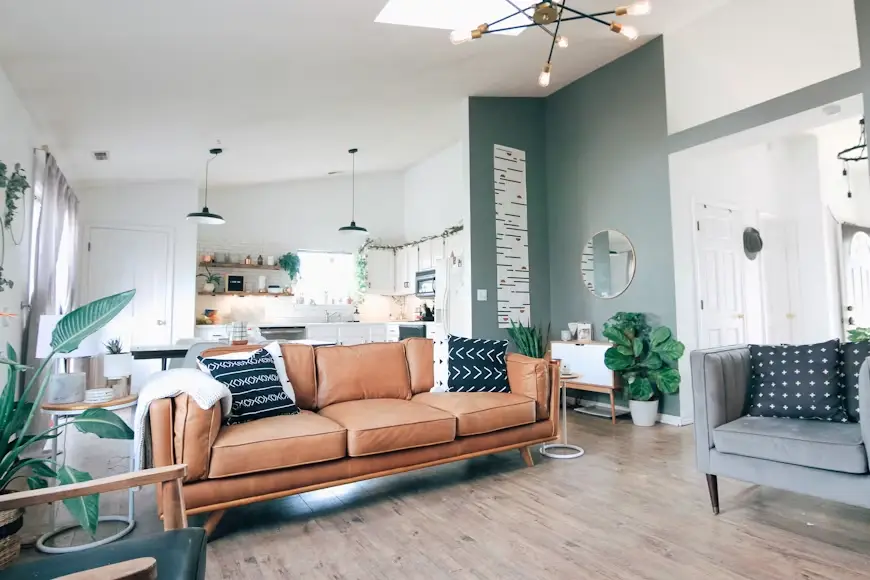
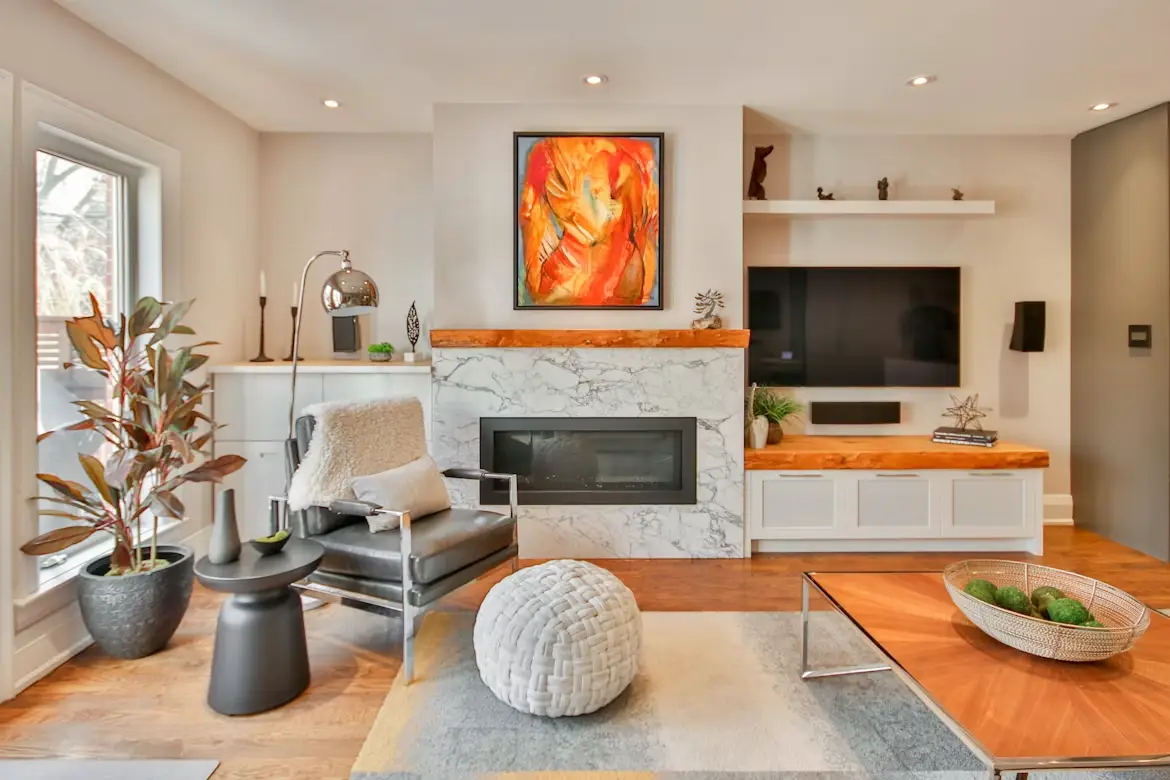
Mixing textures is far more important than matching colours. A sleek leather chair next to a bulky wool blanket feels warmer than two sleek items together. Contrast is what the eye sees as cozy.
Heavy curtains are worth having doubly. They look cozy and they actually are cozy. Draped to the floor with a thermal lining, they create a pocket of still air next to the glass that reduces heat loss and eliminate those pesky drafts by your ankles.
Lighting and Colour That Feel Warm
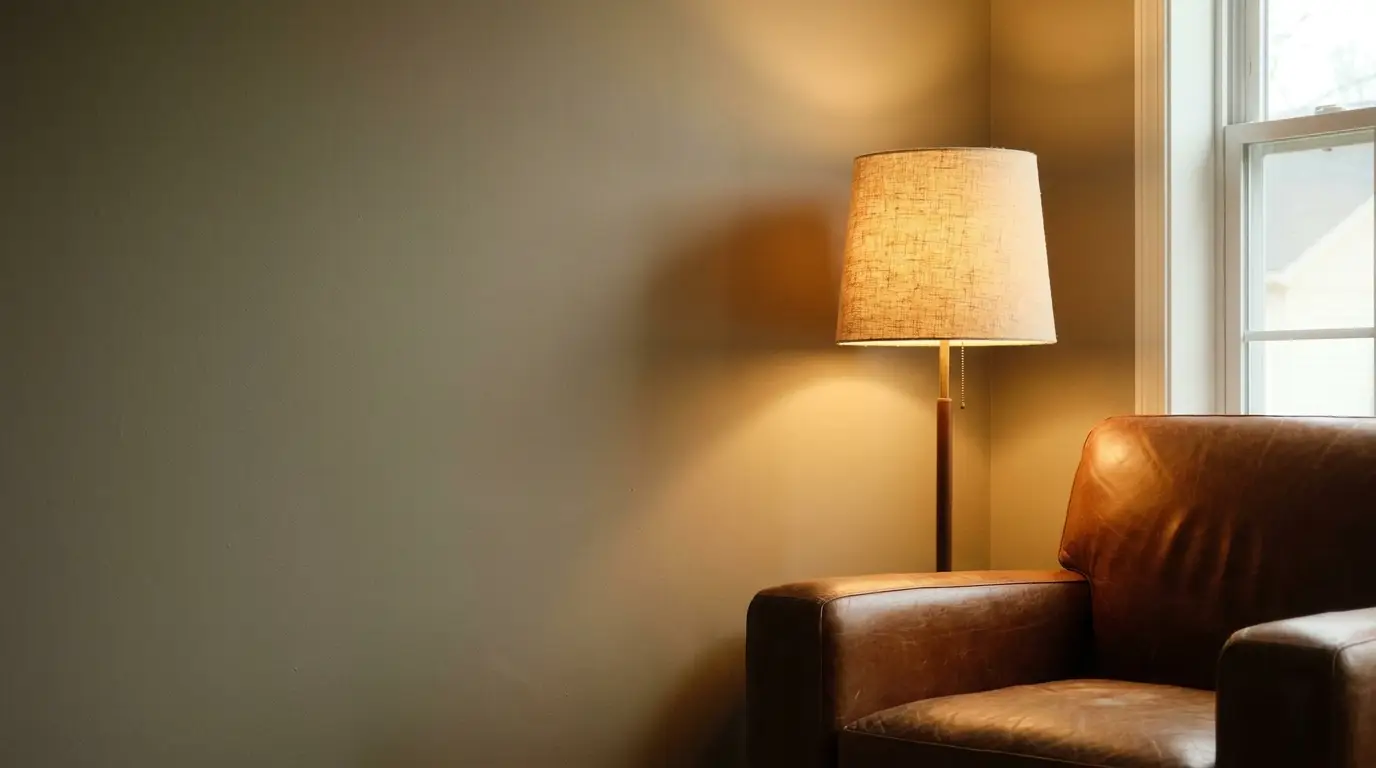
Cold light kills a cozy room faster than a cold draft ever will.
Bright lights from above flatten all surfaces. It pushes shadows into corners and makes your living room look like a waiting room. There’s an easy fix – more lamps, placed lower & distributed throughout the room.
A solid winter lighting setup usually includes:
- Two or three light sources per room instead of one ceiling fixture
- Warm bulbs somewhere in the 2200K to 2700K range
- Dimmers wherever they can be fitted
- Table and floor lamps at seated eye level
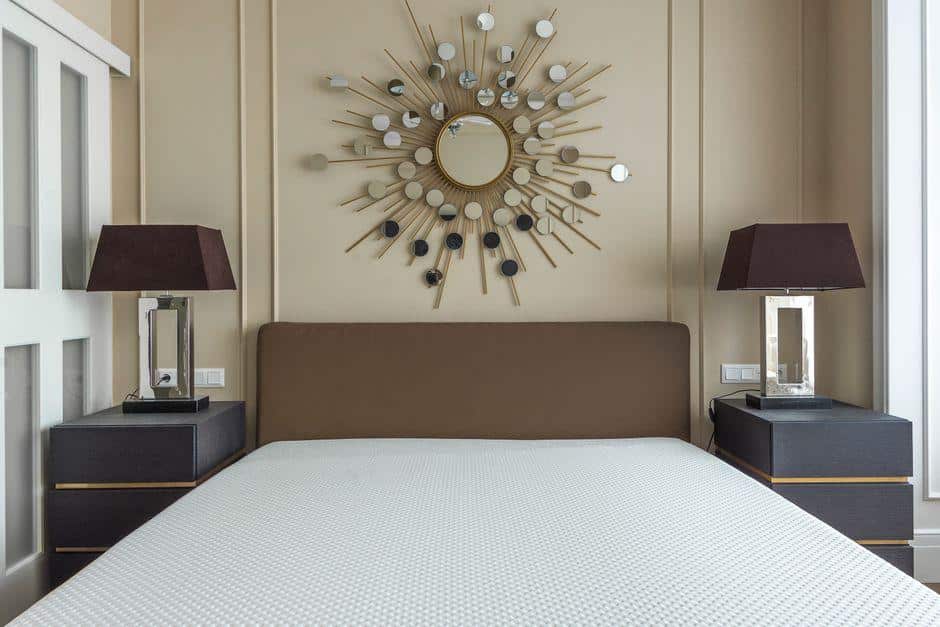
Fabric shades diffuse light. They don’t spear it across a room. Anything that casts a gentle glow at hip to shoulder level will warm a room more than any bright ceiling light.
Colour has the same job. Deep, dusty shades of clay, olive, rust, caramel and mushroom eat light and visually bring walls closer. Walls that feel closer contract space, making you feel more cocooned.
Natural materials will complete your look. Wood that shows grain, wool, jute, linen, stone and unglazed ceramic all mellow with age. Which is the whole idea. Perfectly glossy, perfectly smooth is cold no matter what colour is on the walls.
The Cold Spots Nobody Thinks About
This is where most cozy plans quietly fall apart…
Floors. Windows. Feet are the first things to get cold. Glass is the weakest link in any exterior wall. According to the U.S. Department of Energy, heat gain and heat loss through windows can account for up to 25% to 30% of residential heating and cooling energy use. That means a lot of your comfort is leaving the room through the prettiest thing in it.
The fixes are refreshingly boring:
- Rugs with a thick pad on tile, laminate or timber
- Draft stoppers at exterior doors
- Fresh weatherstripping and caulk around window frames
- Thermal or double-layered curtains, closed at dusk
Cold floors also cause people to set the thermostat higher than necessary. This increases furnace load and pulls your bill higher along with it. Floor repair is nearly always less expensive than bill repair.
Building a Corner Worth Sitting In
Cozy usually isn’t a whole-house project. It’s one spot.
Almost every home should have one intentional warm zone. A chair by the window with a lamp, a side table and basket of blankets. A padded bench in your kitchen. A reading nook at the end of a hallway.
Make it easy to actually use:
- Somewhere to put a mug down
- A light that can be switched on from the seat
- A blanket within arm’s reach
- Something soft underfoot
Few give furniture arrangement much thought, yet it can have a big impact. Moving seating away from exterior walls and grouping it closer together instantly feels more cozy. Conversational distance implies intimacy and showroom distance implies sterility.
One caution. During rearranging keep supply vents and return grilles open. Restricting air flow causes pressure zones which make your heating system work harder than necessary.
Bringing It All Together
Your cozy winter abode is constructed in layers, PRICELESS:
- A heating system that has been serviced and runs clean
- Textiles with contrast and weight
- Warm, low, layered lighting
- Deep colours and honest natural materials
- Sealed windows and covered floors
- One corner designed for sitting still
None of them do very much independently. Layered together they transform the feel of a home right when someone steps through the front door.
Begin with the ugly stuff first – the furnace, the filters, the drafts – because everything else rests on top of that layer. A warm room with a weak HVAC system is merely a pretty room that will eventually turn cold.
Then bring out the blankets.