Palm trees are easy to spot, but coconuts do not always come with them.
This raises a simple question: do coconuts grow on palm trees? The answer depends on the type of palm tree you are looking at.
I used to assume all palms were the same, until I looked closer. You might be surprised how many kinds of palm trees exist.
Some grow dates, some grow tiny berries, and some grow nothing you can eat at all. Only one type of palm actually grows coconuts.
Knowing which one it is helps you understand these trees better. Here is what makes that one palm so different.
Do Coconuts Grow on Palm Trees?
Yes, but only the coconut palm grows them. Not every palm tree makes coconuts. The palm family is huge, with over 2,600 different species around the world.
Each type grows its own fruit, seed, or berry. Date palms grow dates. Açaí palms grow small purple berries. Some palms just grow seeds with no fruit at all.
A tree can look like a classic palm, with a tall trunk and fan-shaped leaves, and still never produce a single coconut.
Coconuts come from a specific species with its own genetics. So palm-like looks alone do not tell you what fruit a tree will grow.
Why Do Coconuts Grow on Coconut Palm Trees?
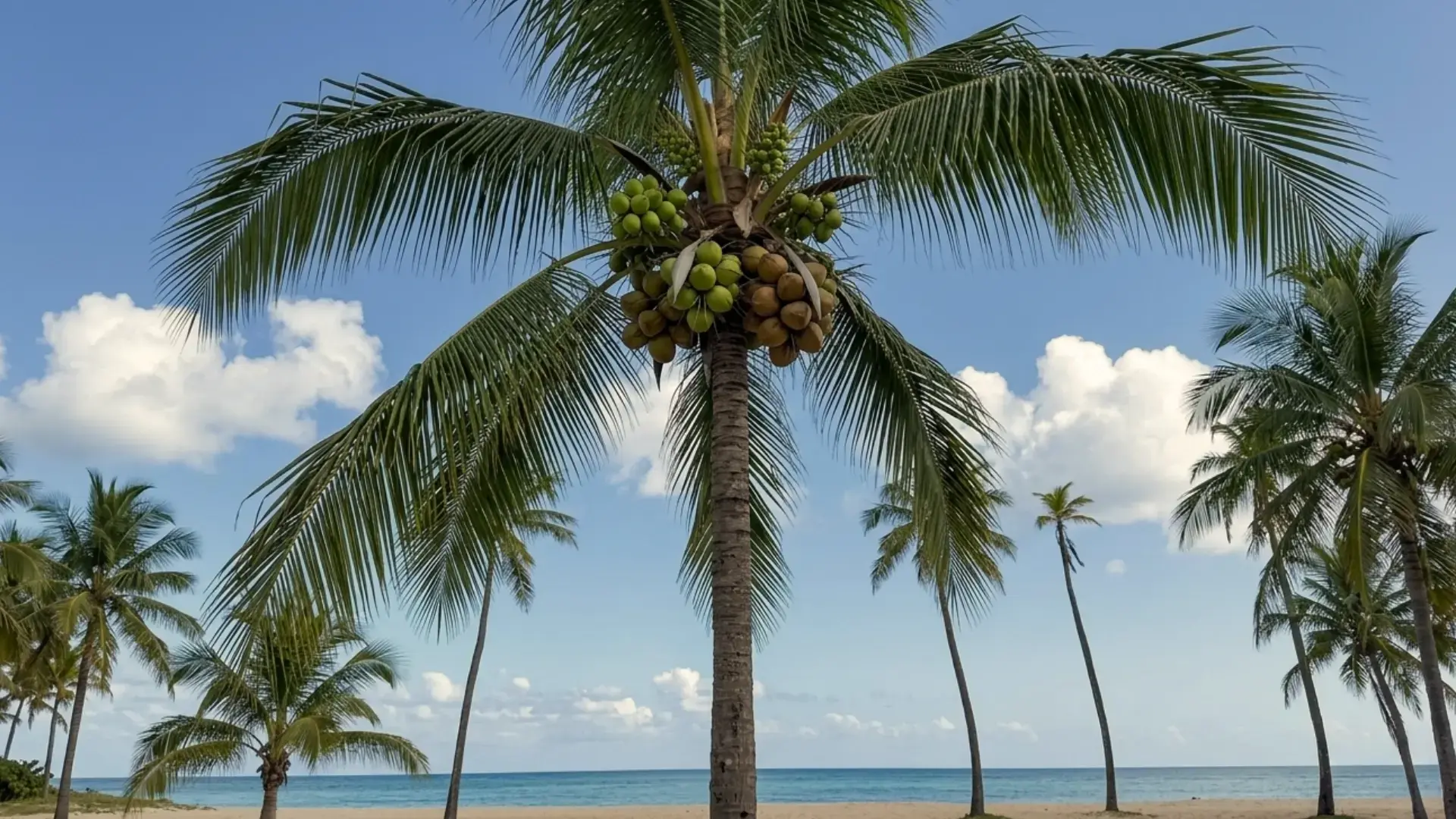
Coconuts are the fruit of a tree called Cocos nucifera. This is the tree’s scientific name. The tree grows small flowers near the top, close to the leaves.
Wind, insects, or gravity help move pollen between flowers. After pollination, the flower slowly turns into a coconut. This is just part of how the tree makes new seeds.
Growing coconuts is how the tree reproduces. Each coconut holds one big seed inside its shell. That seed can grow into a brand new coconut palm.
So the whole process is really just the tree’s normal life cycle at work.
Where Do Coconut Palm Trees Grow?
Coconut palms grow best in warm places near the coast. Here is a simple breakdown of what these trees need:
| Where They Are Found | Notable Countries | Common Landscape |
|---|---|---|
| Southeast Asia and the Caribbean | Indonesia, Jamaica | Sandy beaches and coastal plains |
| South India and Southern Philippines | India, Philippines | Warm coastal towns and villages |
| Pacific Islands and Sri Lanka | Fiji, Sri Lanka | Open shoreline with little shade |
| Kerala and Indonesia | India, Indonesia | Humid, green coastal belts |
| Coastal Brazil and the Florida coast | Brazil, United States | Sandy soil near the shoreline |
| Coastal West Africa and Caribbean islands | Ghana, Dominican Republic | Beaches and port towns |
| Asia, the Pacific, Africa, and the Americas | Multiple countries worldwide | Tropical and subtropical coastlines |
Whenever I think about a coconut palm, I always visualize it swaying somewhere warm and sunny by the beach, and honestly, that image is pretty accurate.
What Climate Do Coconut Palms Need to Produce Coconuts?
I have watched coconut palms up close, and even small climate shifts really do affect how much fruit they produce. Based on what I have seen, here is what actually makes a difference:
- Warm temperatures all year matter a lot, since sudden cold snaps or frost can seriously damage the tree.
- Plenty of direct sunlight each day helps the tree support strong growth and steady fruit development over time.
- Regular moisture is important, since long dry spells can cause flowers to drop before fruit even forms.
- Humid air plays a big role, since it helps the tree hold onto young fruit instead of shedding it.
- Well-draining soil matters too, so water does not sit around the roots and cause long-term stress.
When any of these needs are not met, the tree may flower less or drop fruit early. So a steady, mild climate helps coconut palms produce fruit reliably.
When and How Often Do Coconut Palms Produce Fruit?
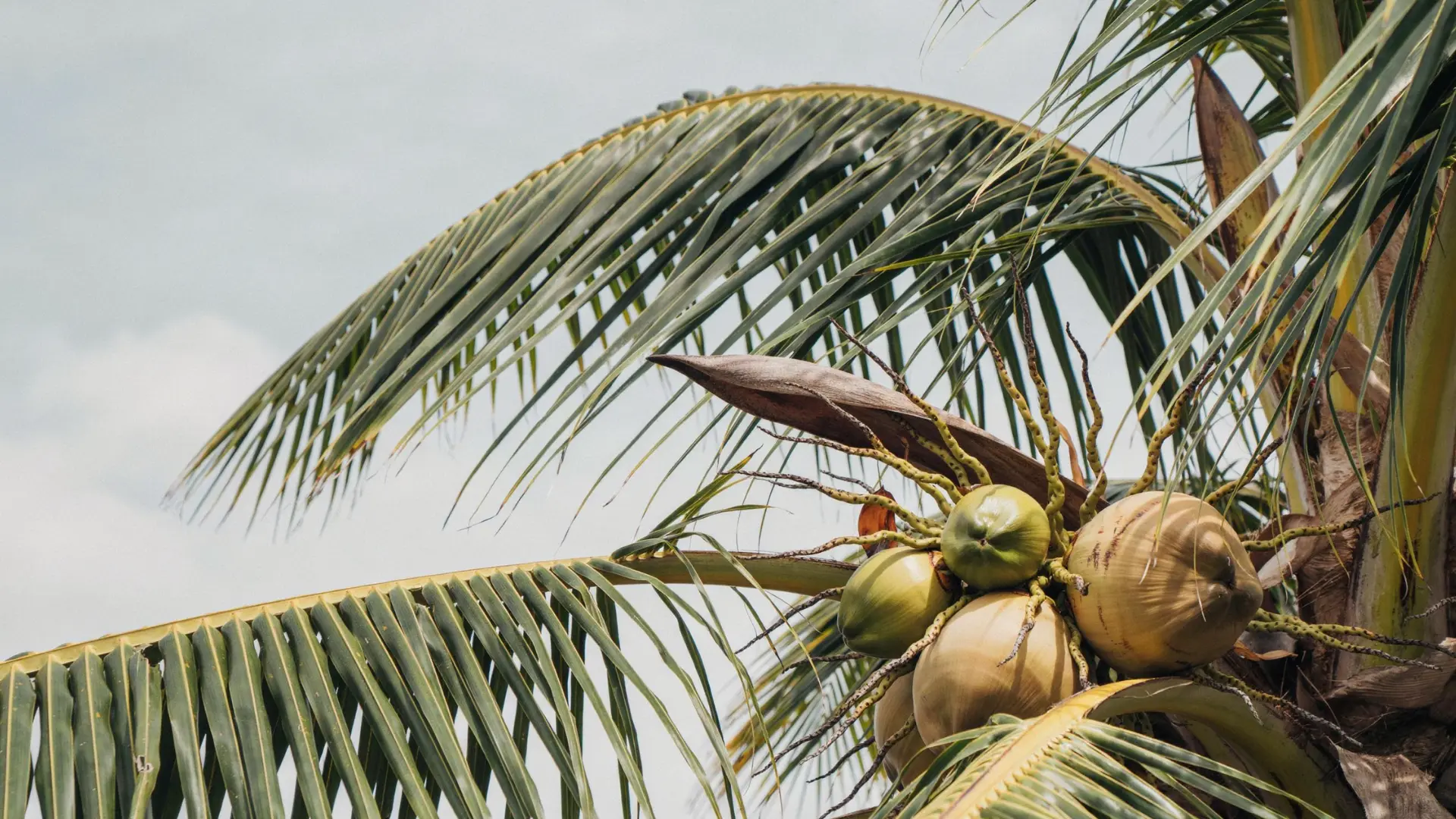
A young coconut palm usually starts producing fruit after five to ten years of growth. Some varieties fruit sooner, while others take longer depending on care and climate.
Good soil, warm weather, and steady water can speed up this early growth stage. Once fruit set begins, a single coconut takes close to a year to fully mature.
Healthy palms do not just fruit once; they keep producing for many years. In warm tropical climates, palms can flower and fruit all year long.
Several clusters often grow at different stages at the same time. Overall production still depends on the palm’s age, variety, and everyday growing conditions.
What Other Fruits Grow on Palm Trees?
Coconut palms are not the only fruit-bearing palms out there. Many other palm species grow their own unique fruits, and none of them produce coconuts. Here are a few well-known examples:
- Dates: These sweet fruits grow on date palms, known by the scientific name Phoenix dactylifera.
- Açaí Berries: Small dark purple berries grow in clusters on the açaí palm, or Euterpe oleracea.
- Oil Palm Fruit: Oil palms produce dense clusters of reddish fruit, used mainly to make palm oil.
- Peach Palm Fruit: This palm grows edible orange-red fruit, often cooked before eating.
Each of these palms has its own fruit, its own look, and its own growing needs, but none of them ever produce coconuts.
Coconut Palms vs. Other Palm Species
According to my research, the coconut palm (Cocos nucifera) is just one species in a huge palm family. Here is how it stacks up against a few other common palms:
| Palm Type | Fruit Produced | Mature Size | Climate Needs | Common Use |
|---|---|---|---|---|
| Coconut Palm | Large coconuts in clusters | 60 to 100 feet tall | Tropical, warm, coastal | Coconut water, flesh, and oil |
| Date Palm | Sweet, chewy dates | 50 to 80 feet tall | Hot, dry desert climates | Eaten fresh or dried |
| Açaí Palm | Small purple berries | 60 to 90 feet tall | Humid tropical rainforest | Juices, bowls, and supplements |
| Oil Palm | Dense reddish fruit clusters | 60 to 65 feet tall | Hot, humid tropical zones | Palm oil production |
| Queen Palm | Small, mostly ornamental fruit | 25 to 50 feet tall | Subtropical, mild climates | Landscaping and decoration |
| Fan Palm | Small, non-edible fruit | 15 to 60 feet tall | Varies by species | Landscaping and shade |
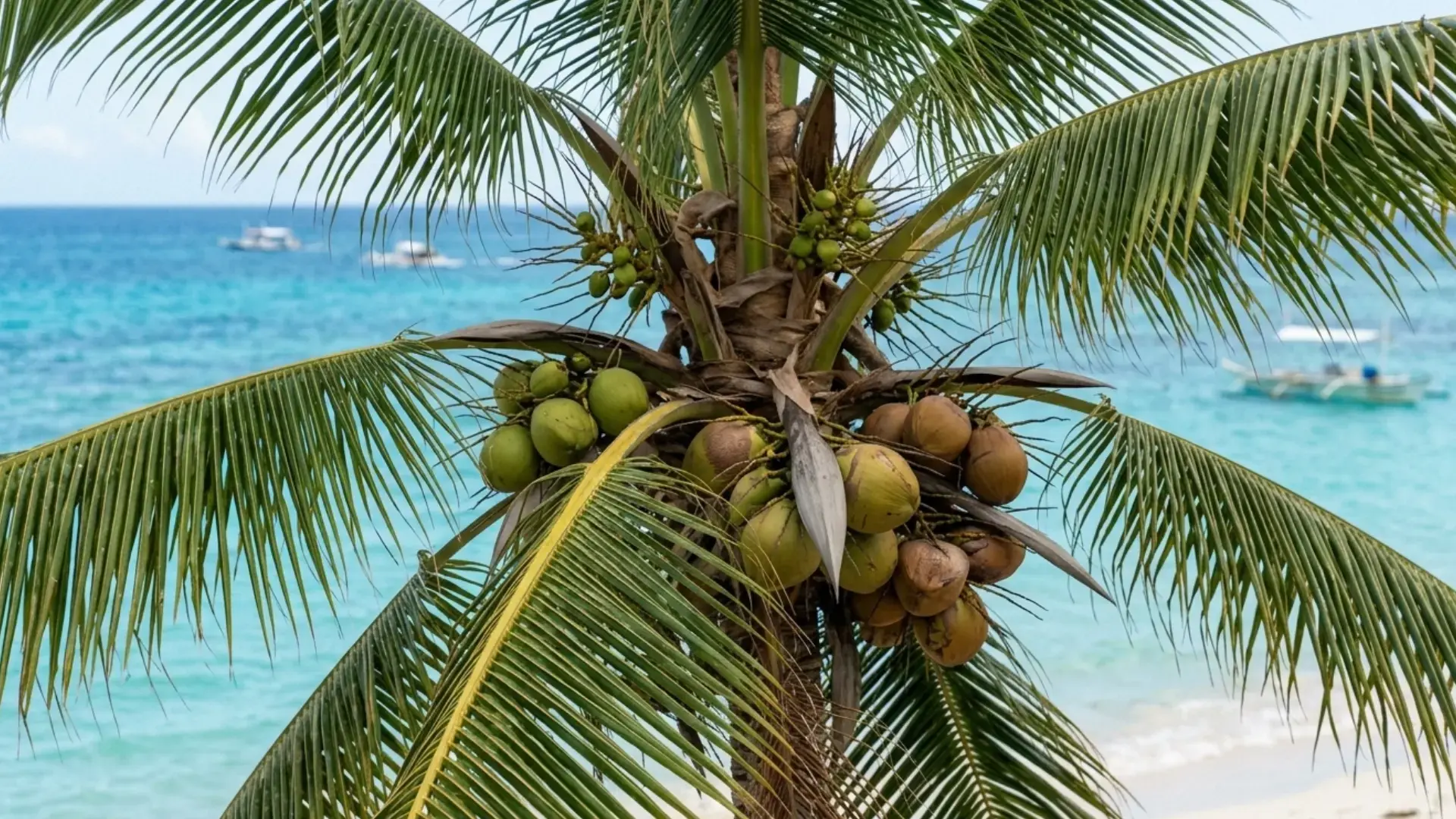
You can spot a coconut palm by its feather-like fronds, slender trunk, and coconut clusters near the crown. Every coconut palm is a palm tree, but not every palm tree is a coconut palm.
Frequently Asked Questions (FAQs)
Can you grow a coconut palm from a store-bought coconut?
Yes, a fresh, mature coconut with its husk still intact can sprout if kept warm, moist, and given enough time to grow.
How long can a coconut palm tree live?
A healthy coconut palm can live for several decades, often producing fruit steadily for most of its long natural lifespan.
Is a coconut considered a fruit, nut, or seed?
A coconut is technically a fruit called a drupe, though it also contains one large seed inside its tough, fibrous shell.
The Bottom Line
In the end, only one type of palm tree truly grows coconuts. That palm answers the question of whether coconuts grow on palm trees.
This palm stands apart from every other palm species out there. It needs warm weather, steady rain, and plenty of sunshine to thrive.
You now know dates, berries, and oil all come from different palms. I love spotting a coconut palm by its curved trunk and full crown.
Its fruit takes real time to grow, but the wait pays off in the end. Share your favorite palm tree story in the comments below!