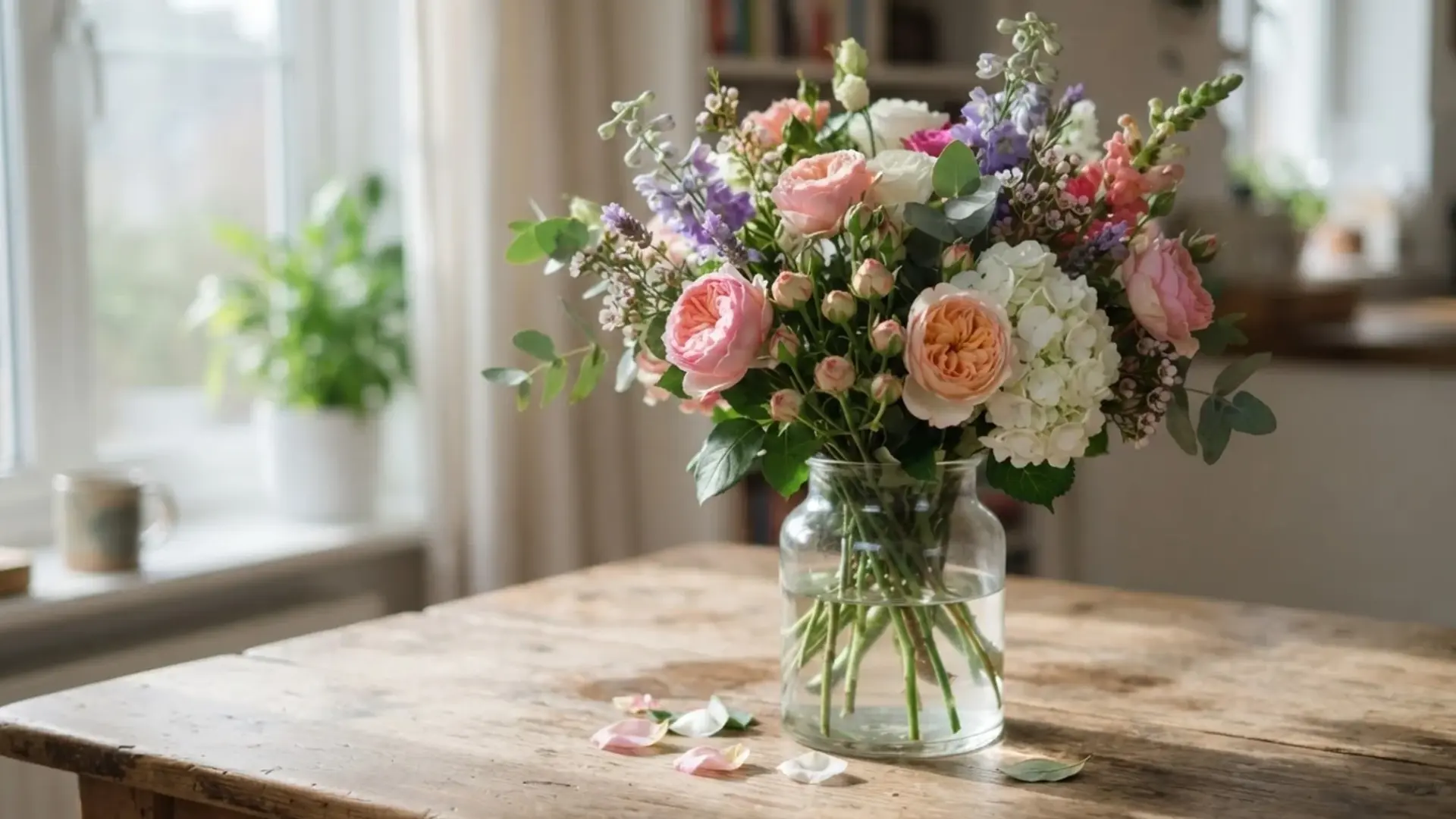
Fresh flowers can brighten a room the moment you bring them inside. But you may wonder how long flowers last in a vase. Several small factors determine the answer, not chance.
Little things like water, light, and temperature all play a part. Some flowers stay bright for days while others fade fast. I know how it feels when blooms wilt earlier than expected.
Knowing what helps and what hurts can change everything. You don’t need fancy tricks or costly products to keep blooms fresh.
Simple habits make a real difference every time. Here’s what keeps your flowers happy and full of life.
How Long Do Flowers Last in a Vase?
On average, most cut flowers last about 5 to 12 days in a vase. Some hardy varieties can stretch closer to two weeks with the right care.
Flowers that were already sitting around before you bought them simply won’t last as long. No amount of good care afterward can fully make up for that early damage.
That’s why storage before purchase plays such a big role in vase life. Blooms kept cool and hydrated at the store tend to open more slowly.
They also hold up far better once they finally reach your home and vase
What Affects How Long Flowers Last in a Vase?
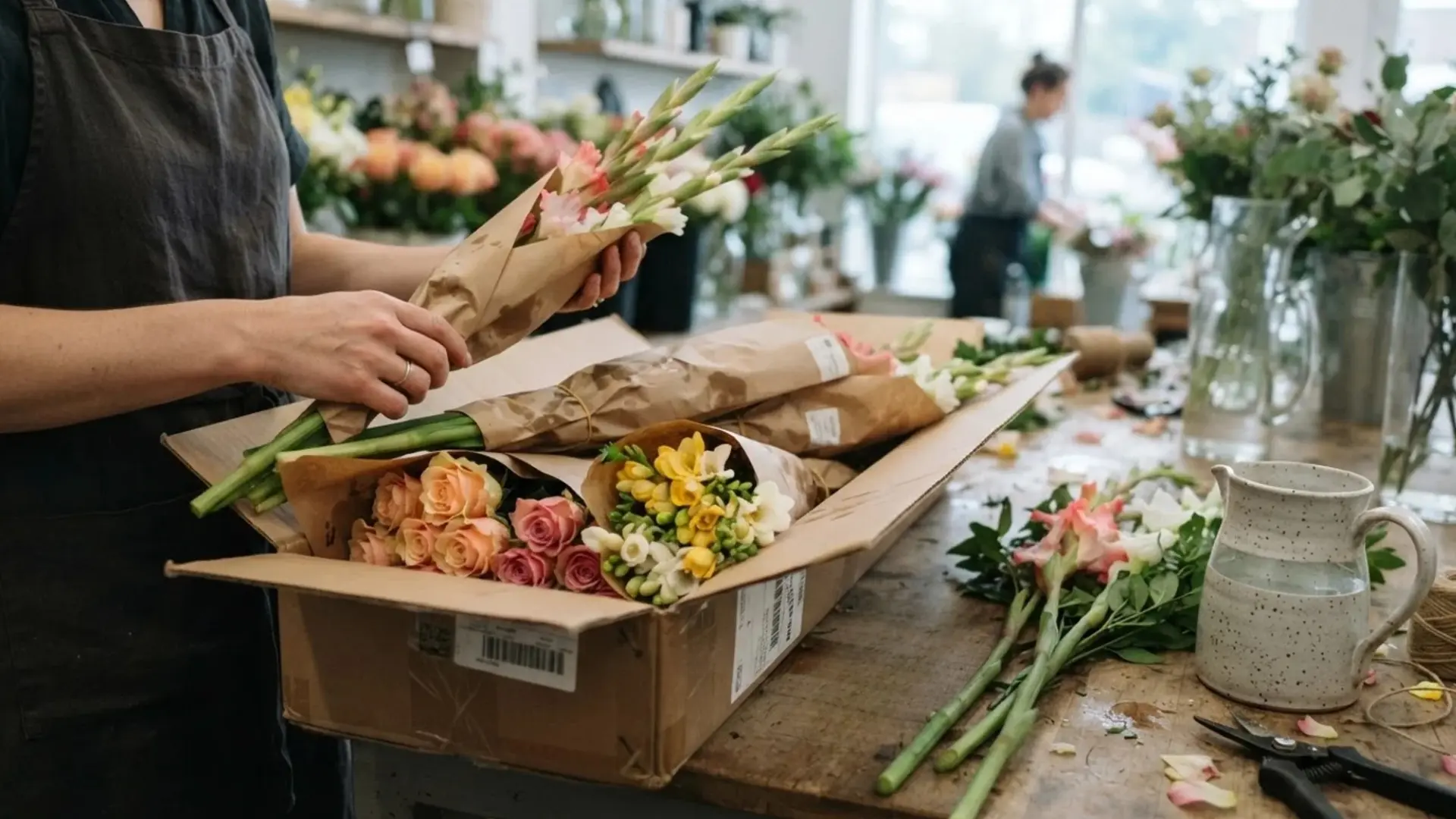
Lots of little factors decide how long your flowers will actually last. I’ve learned that a few key things matter more than the rest:
- Freshness at purchase: how long the flower sat before reaching you; imported stems (most US flowers) lose vase life days in transit.
- Flower variety: some species last naturally longer (carnations, mums) while others fade fast regardless of care (dahlias, sweet peas).
- Temperature and light: heat and direct sunlight speed up wilting; cool rooms (18–22°C) with indirect light slow it down.
- Water quality and chemistry: dirty water breeds bacteria; hard water, chlorine, or fluoride can shorten life for sensitive flowers like gladiolus and freesia.
- Stem condition and handling: sealed or crushed stems block water uptake, and rough transport shortens vase life before arrangement.
Once you know these factors, you can spot problems before they ruin your bouquet. A little attention to each one goes a long way toward fresher flowers.
How Long Can Flowers Go Without Water?
Most cut flowers can survive without water for about 2 to 4 hours. After that, real damage can start to show up on the petals.
How long they last depends mostly on the surrounding temperature. Warm air speeds up wilting much faster than cool air does.
That’s why a hot car can cause drooping in under an hour. Cooler conditions give flowers more time before they start to struggle.
This matters most during travel, deliveries, weddings, and other long events. Each of these situations adds extra stress that shortens how long blooms hold up.
Knowing these time limits helps you plan ahead and avoid damage. A little extra care with timing keeps your flowers looking fresh longer.
How to Make Flowers Last Longer: Simple Care Tips
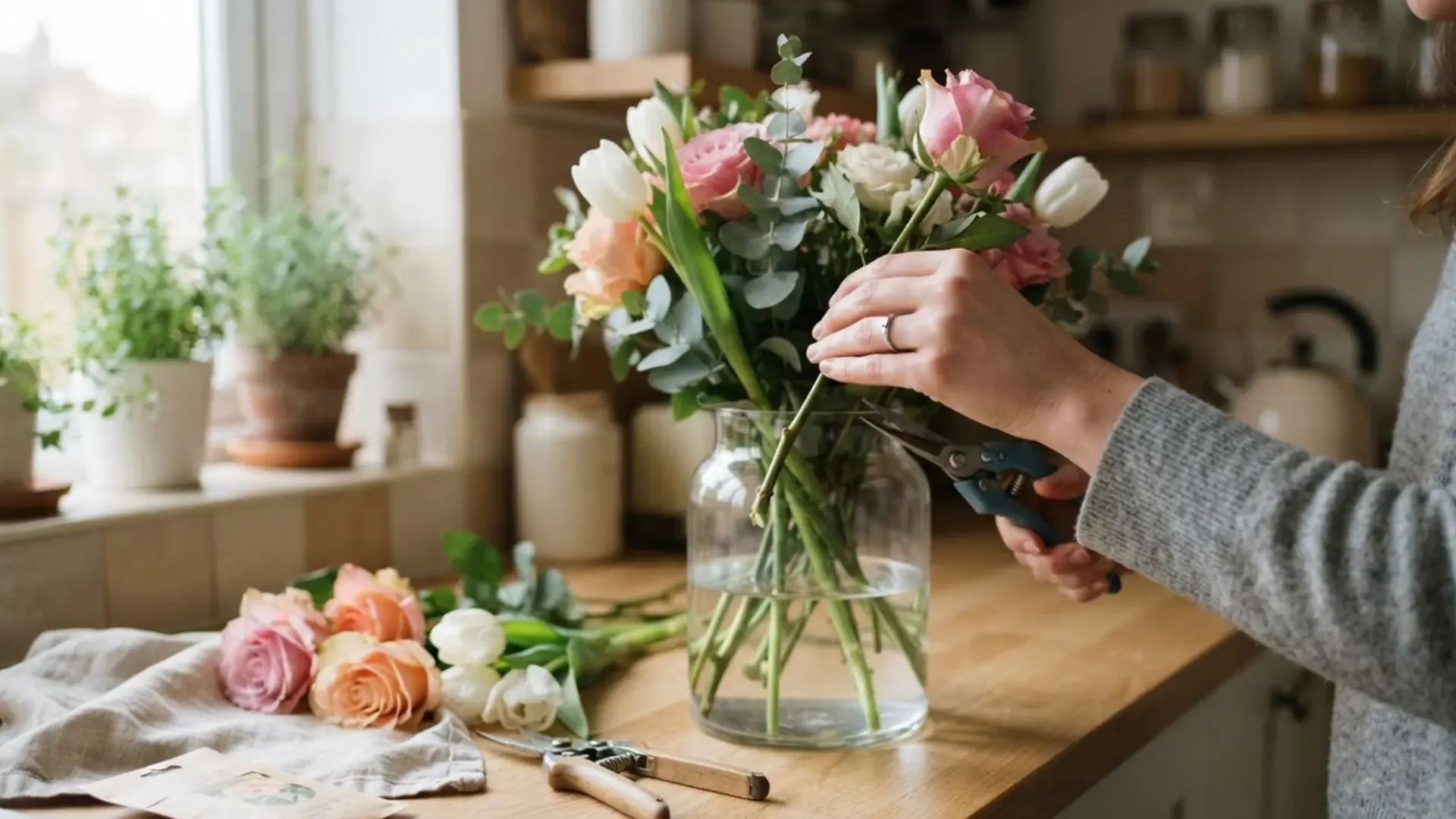
A few small habits can help your flowers stay fresh for days longer. From picking good blooms to keeping them cool, every little step adds up. Here’s everything I do to keep my own bouquets looking their best:
1. Start With the Freshest Flowers Possible
Pick flowers that look healthy right from the start. Choose ones with firm stems and bright green leaves. I always look for buds that are just beginning to open.
Fully bloomed flowers won’t last as long once cut. Skip any with brown spots, torn petals, or wilting leaves.
Gardeners growing their own for cutting can make this easier by choosing varieties bred for long vase life from the start.
2. Wash the Vase Before Adding Flowers
Always wash your vase before you use it for flowers. Old residue and bacteria can hide on the inside walls. This buildup can spread into fresh water fast.
Dirty water shortens how long your flowers stay pretty and bright. A quick scrub with warm water and mild soap helps a lot. Rinse well so no soap residue is left behind inside.
3. Trim the Stems Before Arranging
Before placing flowers in water, trim the stem ends first. Use clean, sharp scissors or floral shears for this step. I like to snip off about an inch from each stem.
This removes any dried or damaged tissue blocking water flow. Fresh cuts help flowers drink water more easily right away. Doing this before arranging sets your bouquet up for success.
4. Cut Stems at an Angle
Cut each stem at a slight angle instead of straight across. A flat cut can rest completely against the vase bottom. This blocks the stem from soaking up water properly over time.
An angled cut keeps a small gap open underneath the stem. That gap lets water reach the stem more easily and consistently. This tiny change can make a real difference in vase life.
5. Remove Leaves Below the Waterline
Strip off any leaves that will sit underwater in the vase. Submerged leaves break down fast and turn soft and mushy. This mess feeds bacteria and clouds up your water quickly.
Bacteria buildup can shorten your flowers’ vase life significantly. Keep only the leaves that stay above the water level. Clearing lower leaves also gives your arrangement a cleaner, tidier look.
6. Use the Right Amount of Water
Keep enough water in the vase to cover the stem ends. Different flowers need different water depths to stay happy and hydrated. Some stems do fine with just a few inches of water.
Others prefer to be submerged much deeper in the vase. Check that no extra leaves are sitting under the water. Adjusting water depth to your flower type helps them last longer.
7. Add Commercial Flower Food
Flower food packets give blooms nutrients they need to last longer. I always mix it exactly the way the package instructions say.
Adding too much can actually harm the flowers instead of helping. Follow the directions instead of guessing at home. This simple step keeps the water balanced and slightly acidic.
Balanced water helps flowers absorb what they need each day.
8. Change the Vase Water Regularly
Swap out old water for fresh water regularly. Do this right away if water looks cloudy or smells bad. Clean water keeps bacteria from building up around the stems.
Regular changes help flowers stay fresh and hydrated for longer. Aim to check and change the water every couple of days. Fresh water gives your flowers the best environment to thrive in.
9. Clean the Vase During Water Changes
Don’t just pour out the old water and refill the vase. A thin bacterial film often clings to the inside walls. Quickly rinse and wipe the vase before adding fresh water.
This extra step keeps your flowers’ environment cleaner overall each time. It only takes a few extra seconds to do this right. Skipping it lets bacteria build back up faster than expected.
10. Recut the Stems Every Few Days
Every few days, snip a little more off each stem end. This removes ends that have dried out or gotten blocked. A fresh cut helps flowers take up water again more easily.
Blocked stems struggle to absorb enough water over time otherwise. This small habit keeps blooms perking up and looking fresher longer.
It takes just a minute but makes a noticeable difference overall.
11. Keep the Vase Out of Direct Sunlight
Sunlight can warm up both the flowers and the vase water. Warmer water evaporates faster and stresses out the blooms quickly.
I always place my vase somewhere shady in the room. This simple move helps flowers stay fresh much longer. Direct sun speeds up wilting more than most people expect.
A shaded spot keeps temperatures steady and blooms looking their best.
12. Keep Flowers Away From Heat Sources
Keep your vase far from radiators, heaters, and open fireplaces. Hot appliances and heating vents can dry flowers out fast. Warm air pulls moisture from petals and leaves quickly and steadily.
This speeds up wilting and shortens how long blooms last overall. A cooler spot helps flowers stay hydrated and last much longer. Even small heat sources nearby can affect your bouquet’s lifespan.
13. Choose a Cool Location for the Vase
Cooler rooms are much better for cut flowers overall and generally. Moderate temperatures help blooms hold onto their moisture for longer.
Warm rooms cause flowers to dry out and fade much faster. Try placing your vase somewhere away from warm, sunny spots.
A cool, steady temperature keeps flowers looking fresh for longer stretches. Small temperature changes throughout the day can still affect freshness.
14. Keep Flowers Away From Ripening Fruit
Ripening fruit like bananas and apples release ethylene gas naturally. This gas speeds up aging in many kinds of cut flowers. I always keep my fruit bowl in a separate room entirely.
Even small amounts of ethylene can affect nearby blooms over time. Keeping fruit and flowers apart helps blooms stay fresh longer. This easy separation is one small step with a big payoff.
15. Remove Wilting Flowers and Damaged Foliage
Pull out any wilting blooms or damaged leaves right away. Fallen petals and dying foliage can rot inside the water. I try to tidy up my vase every couple of days.
Decaying plant material quickly speeds up nearby bacterial growth. Keeping things tidy helps the rest of the bouquet last longer. A little daily cleanup goes a long way toward freshness.
How to Tell If Cut Flowers Are Still Fresh
Sometimes it’s hard to know if your flowers still have life left in them. A quick check can save you from tossing blooms too soon or keeping ones that are already done. Here are a few signs to look for:
- Firm versus soft stems: healthy stems feel firm and sturdy, while soft or mushy stems signal decay has already started.
- Petal texture and discoloration: fresh petals feel smooth and hold their color, while browning edges or curling signal aging.
- Condition of leaves: healthy leaves stay green and crisp, while yellowing or slimy leaves point to bacteria in the water.
- Drooping flower heads: a heavy droop that doesn’t perk back up after a fresh cut often means the stem can’t take up water anymore.
- Unpleasant stem or water odors: a sour or rotten smell means bacteria have taken over and the water needs changing right away.
- Signs a flower is beyond recovery: shriveled petals, blackened stems, and a strong odor together usually mean it’s time to let that bloom go.
These signs are easy for me to spot once I know what to look for. I run through this quick check daily to keep my whole arrangement looking its best.
Long-Lasting Flowers Based on Their Care Needs
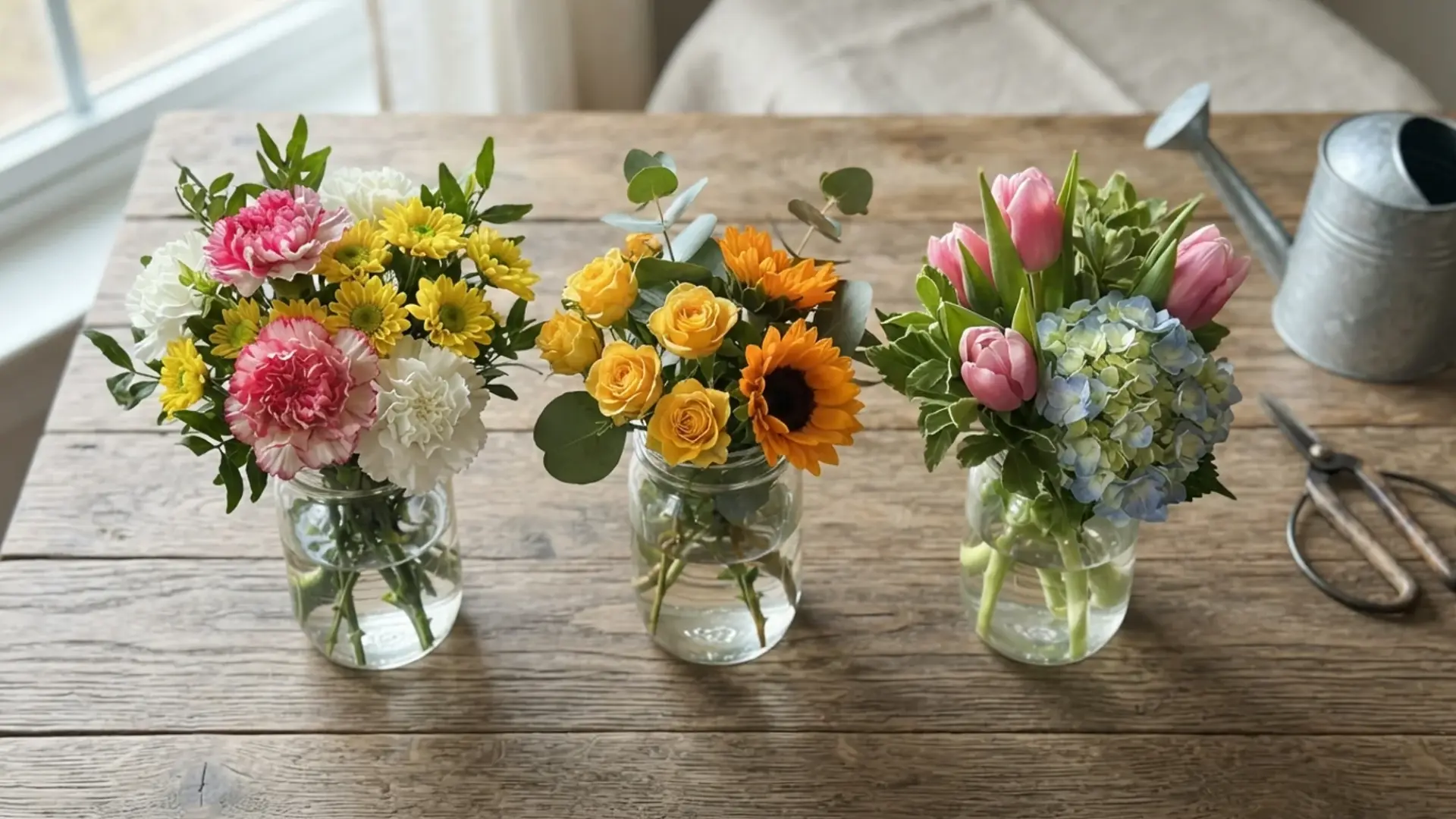
Flower lifespan often comes down to how much care a bloom actually needs. The right effort matched to each flower’s needs makes all the difference. Here’s how three care levels stack up:
1. Low-Maintenance Flowers
These blooms forgive a bit of neglect without wilting quickly. They hold up well even during a busy week: carnations, chrysanthemums, and alstroemeria are solid picks for that reason.
- Carnations (14–21 days): often last 2 to 3 weeks in a vase with minimal upkeep.
- Chrysanthemums (14+ days): can stay fresh for 2 weeks or more with just occasional water top-offs.
- Alstroemeria (7–14 days): typically lasts 1 to 2 weeks and rarely needs trimming to stay perky.
These flowers reward even basic attention. They’re worth keeping in mind for lasting color without a daily routine.
2. Moderate-Maintenance Flowers
Roses, lilies, and sunflowers ask for a bit more effort in return for their beauty. Vase life improves noticeably with a few small, consistent tasks: here’s what these flowers need.
- Roses (5–7 days): usually last about a week, longer if you change the water every 2 days.
- Lilies (7–14 days): can stay fresh for 1 to 2 weeks when you trim the stems and remove spent blooms.
- Sunflowers (6–12 days): often last 6 to 12 days and benefit from a fresh diagonal cut every few days.
These flowers respond well to consistent, simple care. A little regular attention goes a long way toward keeping them upright and vibrant.
3. Higher-Maintenance Flowers
Hydrangeas, tulips, and dahlias are pickier about their environment than most other blooms. Water quality, temperature, and careful handling all play a bigger role here: these details make all the difference for these three.
- Hydrangeas (5–10 days): need their stems slit or smashed and often benefit from a quick dunk in water.
- Tulips (7–10 days): prefer cooler spots away from direct sunlight and heat sources.
- Dahlias (5–7 days): do best with fresh, cool water changed every 1 to 2 days and minimal handling.
These flowers reward precision more than any other type. Following their specific needs closely leads to noticeably more days of fresh, full blooms.
Frequently Asked Questions (FAQs)
Does Adding Ice Cubes to the Vase Help Flowers Last Longer?
Ice cubes can cool the water slightly and slow bacterial growth for a short time. They aren’t a long-term fix, though.
Can I Use Tap Water for Cut Flowers?
Yes, tap water works fine for most flowers. Some sensitive varieties like gladiolus may do better with filtered water.
Do Homemade Remedies Like Sugar or Vinegar Actually Work?
Sugar can feed flowers, and vinegar can fight bacteria. Results vary, and neither works as well as proper flower food.
Final Words
Keeping your flowers fresh doesn’t take much effort or time. Small steps like clean water and cool air make a big difference.
You now know how long flowers last in a vase and what changes that. Every little habit adds up to fresher, longer-lasting blooms. I always check my flowers daily to catch problems early.
You can do the same and enjoy blooms that stay lovely longer. A little daily care keeps your bouquet looking its best.
Fresh flowers add a nice touch to any room. Small changes can help your blooms last a bit longer. Try these steps with your next bunch of flowers.
Tell me your favorite flower care trick in the comments below.