
The moment you pull a tomato off the vine, it’s already changing. Produce keeps breathing, giving off heat, and losing moisture with every hour it sits in the sun. That window between harvest and the cooler is shorter than most growers expect, and what happens first decides how much of the week’s harvest reaches the table.
FAO estimates put global food loss at 526 million tonnes a year, tied in part to gaps in refrigeration. This guide walks through that window, from cooling methods to the storage choices that keep produce fresh until it sells.
Why Produce Loses Quality After Harvest
Produce doesn’t stop working once you cut it from the plant. It keeps breathing, burning through the sugars that give it flavor and throwing off heat as it goes. The warmer it stays, the faster that clock runs.
At the same time, water evaporates from the surface, causing wilting and a slow loss of weight and shine. Ripening speeds up too, pushed along by ethylene gas the produce releases on its own, and any bruise or scrape from harvest opens a door for mold and bacteria.
All of that slows down the moment you remove field heat. Pulling that heat out fast, before produce reaches a truck or a shelf, does more for its shelf life than almost anything else you’ll do after harvest.
The First Hour After Picking
Once produce leaves the plant, that first hour decides a lot. Here’s the workflow that keeps it that way:
- Harvest early morning or evening, when it’s coolest outside.
- Move produce into shade or a shaded staging area right away.
- Use clean, vented containers so air can move around each piece.
- Don’t stack weight on fragile crops. Bruising opens the door to decay.
- Check the production temperature with a probe thermometer, not the air around it.
Precooling and cold storage do different jobs. One removes field heat fast, the other simply holds the temperature already reached. A walk-in cooler alone often can’t cool leafy greens, berries, or flowers fast enough, and mixing up the two trips up a lot of growers.
How to Remove Field Heat
No single method suits every crop. It depends on how perishable the crop is, your equipment, and how fast it needs to cool.
Shade and Room Cooling
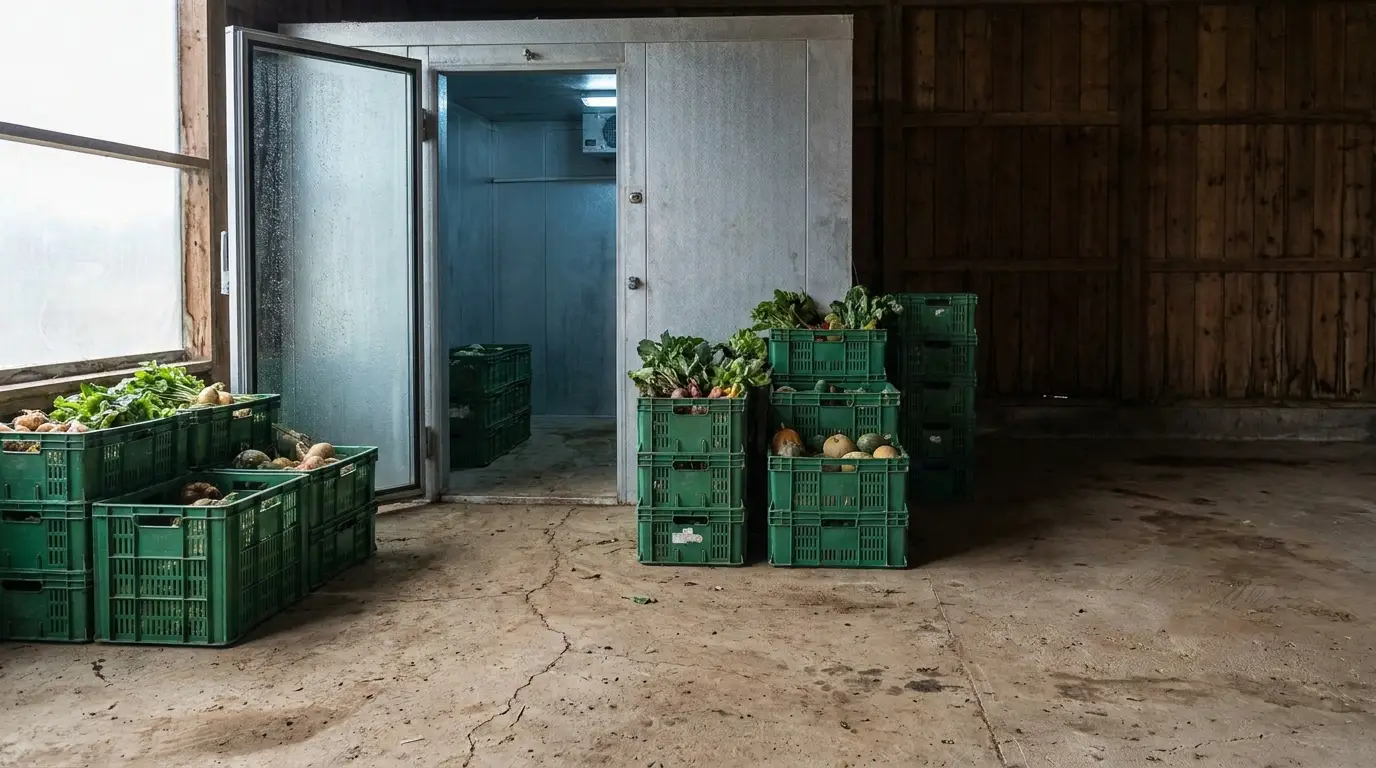
Shade and a simple walk-in cooler go a long way for root vegetables, winter squash, and onions. Neither costs much, and neither requires special equipment beyond what most farms already have.
Room cooling holds up fine for these sturdier crops, but it works slowly, sometimes taking a full day or more to bring the load down. That’s too slow for leafy greens, berries, and cut flowers, where every hour of delay costs shelf life.
Forced Air, Hydrocooling, and Icing
Forced-air cooling pulls refrigerated air straight through the produce instead of just around it, which makes it noticeably faster than sitting in a cooler. Hydrocooling works well too, for crops that can handle a soak, like celery, sweet corn, and stone fruit, but it’s a poor fit for moisture-sensitive crops.
Icing suits field-packed produce headed straight to market, since the ice keeps working during transport, not just during the initial cool-down. Vacuum cooling works fast on leafy crops, but it usually needs commercial-scale equipment most small farms don’t have.
Storage Conditions by Crop
Different crops want different conditions, and lumping them into one cooler at one temperature usually costs someone quality.
- Cold and humid (32-40°F, 90-95% RH): leafy greens, herbs, broccoli, berries, carrots
- Cool and humid (45-55°F): cucumbers, peppers, eggplant, ripe tomatoes
- Cool and dry (50-60°F): garlic, cured onions, cured potatoes
- Warm and sensitive: basil, winter squash before curing
Tomatoes, cucumbers, and basil are easy to get wrong here, since they can suffer cell damage below their safe minimum even in a cooler that seems set reasonably. Keep ethylene producers away from ethylene-sensitive crops too, since apples, pears, and cantaloupes give off ethylene that speeds up decay in nearby leafy greens, broccoli, and carrots.
When Your Setup Isn’t Enough
Most small farms start with a household fridge, a shaded corner, or a modest walk-in cooler. That setup holds until peak harvest week, an equipment failure, or growth outpaces the original plan.
Signs You’ve Hit the Limit
A few signs mean you’ve outgrown your setup:
- Produce sits in the shade, queued up, waiting for cooler space to open.
- Temperature stays high hours after harvest instead of dropping as it should.
- Aisles disappear as inventory fills the room and blocks the return-air path.
- The thermostat reads the target temperature, but a probe inside the product tells a different story.
- Peak-week volume regularly blows past what the space was built to handle.
Four Ways to Add Capacity
When your own space runs out, you’ve got four realistic paths, and the right one depends on how long the shortage lasts and how much you want to invest.
Shared regional cold storage lets you rent bin space nearby without owning equipment yourself. A DIY or CoolBot-style room costs less upfront and suits growers comfortably building it themselves.
A commercial walk-in installation costs more up front but grows with the farm long-term, making sense for operations that keep expanding year over year.
For farms that need extra capacity only during a harvest surge, an equipment failure, or a facility renovation, a Response Logistics temporary refrigeration rental can add on-site cooling without committing to a permanent build.
What Good Cooling Actually Buys You
Extra shelf life buys you options, and not just savings. A few more good days means you can hold produce for a second market, say yes to a late restaurant order, or ride out a weather delay instead of scrambling to sell before it turns.
Remember that harvest clock from the start of this guide? Good cooling doesn’t stop it, but it buys you enough time to run your business instead of racing it.