Thinking through your options before settling on a surface for your garden-friendly outdoor living space is an important first step towards ensuring that you end up with a space that you love. Once you have a sense of the ideal layout and aesthetic of your new outdoor space, it is time to start thinking about the types of surfaces you can use in your design.
Your outdoor living area surface needs to complement the garden. It will need to withstand changing weather conditions, frequent use by people and furniture, and periodic garden maintenance. How will you use your new outdoor living area, and how much time are you prepared to devote to the surface’s maintenance?
The various options of materials all have different characteristics and needs, such as the durable properties of stone and composite decking or the relatively low cost and lightweight characteristics of gravel. All the above materials have different lifespans and different amounts of maintenance required to keep them looking their best. Depending on how you plan to use your garden and your outdoor living area, you will no doubt opt for a surface that has the appropriate amounts of durability, maintenance, cost, and weather resistance to create a space that will complement your garden for a long time.
Determine How You Will Use the Space
Think about the uses of your space. A patio or deck surface that’s great for the occasional seating of garden seating may not be as effective for the needs of a patio that will be used for formal dining and entertaining. The surface will likely need to support additional large planters as well as other items such as outdoor furniture.
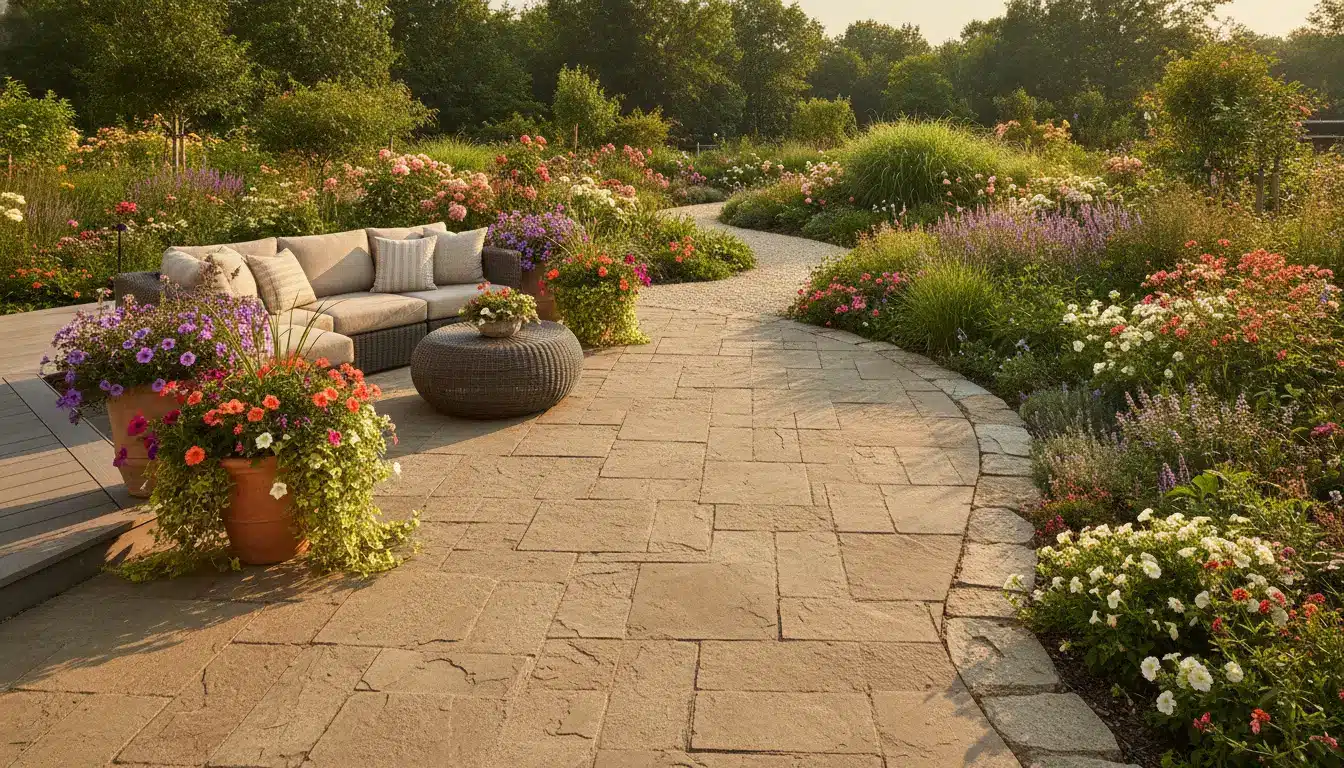
Stone and pavers are ideal to create a natural transition from your landscape to a garden path or backyard. Composite decking is smooth and even for placing tables, chairs, and other accessories to enjoy with your family and friends in your outdoor space. If you are comparing stone decks vs. composite wood decking, we invite you to read this article in which we will explain the differences in terms of maintenance, durability, and installation as well as the aesthetic aspect in the long run.
Consider the accessibility of your surface, particularly if you plan on moving around the outdoor living space frequently with items such as wheeled carts and strollers. Even smooth surfaces can pose difficulties for individuals with mobility challenges. A perfectly level surface, on the other hand, is ideal for regularly used areas of your garden.
Consider Drainage and Moisture
Water from rainfall must be able to drain away from your home and not pool up in a big spot in the middle of your outdoor living space. It must also not collect up around individual plants in the garden, planters, and large containers. It is helpful to consider how much you will be watering the plants around your patio or deck and how they will fall. Leaves from trees will fall into gardens and on patios. Soil from containers will fall out from time to time. These items can be very problematic for some surfaces.
Another crucial consideration when selecting a surface is how it will deal with moisture. Gravel is naturally permeable, which allows rain to fall to the ground. Some forms of stone are more prone to moving than others; in particular, rounded pebbles can become slippery when wet. In general, gravel is best suited for garden paths that do not require constant use.
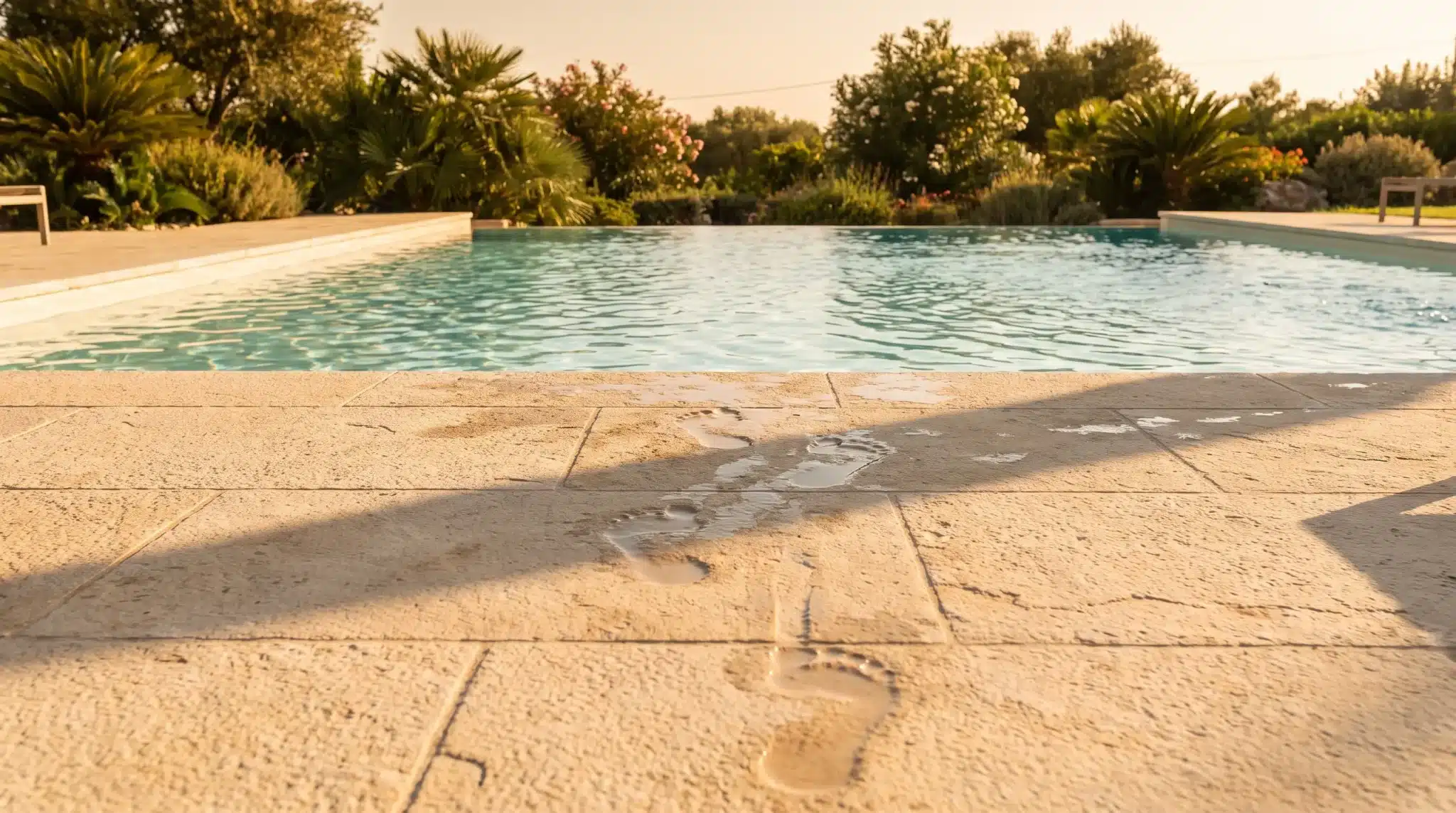
Also, when there is a lot of water falling onto a surface from containers, lawns, or foliage, it can lead to slippery surfaces and puddles forming, which can stagnate and encourage the growth of moss and algae. Pavers can be very permeable when laid correctly with the gaps filled with a permeable material, such as kiln-dried sand or permeable paver sand. In some instances, a hard surface such as a deck may be best for an area, as water can fall through the decking and drain to the ground below. It is vital to remember that the ground below the decking must be sloped to allow the water to drain effectively.
How often do you water your plants nearby your outdoor living space? Some surfaces can be affected by constant moisture, by leaves that fall from the trees and plants, and even by soil from your containers. Also, some of the surfaces can stain, and some can even grow mold and algae. Look for surfaces that are easy to clean.
Plan for Containers and Raised Beds
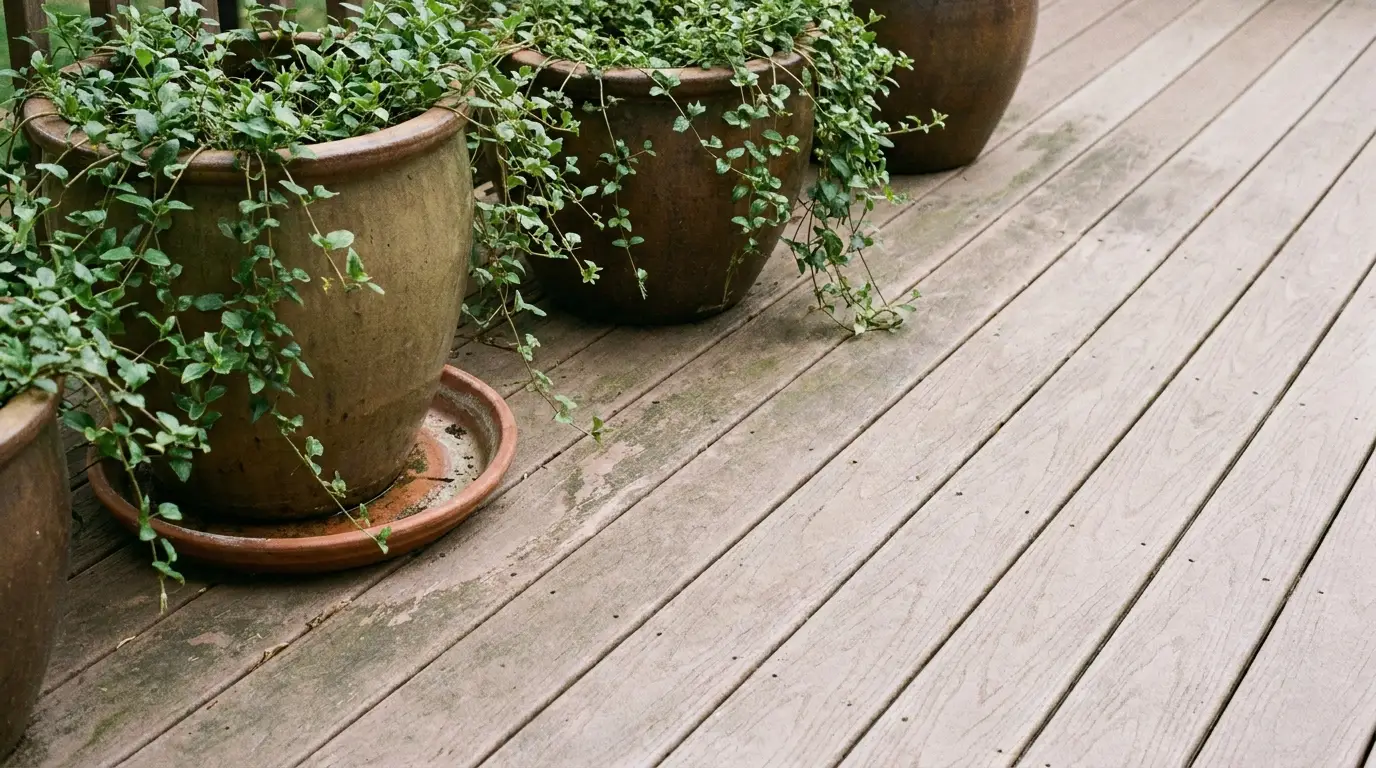
Containers can be incredibly flexible and add a great deal of color to your patio or deck. However, when filled with water and soil, they can become incredibly heavy. This means that the surface of your deck or patio needs to be able to hold their weight. When using raised decking, this can be a particular problem, but by using planter feet, trays, or stands, you can allow for good airflow around the roots of your plants and prevent moisture from becoming trapped. This will help to stop mold and algae and mildew from growing and will make it easier to keep your containers clean throughout the growing season.
Try to use planters so that they are standing on feet or on a tray, which will help to improve the air flow to prevent moisture from being trapped by the soil in the planter. Position the containers in such a way so that any water that comes out of the containers will drain away from the doors and foundations and not collect in a puddle.
Space should be left for the growth of plants—even though they are small at first, they will spread quickly. Also, plan for the largest planters and allow sufficient space between them and the furniture as well as between the plants and the decking/garden.
Compare Maintenance Requirements
Every outdoor floor has maintenance needs. Sometimes, they can be time-consuming or costly. There are many wood decks that need to be stained or sealed on an annual basis. Many gravel decks need to be raked and replenished from time to time. Pavers need to have their joints cleaned from time to time, and sometimes weeds can grow in the joints. Some stone has to be cleaned periodically.
Composite decking surfaces are made to last and can be kept looking great with regular sweeping and washing. They do not require the same level of refinishing as do natural wood surfaces. Concrete is another durable surface that can last for years but will sometimes develop cracks or discoloration.
Consider the amount of time and resources you will need to keep your space looking its best and select a surface that fits your lifestyle. In the end the surface you choose should remain beautiful for years to come and be the backdrop for the garden.
Create a Natural Connection With the Garden
Connecting to your garden is key when selecting a surface for your new outdoor living space. Bring your garden out to your patio or deck with container gardens, planters, border plants, garden pathways, and more. Use natural textures and materials and repeat colors and materials used throughout your garden. For example, natural stone used for the edging around your flower beds can be used for your composite deck or patio, and wooden planters can be used to add warmth to a concrete patio.
Repeating plant colors, patterns, and materials used in other design elements found throughout your property or garden can further connect outdoor living spaces with garden areas as well. Such as the use of stone in the edging of garden flower beds, which could also outline a new deck made of composite wood and accent a few of the planter boxes found on the concrete patio, as were the planters made of wood.
There is a delicate balance of appearance, comfort, good water flow, long lasting durability and necessary maintenance in selecting a suitable material for an outside space. Review how your garden is likely to look throughout the seasons and plan your deck accordingly. With a little consideration your outside space will remain useful and attractive for many years.