Bees tend to be associated with good news. Spring sunshine, garden flowers, honey. So it can come as a surprise to learn that wild bee populations have been falling for decades and that the cause is, in large part, something ordinary people can help address.
In the US, USDA research found that wild bee populations fell 23% between 2008 and 2013 alone. Globally, pollinator distributions have decreased by around 23% compared to 1980 levels, according to data compiled by conservation monitoring bodies. These are not abstract numbers. One in every three mouthfuls of food that humans eat depends on pollinators. In the US, the economic value of insect pollination to agriculture runs to tens of billions of dollars each year.
The cause of the decline is well understood. It is not mysterious or complicated. It is, primarily, the loss of wildflower-rich habitat that bees depend on for food and nesting.
Why Wildflowers Are the Key
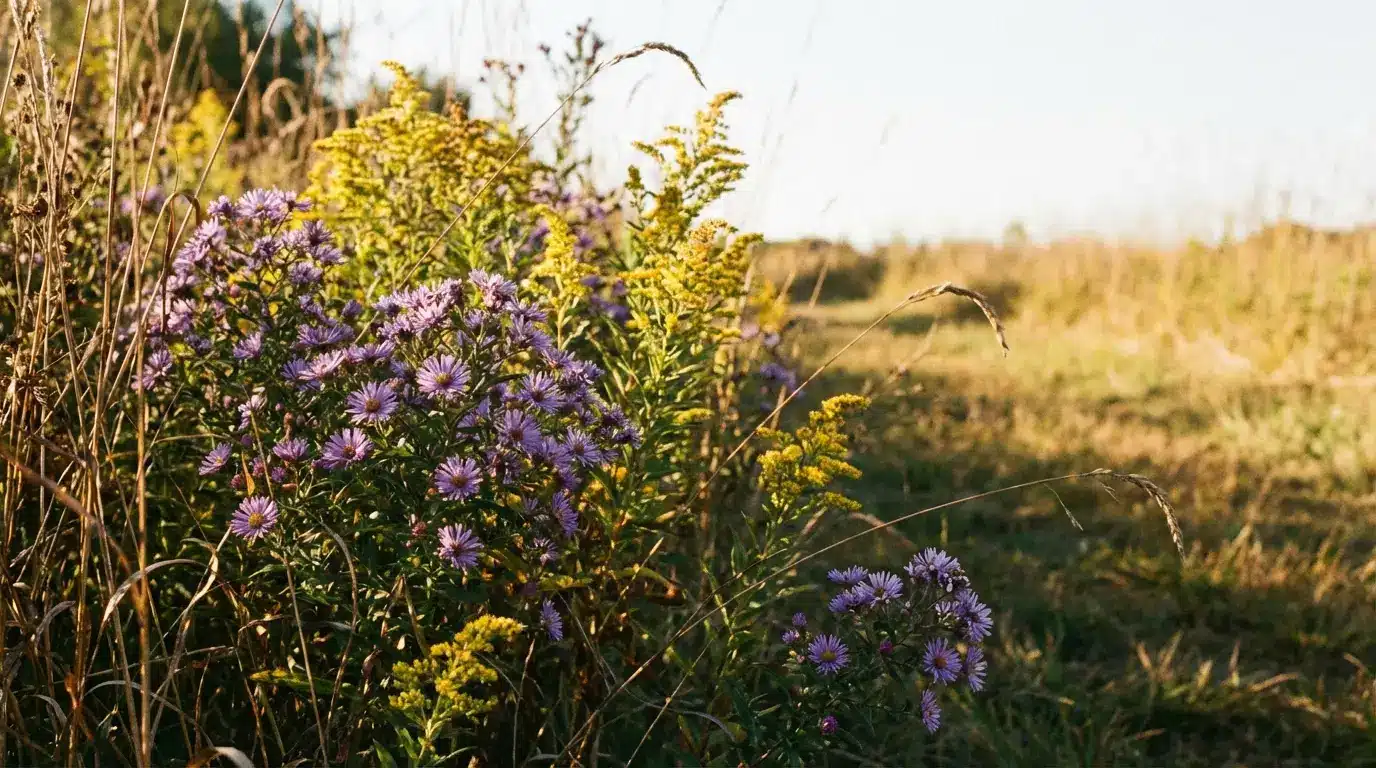
Bees need a reliable supply of nectar and pollen throughout the growing season. Native species of wildflowers provide exactly that. Over millennia, local pollinator populations evolved alongside native plant species and are best adapted to forage from them. The 20th century brought widespread loss of wildflower meadows and grasslands to agricultural intensification, development, and changing land management. What was once a continuous patchwork of foraging habitat became fragmented and sparse.
The practical implication is that ordinary people, with ordinary sized gardens, balconies, window boxes, or even desk pots, can contribute in a meaningful way. Pollinator habitat lost at scale can begin to be rebuilt patch by patch.
6 Things Individuals Can Do to Support Pollinators
1. Grow Native Wildflowers
Not all flowering plants are equal when it comes to supporting pollinators. Native wildflowers offer the nectar and pollen profiles that local bee species have evolved to use. Many garden centre plants have been bred for visual impact rather than wildlife value and offer little to no accessible nectar.
A simple patch of native wildflowers, even in a container, provides more practical benefit than a bed of ornamental blooms. Seed mixes designed for local pollinators are widely available and inexpensive. The Xerces Society publishes regional guides to pollinator-friendly planting across North America, with plant lists tailored to specific climates and growing zones.
2. Try Seed Paper Products
One of the more practical recent innovations is seed paper: handmade recycled paper embedded with wildflower seeds during production. When the paper is no longer needed, it is planted in soil, where it breaks down and the seeds germinate. UK-based manufacturer SeedPrint is one of the few printers making products solely using this type of fully recycled paper pulp mixed with wildflower seeds.
For households that send greetings cards, use business stationery, or want a genuinely zero-waste option for gifts and events, seed paper is an accessible way to turn an everyday purchase into a direct contribution to pollinator habitat.
3. Let Part of Your Lawn Grow
The No Mow May campaign encourages people to stop mowing their lawns during May to allow wildflowers to bloom. Research by the conservation charity Plantlife found that unmown lawns produced five times more nectar sugar than regularly mown ones.
Even leaving a corner of a garden uncut year-round creates valuable foraging and nesting habitat. Long grass is not just untidiness: it is a functioning wildlife corridor. Given that residential lawns cover an enormous area across North America, small changes in how they are managed can add up quickly at a landscape scale.
4. Avoid Pesticides in the Garden
Pesticides and neonicotinoids in particular are well-documented drivers of bee decline. The EPA and independent researchers have linked these compounds to impaired bee navigation, reduced colony health, and increased mortality. Many common garden problems, from aphids to slugs, can be managed without chemical intervention using physical barriers, companion planting, or encouraging natural predators such as ladybugs and lacewings.
5. Provide Nesting Habitat
While much of the focus on pollinators centres on food sources, nesting habitat is equally important. Solitary bees make up the majority of bee species in most regions and nest in a wide variety of locations: hollow stems, sandy soil, holes in wood, and bare earth. Simple measures such as leaving hollow plant stems standing over winter, keeping a patch of bare or sandy soil, and installing a bee hotel can meaningfully increase nesting opportunities in a garden.
The Xerces Society and the Pollinator Partnership both publish practical guidance on creating pollinator-friendly gardens, including nesting advice tailored to different climates and garden sizes.
6. Choose Pollen-Rich Plants for Different Seasons
Pollinators need food from early spring through to late autumn. A garden planted entirely with summer-flowering species leaves bees short of resources at the start and end of the season. Early-flowering plants such as crocuses, lungwort, and native willows provide critical early-season nectar, while goldenrod, asters, and late-blooming sedums support pollinators well into fall.
Planning for seasonal succession does not require a large garden or a large budget. Even a window box with a rotation of three or four species chosen for different flowering times makes a meaningful difference.
The Cumulative Case for Individual Action
It is tempting to feel that the scale of pollinator decline puts it beyond the reach of individual action. But the evidence points in a more hopeful direction. Where conservation action is targeted and sustained, wildlife recovers. Residential gardens and yards, taken together, cover more land than all the protected nature reserves in many countries combined. What happens in them matters.
None of the actions above requires significant money, space, or expertise. They require only the decision to start.