You turn on the heat for the first time in months, and you notice a faint smell of dust settling. A small amount of dust or a faint dusty smell when you turn on the heat for the first time in months can be normal. It often means dust has settled on parts of the heating system during the off-season. But if it’s a chronic problem that happens during the winter, then there’s a mechanical problem.
Forced-air heating systems have an ideal configuration with filtration, ductwork, and constant airflow. When something is broken, due to pressure imbalances, it will instead pull in and recirculate airborne debris instead of trapping it. This guide starts you out with the right concepts to help understand if you are in a seasonal clearing case, or an ongoing circulation case, which will help you ultimately with indoor air quality and having your heating system function as designed.
Check Your Air Filter First
First thing is the air filter, which is designed to prevent airborne particulates from moving back through the system. Dirty filters, low-quality filters, or overdue filters clog your HVAC and reduce airflow and motor effectiveness. During the winter, filters need to be replaced more aggressively than during the spring, summer, or fall since your furnace runs all the time.
A standard 1-inch pleated filter may need replacement anywhere from about 30 to 90 days, depending on system use, filter type, pets, and indoor air conditions. During heavy winter use, many homes need more frequent checks and replacements. In fact, replacing the right heating system filter can be one of the easiest and most cost-effective ways to reduce dust and improve airflow.
The U.S. Department of Energy notes that clogged filters reduce airflow and can increase energy use, so replacing a dirty filter can improve system efficiency. Higher-efficiency filters can capture smaller particles, but they also create more resistance to airflow. Not every HVAC system is designed for high-MERV filters, so it’s best to use a filter rating your system can handle.
Leaky Ductwork Can Pull Dust Into the System
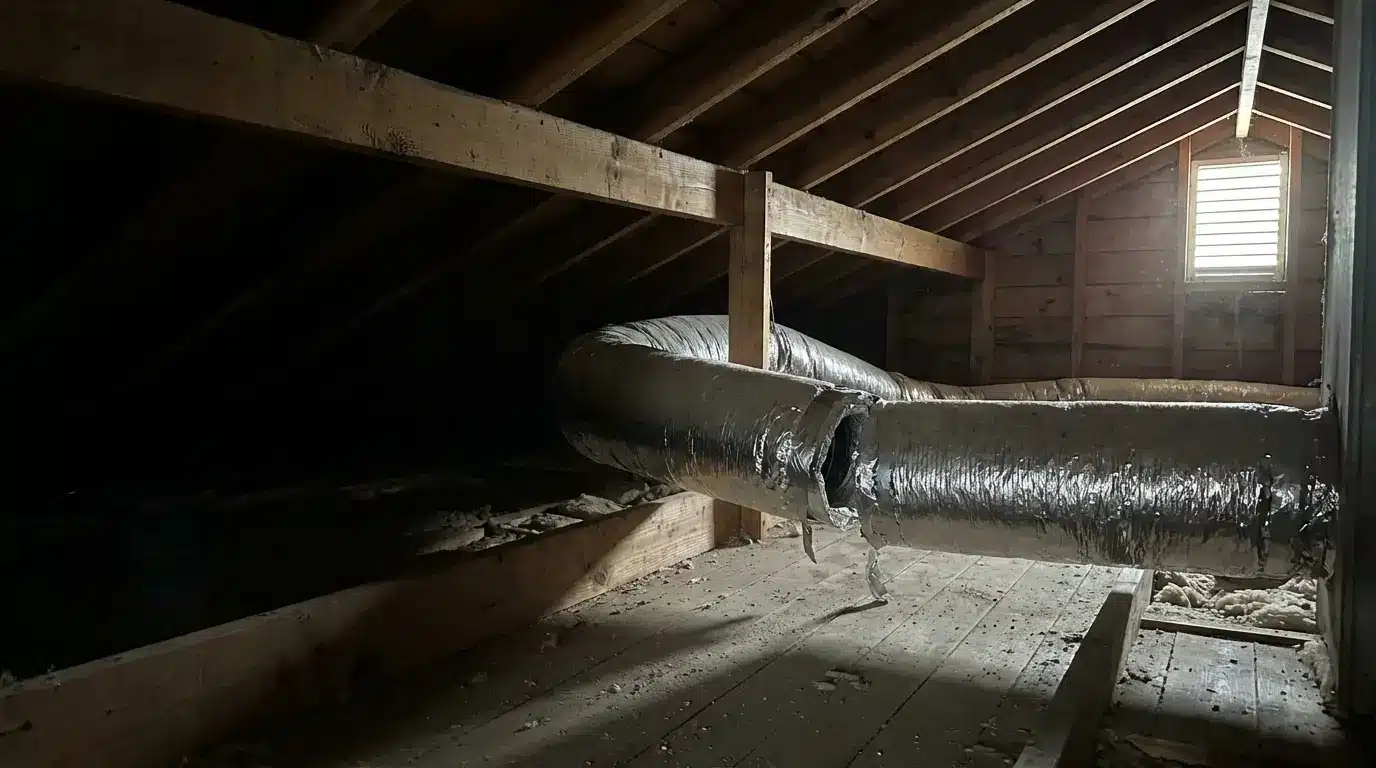
Next up is the ductwork, where the typical existing home has about 20% to 30% duct leakage, and older homes even more so due to duct tape aging and flexible duct degradation over time. Gaps, joints, and leaks in ductwork lead to the HVAC system creating large pressure system imbalances if supply air leaks into an unoccupied attic, it creates negative pressure within your home, causing it to suck in contaminants and particles from the outdoors, attics, crawl spaces, and wall cavities.
You don’t need special equipment to detect leaky ducts persistent heavy dust coatings after cleaning, uneven heating performance between rooms, and visible dust over the edges of supply vents are all indicators. The stack effect induces infiltration of air at the bottom of a house and exfiltration at the top of a house, so ceiling and attic duct leaks are often the most significant contributors of thermal energy loss and dust infiltration within breathable air space.
Other Common Causes of Dust From Heating Vents
Indoor humidity is another factor winter heating significantly decreases the absolute moisture concentration of indoor air. Below 40% relative humidity indoors, static electricity becomes aggressive, causing dust to cling to surfaces and remain suspended rather than settling. Humidifying to 40% to 50% relative humidity helps dust and particles fall out so they can be cleaned.
Another common issue is neglecting HVAC maintenance over time small debris that bypasses filters eventually accumulates on cooling coils and the blower wheel. Dust tends to accumulate at “friction points” in ductwork, particularly where flexible ductwork has excess slack — these sagging sections act like speed bumps damaging the ducts. Additionally, many older homes have less effective thermal and air barrier insulation, allowing more environmental dust influx.
Finally, remember that the relative amount of dust in homes is often more significantly impacted by daily indoor occupant activities like cooking, cleaning, pets, and airflow induced from outdoors rather than lightweight and stationary dust sitting in a perfectly functioning duct line.
How To Tell Whether It’s Dust, Insulation, or Something More Serious
It’s important to differentiate when dust is “normal” household dust (skin cells, lint, pet dander) versus weird debris that indicates a mechanical problem or health hazard.
- Normal Household Dust: Tends to be light grey and relatively uniform.
- Insulation: If you see yellow or pink fibrous chunks blowing out vents, your system may be pulling fiberglass insulation via an unsealed duct.
- Soot: If you see black soot or charcoal-like particulates, particularly congregating near registers, this can indicate an operational problem.
- Mold Indicators: Dark residue around registers is not always dangerous, but it should not be ignored. In some cases it may be ordinary dust sticking to moisture or surface grime. In other cases, soot-like residue can point to a combustion or venting problem and should be evaluated by an HVAC professional.
If the “dust” is strongly musty-smelling, spotty, and firmly attached to the grate and register surfaces, this may indicate active microbial growth on settled dust with constant moisture input. These strange and unusual bits usually indicate problems that should not be ignored.
What To Do Next To Stop the Problem
Here’s how to troubleshoot:
- Inspect and replace the filter: Switch off power at your thermostat. Hold your current filter up to light, using the “light test” if you can’t see light go through the pleated filter, it’s functionally clogged and should be discarded.
- Confirm correct fit and direction: Put the filter in, and make sure the printed arrows on the filter frame point toward the HVAC unit (indicating correct airflow direction).
- Check visible vents and registers: Walk around the house and make sure the returns and supply vents are all open and unblocked with furniture/rugs, etc. — ensuring pressure balance within rooms.
- Monitor for a few days: If persistent dust or uneven heating occurs despite this clean, properly rated filter, likely ductwork is the culprit.
When To Call an HVAC Professional
If you’ve done the above sequence and there are ongoing problems because of duct leaks and visible dust like soot, fiberglass, or fuzzy stuff, it’s reasonable to call in professionals. HVAC professionals can use tools such as pressure testing, airflow measurements, combustion analysis, and sometimes thermal imaging to help locate duct leaks and other system problems.
Some problems require an HVAC technician, who can help make sure the system operates safely and efficiently rather than guessing at the cause.