Your kitchen cabinets do more than hold your dishes; they quietly set the tone for your entire home.
And right now, two styles are stealing the spotlight in kitchen design conversations everywhere: the clean, understated charm of Shaker cabinets and the rich, ornate character of Traditional ones.
Some kitchens call for simplicity, others lean into a more layered, detailed look, and the style you choose makes all the difference.
Stick around because this comparison is going to make that decision a whole lot easier.
What are Shaker Cabinets?
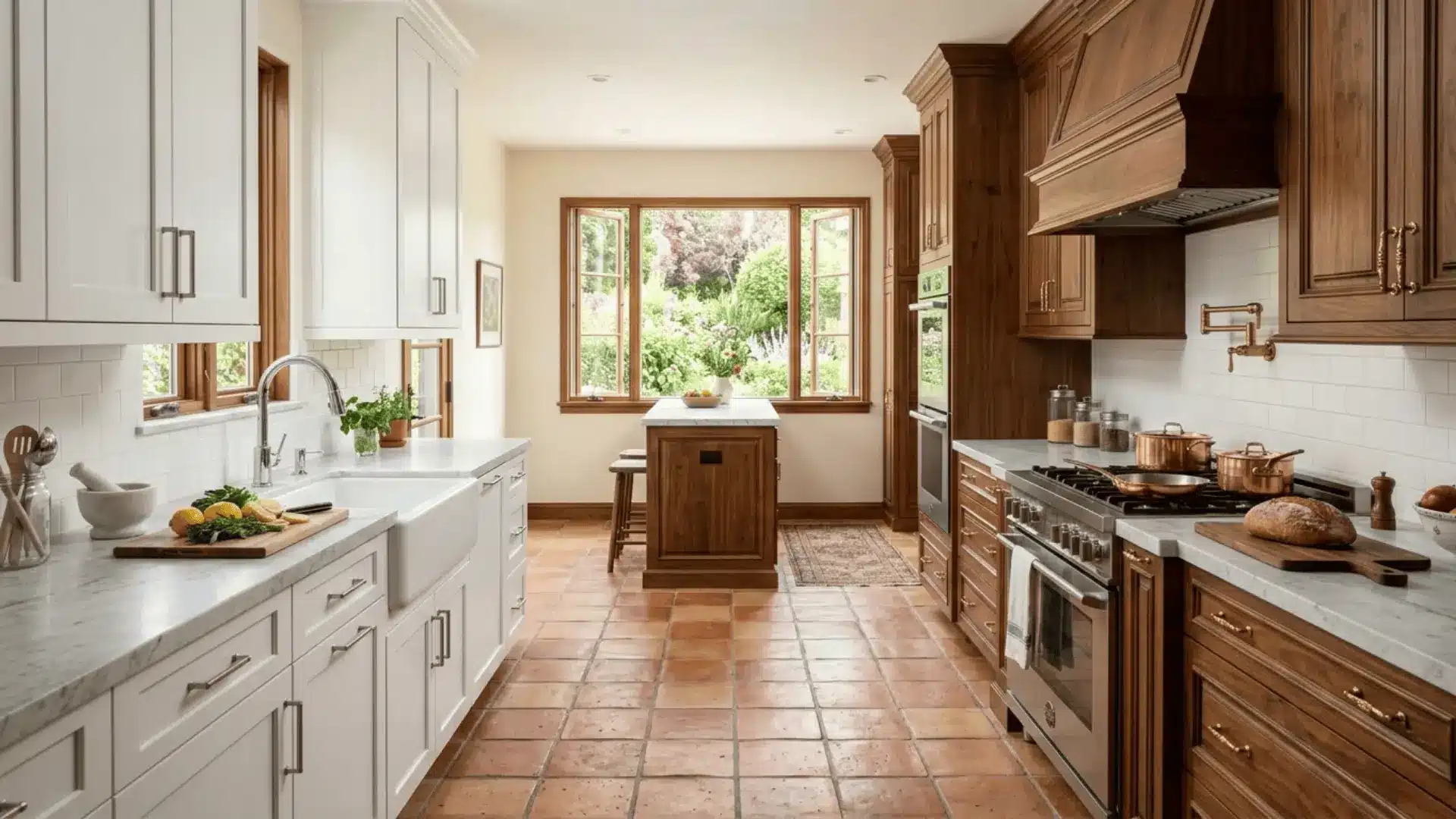
Shaker cabinets have a quiet confidence about them that is hard to ignore.
Rooted in a philosophy of honest craftsmanship, they feature the now-iconic five-piece flat-panel door with clean, straight lines and virtually no ornamentation.
What you see is exactly what you get, and somehow that simplicity feels so deeply refined.
Originally inspired by the Shaker religious community, which believed beauty lived in function, these cabinets have carried that spirit into modern kitchens beautifully.
They are commonly crafted from maple, oak, or cherry, and look equally stunning in painted finishes like white, soft gray, or deep navy.
What are Traditional Cabinets?
If Shaker cabinets speak in whispers, traditional cabinets make a statement.
Drawing inspiration from European and classic American design, they bring a sense of grandeur that feels warm and lived-in all at once.
The signature raised panel doors, decorative moldings, and intricate trim work are what give them that layered, storied look so many homeowners fall in love with.
Every detail feels intentional, almost like fine furniture found its way into your kitchen.
Rich wood tones in walnut, cherry, or mahogany paired with glazed or stained finishes complete that timeless, heirloom-quality aesthetic beautifully.
Shaker Cabinets vs. Traditional: Side-by-Side Comparison
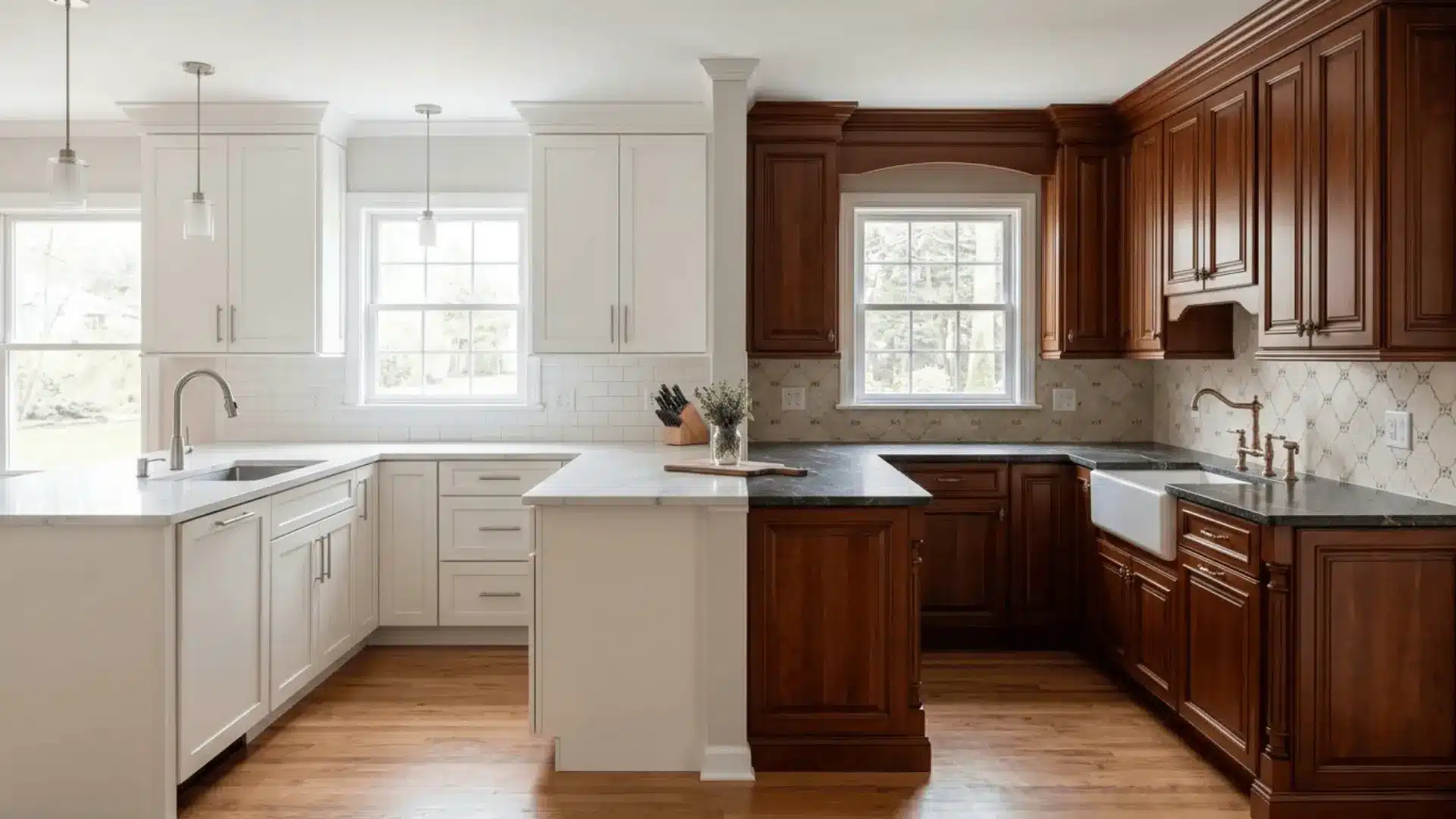
Both styles bring something genuinely beautiful to the table, just in very different ways.
Here is a quick look at how they compare across the details that matter most in a kitchen.
1. Design
Shaker cabinets adopt a five-piece flat-panel construction that feels intentional in its restraint.
Traditional cabinets, on the other hand, layer in decorative moldings, carved accents, and ornate trim that build visual richness from every angle. One feels current and airy, the other feels collected and warm.
Depending on the mood you want your kitchen to carry, both design approaches have a very distinct and rewarding visual payoff.
2. Door Style
The recessed flat center panel is what gives Shaker cabinets their grounded, unfussy character.
Traditional cabinets counter that with raised panels and contoured edges that add depth and dimension to every door.
It is a small detail that carries a lot of visual weight and ultimately shapes the entire personality of your kitchen space.
3. Aesthetic
Shaker cabinets move fluidly across modern, transitional, and rustic kitchen styles, making them one of the most versatile choices available today.
Traditional cabinets, with their formal symmetry and rich layering, anchor a space in classic European and American design heritage.
If your home already leans toward a particular era or mood, your cabinet aesthetic will naturally follow and reinforce that feeling throughout.
4. Maintenance
Shaker cabinets are notably easier to clean because smooth, flat surfaces collect far less dust and grease.
Traditional cabinets, with their intricate molding grooves and trim detailing, need a soft brush or cotton swab to get into the crevices around raised panels and decorative edges.
Neither is difficult to care for, but if a low-effort kitchen is a priority, Shaker cabinets have a practical edge.
5. Cost
Shaker cabinets typically range anywhere from $100 to $300 per linear foot, depending on material and finish quality.
Traditional cabinets, given their intricate joinery and handcrafted detailing, can run between $150 to $500 per linear foot or more for fully custom builds.
Both are worthwhile long-term investments, and the right choice really comes down to your budget and the overall vision you have for your space.
Shaker vs. Traditional Cabinets: At a Glance
| Feature | Shaker Cabinets | Traditional Cabinets |
|---|---|---|
| Design | Simple, clean | Ornate, detailed |
| Door Style | Flat panel | Raised panel |
| Aesthetic | Modern/Transitional | Classic/Formal |
| Maintenance | Easier | More detailed cleaning |
| Cost | $100 to $300 per linear foot | $150 to $500 per linear foot |
Pros and Cons of Shaker Cabinets
Shaker cabinets have earned their place as a kitchen favorite for good reason.
But like any design choice, they come with their own set of strengths and limitations worth knowing before you commit.
Where Shaker Cabinets Shine
- Their clean, flat surfaces make wiping down grease and grime genuinely effortless.
- A versatile design language that adapts beautifully across modern, farmhouse, and transitional kitchens.
- Budget-friendly pricing without compromising on that polished, put-together look.
- A timeless quality that holds up well against shifting design trends.
Where They Fall Short
- The minimal profile can feel too understated for homeowners who love decorative depth.
- Limited visual drama makes them a less exciting choice for formal or classic kitchen settings.
- Flat panels can highlight imperfections in paint or wood finish more readily than detailed doors.
Pros and Cons of Traditional Cabinets
Traditional cabinets carry a warmth and character that is genuinely hard to replicate.
Still, they are not the perfect fit for every kitchen, and knowing where they shine and where they fall short saves a lot of second-guessing later.
Where Traditional Cabinets Shine
- Raised panels, carved moldings, and rich wood tones create an effortlessly luxurious kitchen presence.
- A natural fit for classic, formal, and heritage-style homes that call for that extra layer of grace.
- Handcrafted detailing adds a sense of depth and character that feels truly one of a kind.
- Strong long-term design identity that anchors a kitchen with purpose and intention.
Where They Fall Short
- Intricate grooves and molding crevices demand more frequent and detailed cleaning routines.
- A higher price point means custom and semi-custom builds can stretch budgets considerably.
- The formal, ornate aesthetic can feel visually heavy or outdated in contemporary or minimalist homes.
Which Cabinet Style is More Popular in 2026?
Shaker cabinets are clearly having a moment right now, dominating modern, transitional, and even contemporary farmhouse kitchens with their clean versatility and understated appeal.
Their ability to pair effortlessly with modern appliances, open shelving, and minimalist hardware keeps them at the top of designer recommendation lists.
Traditional cabinets, however, have not lost their footing. They remain a strong, sought-after choice in luxury builds and classic home renovations where richness and formality are the whole point.
Popularity aside, the better question is always which style feels most like home to you.
Which Cabinets Add More Value to Your Home?
Cabinet style plays a quieter but surprisingly significant role in how buyers perceive a home. Both styles can absolutely lift resale value, just for different kinds of buyers and different kinds of homes.
Shaker Cabinets and Resale Value
Shaker cabinets have a broad, cross-demographic appeal that works in their favor during resale. Their neutral, adaptable style reads well to a wide range of buyers, making them a relatively safe and smart investment.
Most buyers, regardless of personal taste, tend to see Shaker cabinets as a natural fit, which keeps your kitchen from feeling like a dealbreaker during a showing.
Traditional Cabinets and Resale Value
Traditional cabinets appeal to a discerning buyer, especially for luxury, classic, or estate-style homes. In the right setting, they can boost perceived value and justify higher prices.
In a modern or transitional home, however, their formal character may not resonate as broadly, making them a stronger investment when the overall home aesthetic already aligns.
Shaker vs. Traditional Cabinets in Different Kitchen Styles
Not every cabinet style belongs in every kitchen, and that is actually a good thing.
Knowing which style naturally complements your kitchen’s existing personality makes the whole decision feel a lot more intuitive.
1. Modern Kitchens
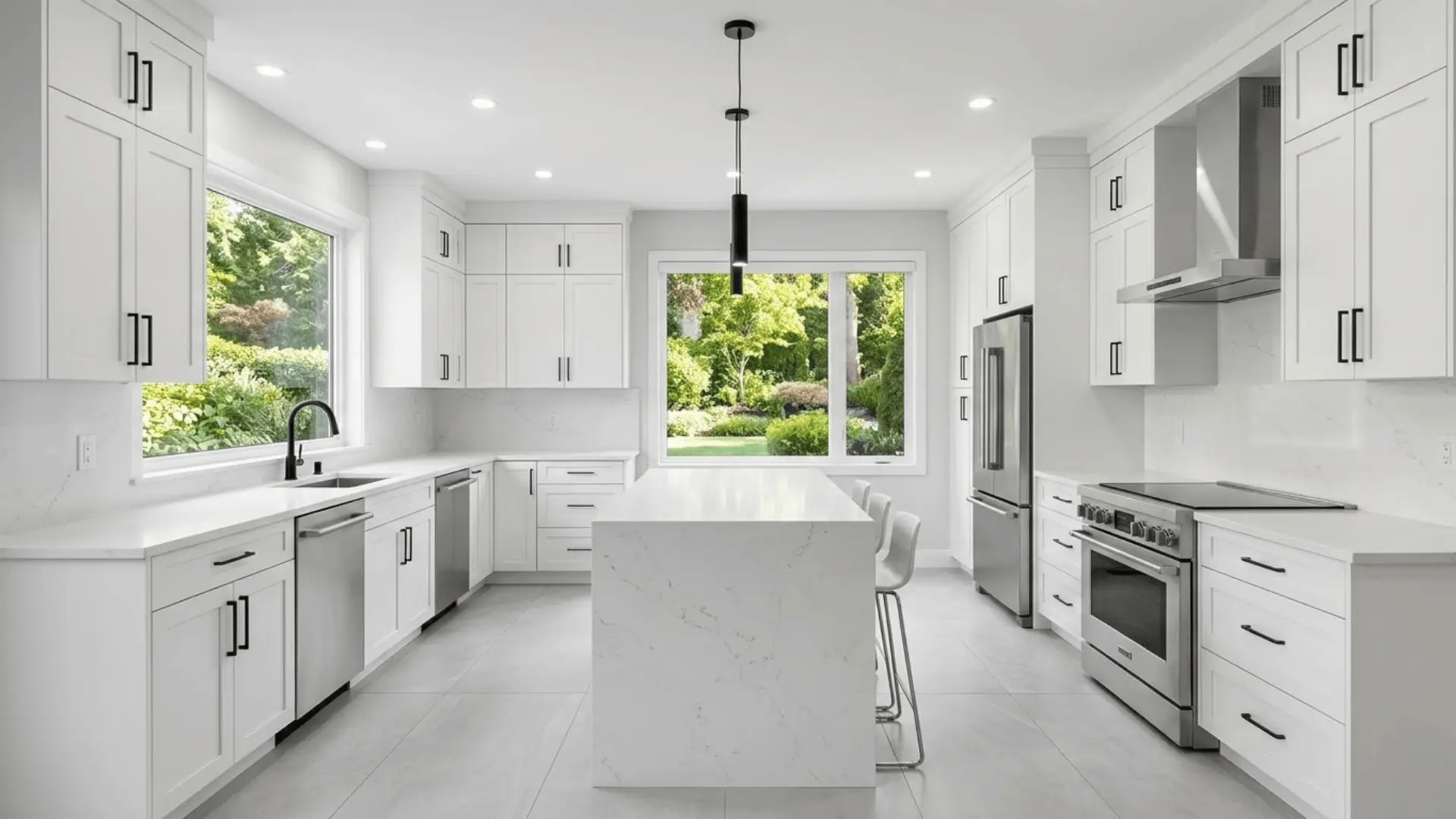
Shaker cabinets are a near-perfect match for modern kitchens. Their flat panels and clean geometry echo the sleek, uncluttered ethos that modern design is built on.
Paired with minimal hardware, quartz countertops, and stainless steel appliances, they pull the whole space together without competing for attention.
2. Transitional Kitchens
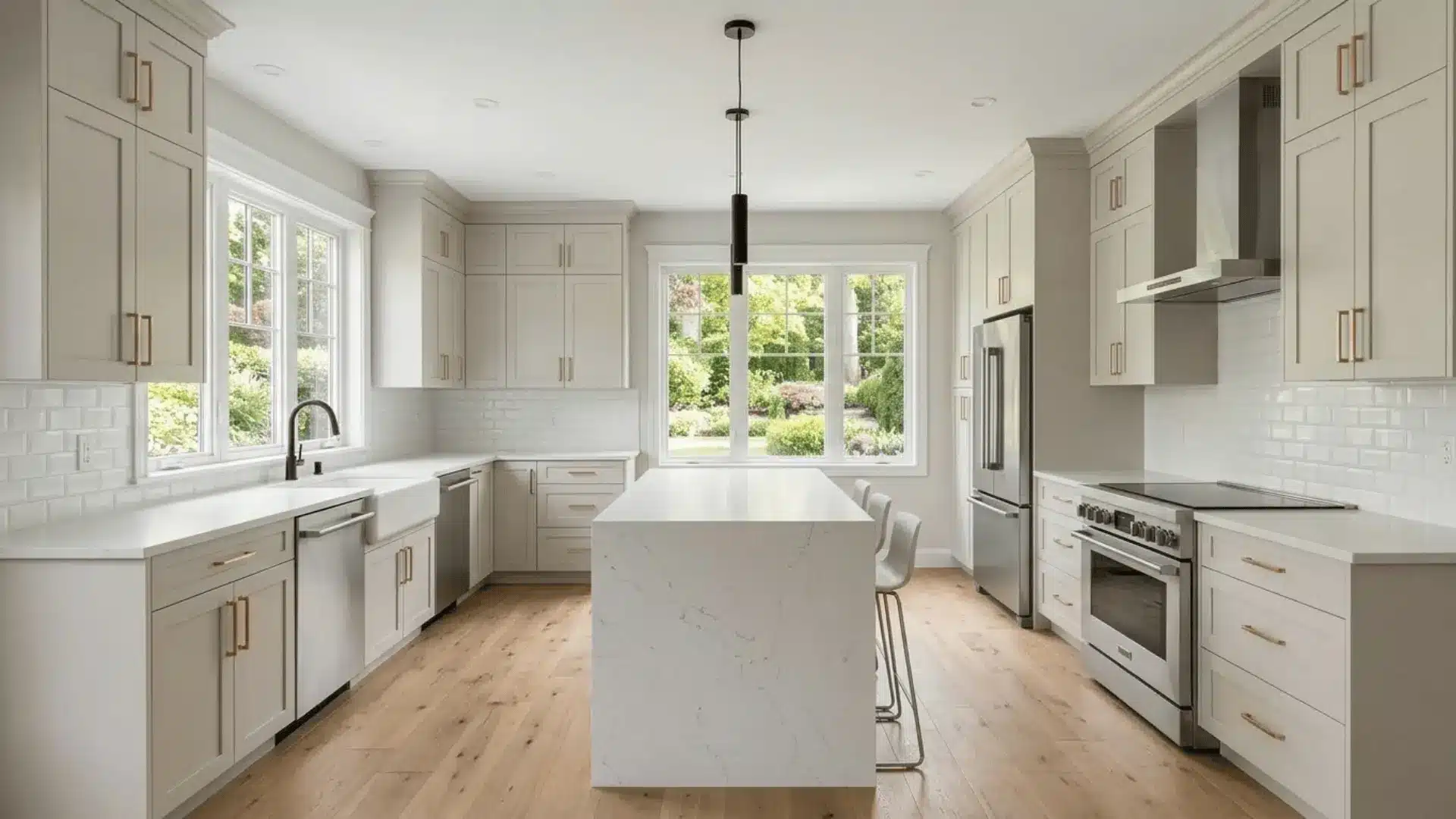
Transitional kitchens sit in an interesting middle ground, and Shaker cabinets navigate that space beautifully. Their neutral profile bridges contemporary and classic elements without tipping too far in either direction.
That said, thoughtfully incorporating traditional details like crown molding or decorative hardware can add a lovely sense of depth to a transitional layout.
3. Traditional Kitchens
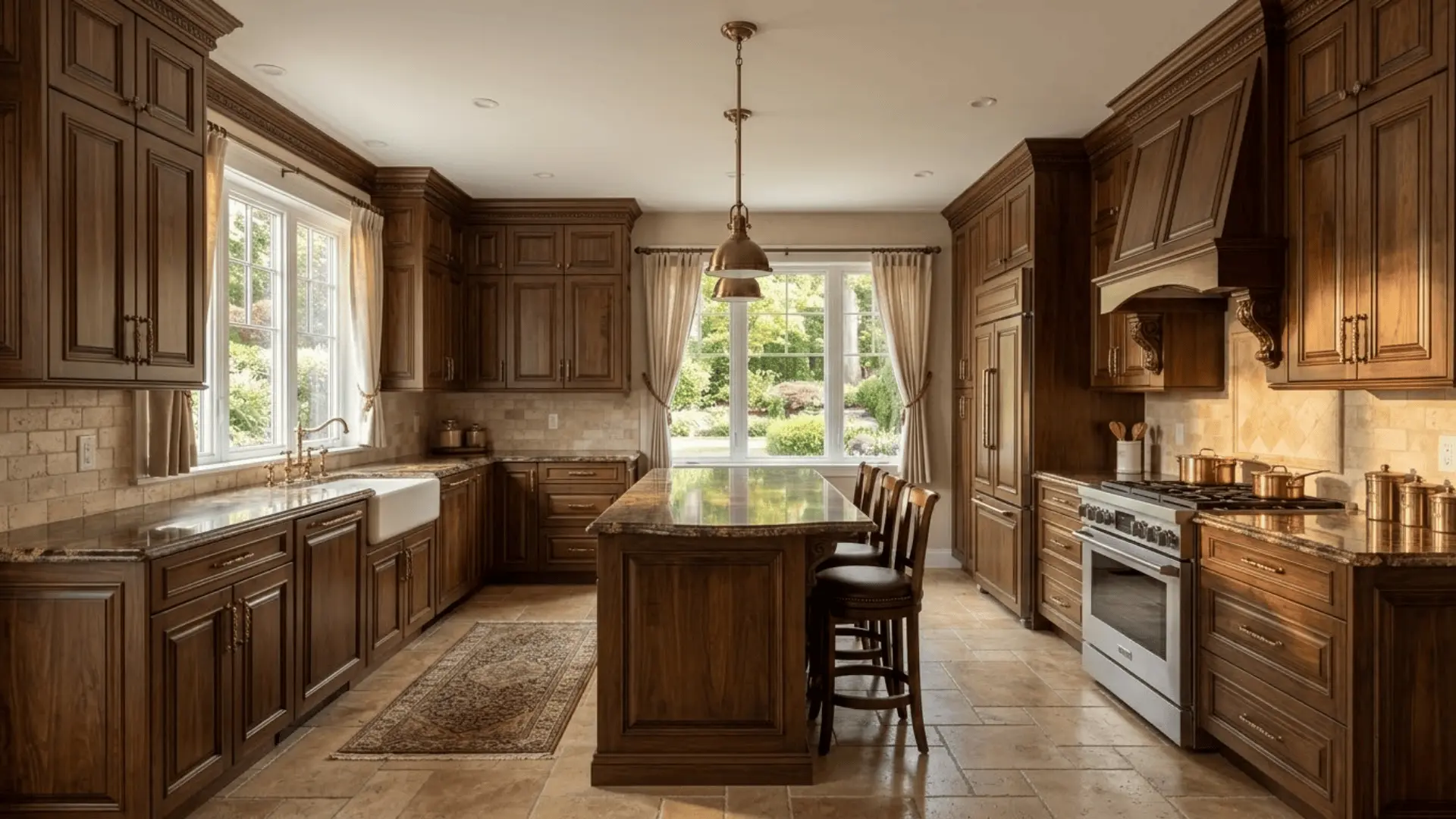
Traditional cabinets were practically made for classic kitchen settings. The ornate moldings, raised panels, and rich wood finishes feel right at home alongside formal details like apron sinks, stone floors, and antique-inspired fixtures.
In a traditionally styled kitchen, these cabinets do not just fit; they complete the entire design story.
Cost Comparison: Shaker vs. Traditional Cabinets
Understanding the cost difference between these two styles comes down to more than just the price tag.
Materials, craftsmanship, and installation labor all play into the final number in ways that are worth looking at closely.
| Cost Factor | Shaker Cabinets | Traditional Cabinets |
|---|---|---|
| Material Cost | Moderate; maple, oak, or painted MDF | Higher; hardwoods like walnut, cherry, mahogany |
| Labor Cost | Lower; simpler construction and fewer details | Higher; intricate joinery and handcrafted moldings |
| Finish Cost | Affordable; clean painted or stained finishes | Higher; glazed, distressed, or multi-step stained finishes |
| Customization | Budget-friendly even in custom builds | Significantly higher for fully custom detailing |
| Overall Range | Mid-range investment | Premium to luxury investment |
Can You Mix Shaker and Traditional Cabinets?
Absolutely, and when done thoughtfully, the result can feel incredibly curated.
The key is leaning into a transitional design approach where one style takes the lead, and the other plays a supporting role.
Keeping a consistent color palette across both styles is what holds the look together and prevents the space from feeling mismatched.
A shared hardware finish helps, too. Think of it less as mixing and more as layering, where simplicity and detail find a natural, considered balance together.
Final Thoughts
Choosing between shaker cabinets vs traditional cabinets really comes down to the story you want your kitchen to tell.
One speaks in clean, quiet lines while the other layers in warmth and character built to last. Neither is wrong, and both are genuinely beautiful in the right space.
Trust your instincts, consider your lifestyle, and let your home’s personality guide you toward the style that feels most like yours.
Already leaning toward one side? Drop your pick in the comments, would love to know which style is speaking to you!