The right container format eliminates access friction — standard units often create it
Most businesses dealing with constrained storage do not need more premises. They need better access to the space they already have, or a format that fits where a standard container cannot.
A contractor who needs tools close to the active work area but cannot leave a 40ft unit blocking the main access route. A warehouse running seasonal overflow that needs to pull stock from both ends without digging through the back half to reach the front. A fabrication business storing tall frame sections that simply do not fit through a standard pair of cargo doors. These are not unusual problems, and a standard single-door container does not solve any of them well.
Businesses dealing with awkward loading zones, tight sites, or non-standard storage needs often start by reviewing the available specialised containers to see which format best matches the limitation they are actually trying to solve. The range covers high cube, tunnel, open top, side access, flat rack, and more — each one designed around a different type of operational constraint.
Why Standard Storage Setups Stop Working on Constrained Sites
A standard 20ft or 40ft shipping container with rear cargo doors is the right tool for a lot of situations. It is not the right tool for all of them. When site conditions are awkward — limited yard depth, narrow loading lanes, restricted overhead clearance, or goods with unusual dimensions — a standard unit creates as many problems as it solves.
The access point is the most common source of friction. Single-end-access containers work on the assumption that goods at the back are accessible from the front. On a busy site where the container is packed tightly, that means moving everything in front to get to what is behind. That is not a storage problem; it is a workflow problem. And its cost is measured in labour time, not square footage.
Space Limits Are Not Just About Square Footage
When businesses think about running out of storage space, they usually think about total volume. But the more common problem is usable space: the proportion of the container that can actually be accessed efficiently given how the unit is placed and how the goods are loaded.
A container that is theoretically 80% full but only has front-third access in practice has effective usable capacity closer to 30%. The rest exists on paper. Taller goods, bulky materials, and anything that requires a forklift or crane to move compounds this further — you are not just losing space, you are also creating a handling problem every time you need to reach the goods at the back.
Access Limits Can Slow Operations More Than Lack of Storage
The HSE warehousing and storage guidance (HSG76) covers the operational and safety implications of poor site layout, including the risks associated with unnecessary manual handling and blocked access routes. The guidance is aimed at fixed warehouse environments but the principle applies equally to on-site container storage: when access to goods is impeded, handling increases, and with it so do time, risk, and cost.
Rehandling — moving goods out of the way to get to other goods — is the single most avoidable cost in constrained storage. Choosing the right container format eliminates it. Choosing the wrong one embeds it into daily operations.
What Makes a Container “Specialised”?
A specialised container is any unit designed to do something a standard single-door box cannot. That might mean a different loading direction, extra internal height, the absence of fixed side walls, or access at both ends. The modification is purposeful — it addresses a specific operational need rather than general-purpose storage.
The Difference Between Standard and Specialised Containers
Standard containers have one pair of cargo doors at one end. They are designed for palletised goods loaded and unloaded from the rear. Internal height is approximately 2.35m. They handle the majority of general storage needs well.
Specialised formats change one or more of those parameters: the loading direction (top or side rather than end), the number of access points (both ends rather than one), the internal height (high cube units add roughly 30cm over standard), or the structural enclosure (open top and flat rack units remove the roof or the walls entirely). Each modification is the answer to a specific type of constraint.
Which Specialised Container Helps With Which Limitation?
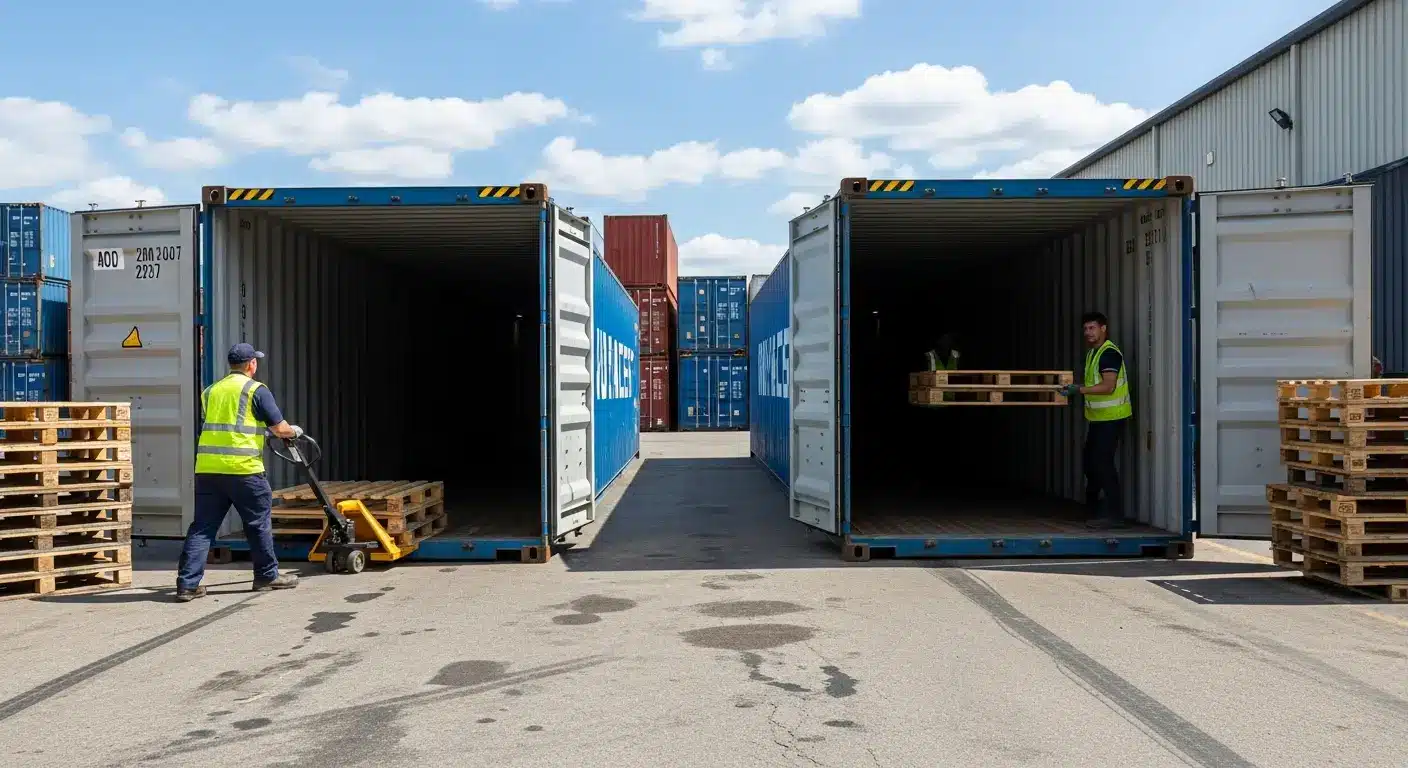
Tunnel containers eliminate the need to unload the front to reach the back — the single most common access complaint on busy sites
High Cube Containers for Height-Related Space Problems
A high cube container is a standard ISO container built to 9ft 6in external height rather than the standard 8ft 6in. Internally that translates to roughly 2.7m of clear working height — about 30cm more than a standard unit.
That extra foot matters more than it sounds. For businesses storing tall racking, large frame sections, rolled materials, tall machinery, or goods stacked on pallets with height, a standard container creates a ceiling problem. Either stock has to be reconfigured to fit, which adds handling, or the top portion of the unit goes unused. High cube containers remove both constraints.
They are also worth considering for any converted container used as a workspace. The additional headroom makes a meaningful difference to comfort and practicality in day-to-day use.
Tunnel Containers for Faster Access From Both Ends
A tunnel container has cargo doors fitted at both ends, creating dual access along the full length of the unit. When both sets of doors are open, the container becomes, as the name suggests, a passable tunnel.
The operational benefit is stock rotation. On a standard container, goods loaded first are hardest to reach — they sit at the back. A tunnel container allows loading from one end and unloading from the other, which means first-in-first-out rotation without any rehandling. For businesses with high-turnover stock, seasonal goods, or materials that need regular cycling, that is a significant operational improvement.
Tunnel containers are also used on sites where through-flow matters: as covered access points between two areas, as vehicle inspection lanes, and as ticket or security checkpoints at events. The dual-access format suits any situation where people or goods need to move through a space rather than simply into it.
Open Top Containers for Loading From Above
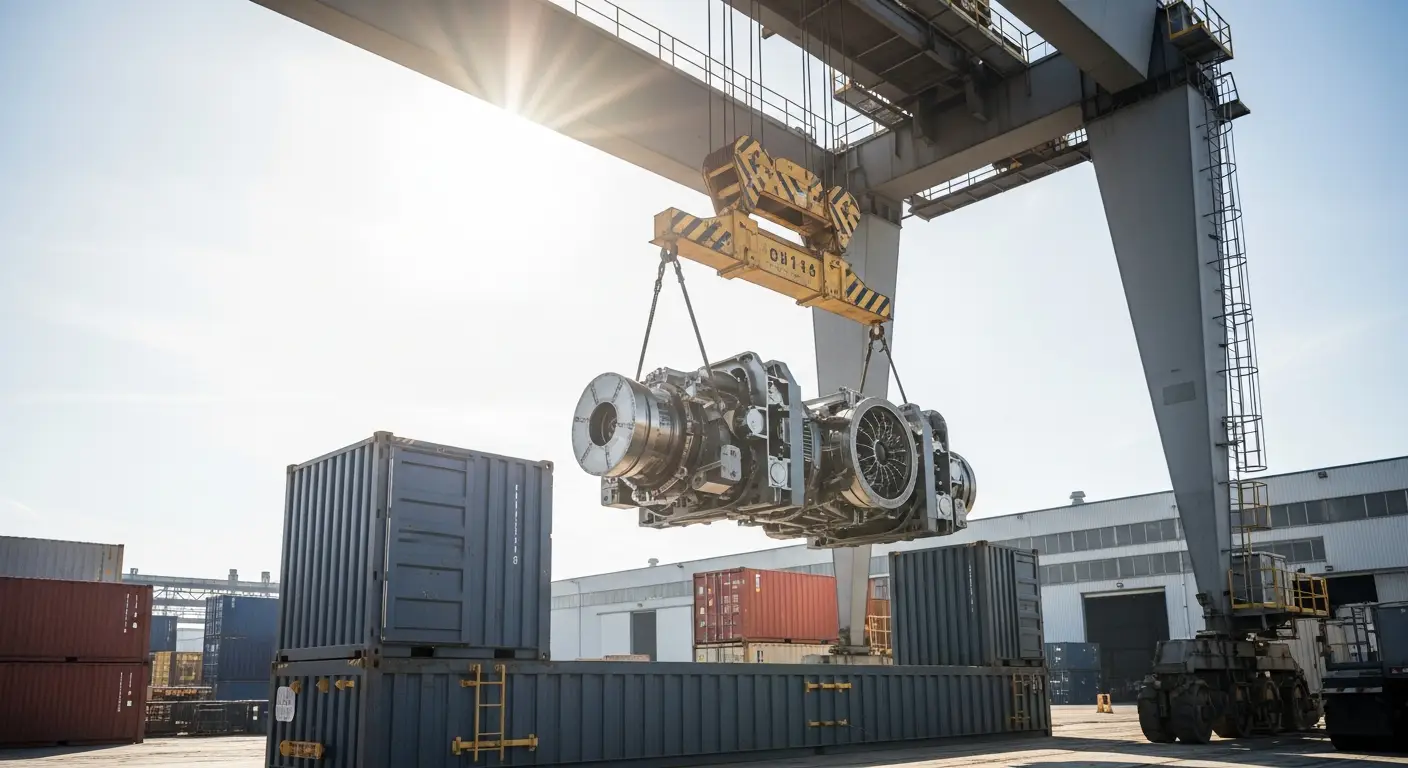
Open top containers remove the overhead constraint entirely — essential for anything that cannot be loaded through end doors
Open top containers have either a removable soft cover (tarpaulin) or no roof section at all, allowing goods to be loaded from above by crane, telehandler, or overhead lift equipment.
This is the right format when goods are too tall or too bulky to manoeuvre through a standard pair of end doors, or when the loading equipment works from above rather than from the side. Structural steel, large plant components, glass sheets, prefabricated frames, and machinery with awkward dimensions are common candidates.
On-site storage applications are sometimes overlooked here. An open top container positioned under a gantry or telehandler path can be loaded and emptied with a single lift per item, rather than requiring the goods to be tilted, turned, or disassembled to fit through a standard door aperture.
Side-Access Containers for Full-Width Forklift Loading
Side-access containers (sometimes called open-side or full side-access units) have bi-fold or concertina doors fitted along the full length of one side wall, in addition to the standard end doors. When open, the entire side of the container is accessible.
This is the format for businesses loading with a forklift. Standard end-door containers require goods to be driven in, turned, and positioned — a slow process in a tight container with a counterbalance forklift. Side access allows the forklift to approach from the side and place pallets directly into position across the full width of the container floor, without any manoeuvring inside.
Side access units are also well suited to display or retail applications, trade counters, and any situation where fast, frequent access across the full width of the container is required.
Flat Rack Containers for Oversized or Difficult-to-Enclose Loads
Flat rack containers retain the floor and end walls but have no side walls or roof. They are built for cargo that cannot be enclosed — extremely wide loads, heavy plant, vehicles, or materials that extend beyond the standard container dimensions in any direction.
On constrained sites, flat racks are also useful where access restrictions make it impractical to use a fully enclosed unit. Loading from the side or above is straightforward with no wall panels to work around. For temporary storage of large items on a site with limited crane or forklift reach, a flat rack can often be positioned and loaded where a standard container could not be used at all.
Business Scenarios Where the Format Makes a Practical Difference
Construction and Infrastructure Sites
Construction sites need storage close to the work face, not at the far end of the compound. A 10ft or 20ft side-access container positioned near an active area lets operatives pull tools and consumables quickly without walking the length of the site. A tunnel container on a groundworks project lets materials be loaded from one end by delivery vehicles and pulled from the other by site workers, without the two operations blocking each other.
High cube units are common on sites handling tall formwork panels, scaffold components, or structural steelwork — materials that are awkward to store upright in a standard height unit.
Warehousing and Logistics Overflow
Seasonal stock spikes, supply chain delays, and rapid growth all create temporary overflow that does not justify a permanent warehouse extension. A tunnel container positioned alongside an existing loading bay can handle the overflow with full end-to-end access, matching the stock rotation pattern of the main facility rather than becoming an awkward annex to it.
Side-access units integrate well with existing forklift operations — the same equipment and process, just applied to an external unit rather than an internal bay.
Manufacturing and Engineering
Manufacturing businesses with tall or awkward components are the most natural users of open top and high cube formats. A fabrication shop storing large weldments, a steelwork contractor holding structural sections on site, or an engineering business with oversized parts awaiting dispatch — all of these face the same challenge: the goods do not fit standard access points without modification.
The open top format removes the overhead constraint. The high cube format removes the height constraint. Neither requires the business to change how it handles the goods.
Events, Retail, and Temporary Operations
Events and temporary retail need fast setup and teardown, compact footprint, and access formats that work for a range of goods. Side-access containers function as on-site stock rooms, serving hatches, and display units. Tunnel containers work as covered walkways, access control points, and through-traffic channels. The temporary nature of these uses often makes hire a more sensible option than purchase.
How to Choose the Right Container for a Site With Space or Access Limits
Most specification mistakes come from measuring the container rather than thinking about how goods will move. The right starting point is the constraint, not the catalogue.
Ask These Questions First
- What is the actual constraint: height, footprint, loading direction, or access frequency?
- How often do staff need to get into the container during the working day?
- Is access needed from one end, both ends, the side, or from above?
- Are goods standard pallets, tall items, oversized equipment, or something that cannot be enclosed?
- Is this a permanent installation, a seasonal requirement, or a temporary site need?
- Does the container need to sit close to active operations, or can it be positioned away from high-traffic areas?
Match the Constraint to the Format
- Extra internal height needed → high cube
- Access from both ends required → tunnel
- Overhead loading or very tall/bulky goods → open top
- Full-width forklift access or fast side loading → side-access / open-side
- Oversized loads or no enclosure required → flat rack
The Operational Benefits Worth Measuring
The case for the right container format is not abstract. The gains show up in specific, measurable places.
Less rehandling. Dual-end access and side access both reduce the amount of stock that needs to be moved to reach other stock. That saves time on every access event — which on a busy site adds up quickly. Poor storage layout is one of the better-documented sources of avoidable cost in warehouse and site operations; the principle applies equally to a container store.
Better footprint use. A container sized and formatted correctly for the goods it holds uses more of its internal volume in practice. A high cube unit loaded with tall racking uses the full height. A side-access unit loaded by forklift fills the floor efficiently because the forklift can place pallets exactly where they’re needed without manoeuvring.
Faster loading and unloading. The time to load or unload a container varies dramatically with access format. An open top unit loaded by crane takes one lift per item. A side-access unit loaded by forklift takes one pass per pallet. A standard unit loaded by hand takes as long as it takes to carry everything through a single door aperture.
Closer proximity to the point of use. Specialised containers — particularly compact formats like the 10ft side-access unit — can often be positioned closer to active operations than a standard large container. That reduces travel distance for operatives, which on a busy site has a real effect on daily productivity.
When a Specialised Container Makes More Sense Than Adding Fixed Space
Leasing additional warehouse space is expensive and locks a business into a term commitment. Building a permanent extension involves planning, construction time, capital expenditure, and the assumption that the space will still be needed in five years. For many businesses, the actual requirement is a short-term spike, a seasonal overflow, or a temporary site need — none of which justify a permanent solution.
A specialised container can be delivered quickly, positioned without planning consent in most circumstances, and removed or relocated when the need changes. For a manufacturer managing temporary overflow while a facility extension is being built, or a logistics operation handling a seasonal peak, that flexibility is worth more than the marginal extra cost over a standard unit.
The comparison with disorganised overflow areas — pallets stacked in a car park, goods stored in an unlit corner of a yard — is even more straightforward. Disorganised overflow creates access problems, security exposure, and health and safety risks. A properly specified container solves all three.
Frequently Asked Questions
What Is a Specialised Container?
A specialised container is a shipping container modified or designed to meet specific operational requirements beyond standard single-end-door storage. Common types include high cube (extra height), tunnel (dual-end access), open top (overhead loading), side-access (full-width side opening), and flat rack (no side walls or roof).
Which Container Format Is Best for Restricted Access Sites?
It depends on the nature of the restriction. If the issue is loading direction — goods need to come in from the side — a side-access container is usually the right answer. If the site is too narrow for a large footprint, a compact high cube or 10ft unit may be more appropriate. If the problem is access to goods at the back of a long unit, a tunnel container solves it.
Are Tunnel Containers Better for Stock That Turns Over Quickly?
Yes, for most high-rotation stock. The dual-end access means goods can be loaded from one end and pulled from the other, making first-in-first-out rotation straightforward without any rehandling. On sites where the same item is both received and dispatched frequently, this saves time on every access event.
When Do You Need a High Cube Container Instead of a Standard One?
When goods exceed the usable internal height of a standard unit (roughly 2.35m), or when fitted racking needs to make efficient use of full wall height. High cube units are also worth considering for converted workspaces — offices, welfare units, and workshops — where the extra headroom makes day-to-day use more comfortable.
Are Open Top Containers Only for Transport, or Can They Be Used for On-Site Storage?
Both. Open top containers are commonly used for on-site storage of goods that are loaded from above — structural steel, large machinery, prefabricated components, and anything that would need to be disassembled or modified to fit through a standard door aperture. If your loading equipment works from above, an open top unit is often the most efficient format.
Can Specialised Containers Work on Temporary Sites?
Yes, and they are frequently used this way. Most specialised formats are available on hire terms as well as for purchase, which suits temporary and seasonal requirements. They can be delivered, positioned, and removed without permanent groundworks in most cases, making them a practical option for project sites, events, and short-term operational needs.