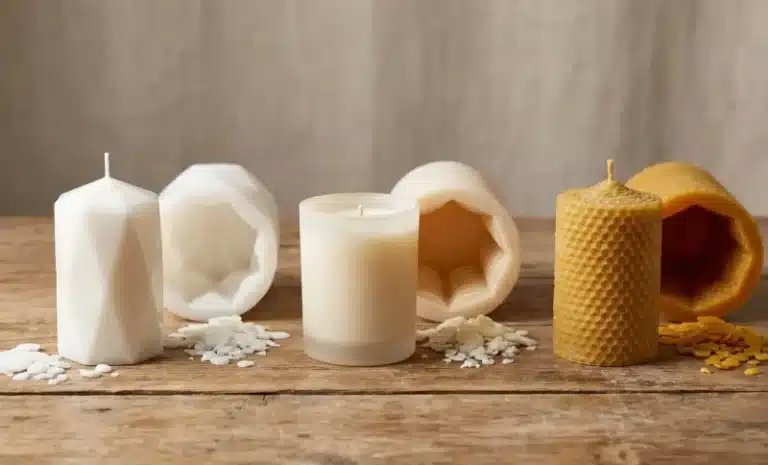
Choosing the right wax for custom silicone candle molds can make or break the final product. Each wax type behaves differently inside a mold, affecting surface detail, shrinkage, burn quality, and finish. For crafters and small-batch candle makers, that choice matters more than most people realize. Paraffin, soy, and beeswax each bring distinct advantages and trade-offs to the table. This comparison breaks down exactly how each wax performs inside silicone molds, so makers can pick the best option for their specific goals, budget, and style.
1. Paraffin Wax: The Detail-Capturing Powerhouse for Silicone Molds
Paraffin wax has long held the top spot in commercial candle production, and for good reason. Its low viscosity in liquid form lets it flow into the deepest cavities of a silicone mold with minimal effort. For anyone who uses eco-friendly custom candle molds with intricate patterns, paraffin’s ability to capture sharp lines and fine textures is hard to beat.
Why Paraffin Produces the Sharpest Mold Details
Paraffin has a relatively low melting point, typically between 120°F and 160°F depending on the grade. At pour temperature, it stays fluid long enough to fill every corner of a silicone mold before it sets. The result is a candle surface that mirrors even the most delicate mold textures almost perfectly. Pillar candles, sculpted figures, and geometric shapes all benefit from paraffin’s precision. Compared to thicker waxes, paraffin simply flows better and releases fewer air bubbles during the pour.
How Paraffin Behaves During Cooling and Release
One thing makers notice right away is how paraffin shrinks slightly as it cools. That shrinkage is actually useful inside silicone molds because it helps the finished candle pull away from the mold walls naturally. Silicone is already flexible enough to peel away from set wax, and paraffin’s contraction makes demolding even easier. But, significant shrinkage can sometimes cause a dip or sinkhole at the top of the candle, which requires a second pour to level out. This is a common step in paraffin candle production and not a major drawback.
Paraffin’s Fragrance Throw and Finish Quality
Paraffin holds fragrance oil at high concentrations, often up to 10% by weight, which gives finished candles a strong scent throw both cold and hot. Its naturally smooth, hard surface also takes dye exceptionally well, so color-heavy designs stay vibrant. The finish tends to be glossy straight out of the mold, which adds a professional look without any extra effort. For makers who prioritize visual appeal and strong fragrance performance, paraffin remains one of the most straightforward choices available for silicone mold work.
2. Soy Wax: The Clean-Burning, Beginner-Friendly Favorite
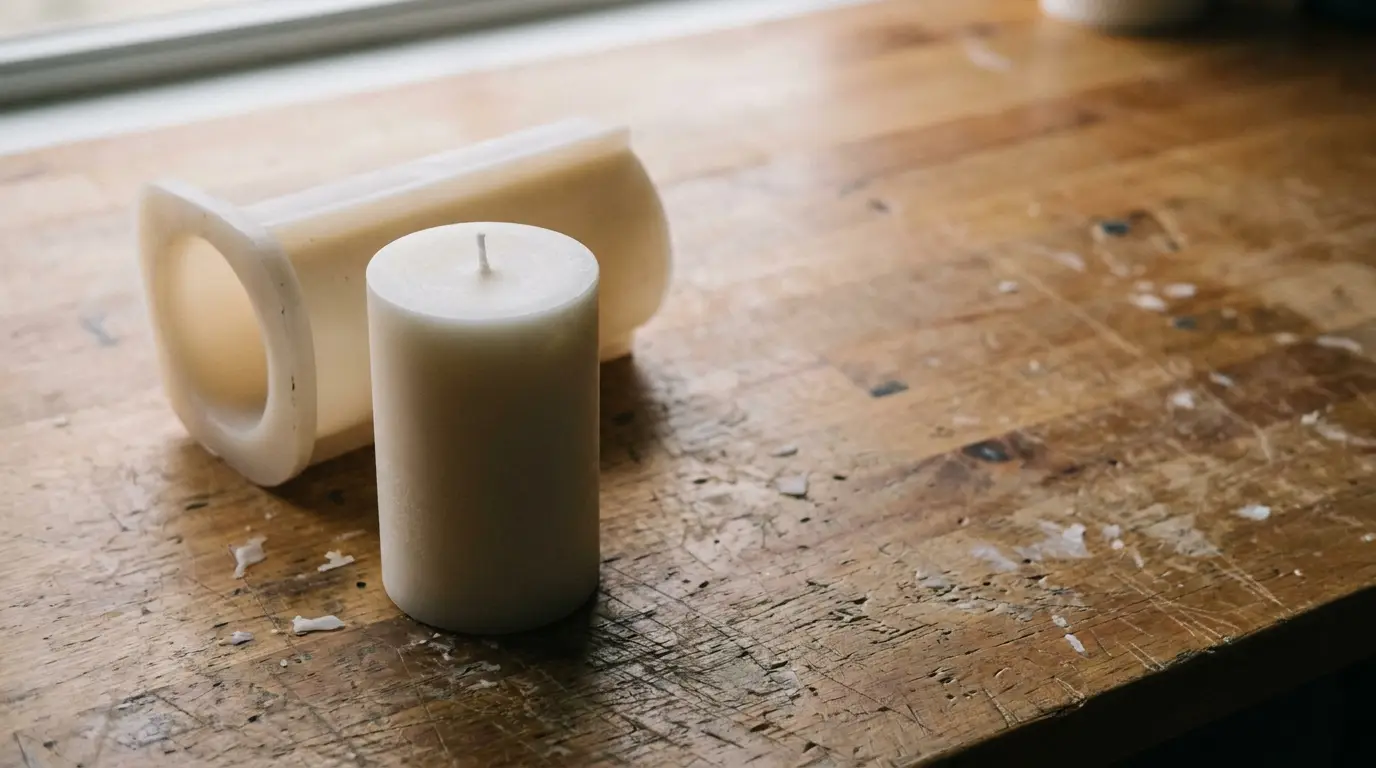
Soy wax has gained enormous popularity over the past decade, largely because of its natural origins and cleaner burn profile. It comes from hydrogenated soybean oil, which makes it a renewable resource. Many crafters prefer it for container candles, but it also works inside silicone molds with the right technique and expectations.
How Soy Wax Fills and Sets Inside Silicone Molds
Soy wax is softer and has a lower density than paraffin, which means it flows a little differently at pour temperature. It tends to cool more slowly, which can actually be an advantage because it reduces the risk of air pockets forming near the surface of the mold. That said, soy wax is prone to frosting, a natural but sometimes undesirable matte or powdery finish that forms on the surface as it cools. Inside a silicone mold, that frosting shows up on the outer face of the candle, which may or may not suit the intended design aesthetic. Makers who want a rustic or natural look often welcome it.
Soy Wax Shrinkage, Adhesion, and Demolding Considerations
Because soy wax shrinks less than paraffin, it holds tighter to the mold walls during cooling. That can make demolding slightly more challenging, but silicone’s flexibility compensates well. A gentle squeeze or peel is usually all it takes to release the candle cleanly. Soy wax also bonds well with fragrance oils, though its maximum fragrance load is typically a bit lower than paraffin, around 6% to 10%. For smooth demolding results, pouring at the right temperature, generally between 120°F and 140°F, makes a noticeable difference.
Why Soy Wax Appeals to Natural and Eco-Conscious Makers
Soy wax burns cleaner than paraffin, producing less soot and fewer airborne particulates. For makers who market their products as natural or sustainable, soy fits that narrative well. It is also biodegradable and easier to clean up with soap and water. The trade-off is a softer finished candle that can dent or scratch more easily than paraffin. In warmer climates or during summer months, soy candles may need extra care in storage and packaging. Overall, though, soy wax offers a solid, accessible option for those new to silicone mold candle production.
3. Beeswax: The Premium Natural Option With Unmatched Scent and Strength
Beeswax sits at the premium end of the candle wax spectrum. It is the oldest wax used in candle making and arguably the most complex in terms of natural chemistry. Makers who invest in beeswax often do so for its natural honey scent, long burn time, and the prestige it carries in artisan markets.
How Beeswax Performs Inside Silicone Molds
Beeswax has a higher melting point than both paraffin and soy, typically between 144°F and 150°F, and it is considerably denser. At pour temperature, it is thicker and less fluid than the other two options. This higher viscosity means it does not flow into extremely fine mold details as effortlessly as paraffin does. For silicone molds with moderate to bold textures, but, beeswax performs beautifully. It produces a slightly matte, golden-toned finish with a natural warmth that other waxes cannot replicate.
Beeswax Shrinkage, Hardness, and Mold Release
Beeswax shrinks very little during cooling, which means it grips mold walls more firmly than paraffin. Demolding requires more patience and sometimes a brief time in the freezer to help the wax contract just enough to release. Once out of the mold, but, beeswax candles are noticeably hard and durable. They resist denting, scratching, and softening in warm conditions far better than soy. That durability translates directly into a longer shelf life and a candle that holds its shape during shipping and display.
Beeswax Scent Profile, Burn Time, and Overall Value
Beeswax releases its own warm, natural honey fragrance without any added scent, which some makers and buyers consider a selling point in itself. Its burn time is significantly longer than paraffin or soy of equivalent size, partly because of its density and higher melting point. The one notable limitation is cost. Beeswax is the most expensive of the three options, which affects pricing strategies for candle businesses. For premium product lines or gift-market candles, though, the investment tends to justify itself through perceived quality and customer satisfaction.
Conclusion
Each wax type brings something different to custom silicone candle molds. Paraffin delivers precision and strong fragrance throw. Soy offers a clean burn and natural appeal. Beeswax provides unmatched hardness and a built-in scent. The right choice depends on the maker’s priorities, target market, and budget. By understanding how each wax interacts with silicone molds, candle makers can produce consistent, high-quality results with every pour.