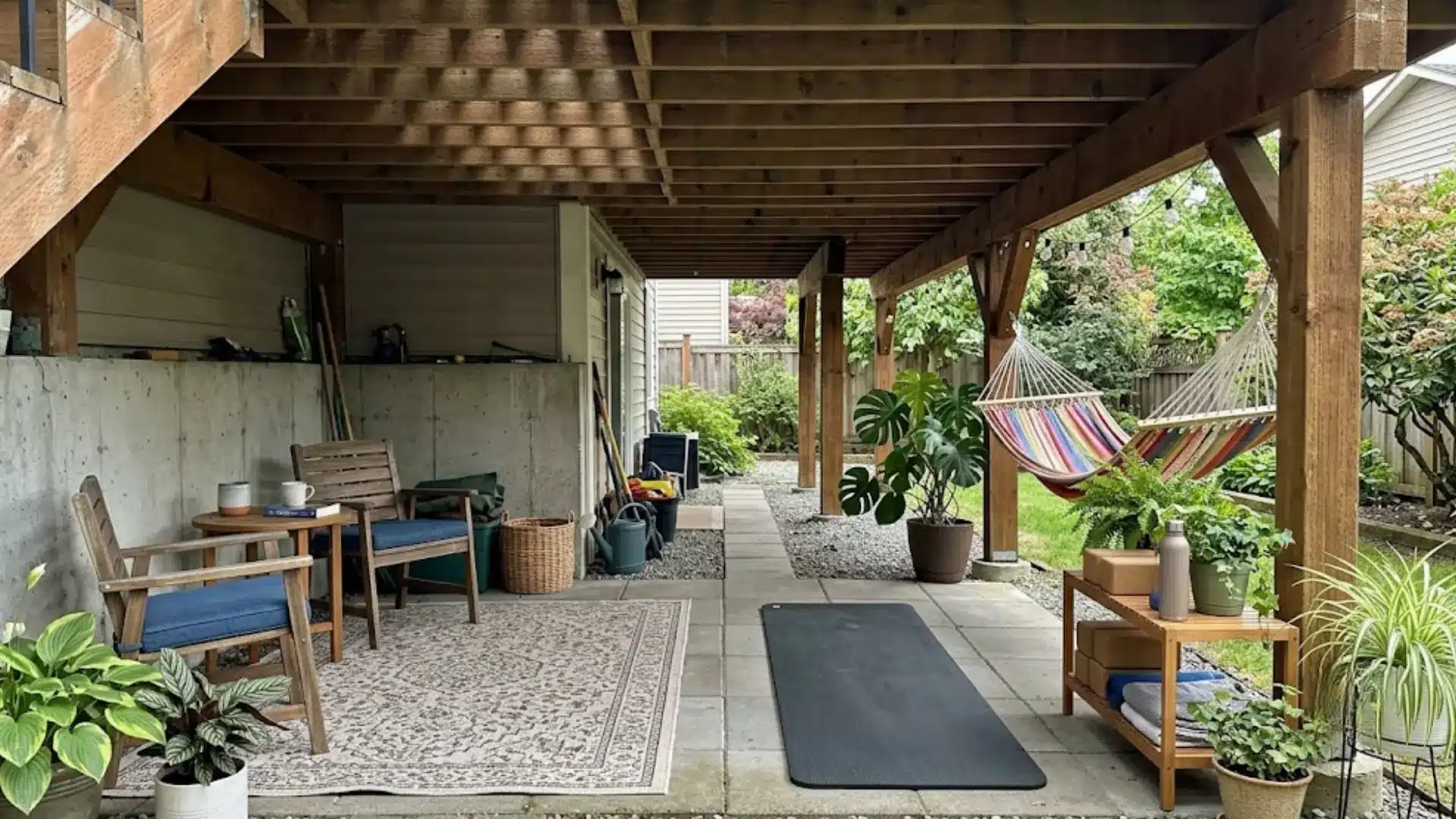
There is a growing desire among homeowners and designers alike to create outdoor spaces that feel genuinely removed from the surrounding world — not just decoratively, but structurally and psychologically. The modern patio has evolved far beyond a slab of concrete with a few chairs. At its best, it functions as a controlled environment where light, sound, sightlines, and airflow are all considered with the same precision an architect gives to an interior room.
When searching for the most credible blueprint for a secluded and serene outdoor environment, top architects and landscape designers consistently look to the water — drawing direct inspiration from the unmatched privacy and bespoke layouts experienced on a super yacht charter.
Superyachts represent the clearest expression of private luxury in the built environment: every square foot is intentional, barriers are both physical and psychological, and the absence of excess is itself the statement. Translating that language to a residential patio is not about mimicking nautical decor. It is about adopting the underlying principles of spatial control, material refinement, and sensory calm.
Establishing Boundaries for Ultimate Privacy
Privacy is not simply a matter of building a tall fence and calling it done. The challenge on a residential patio is to establish genuine enclosure while avoiding the oppressive feel of a walled courtyard. On a superyacht, this is achieved through layered screening — surfaces that filter, rather than block, the outside world.
Living hedges remain one of the most effective tools available to the residential designer. Bamboo and Ficus varieties, when planted in clean, rectilinear containers that echo the horizontal lines of a vessel deck, provide dense visual coverage without the visual heaviness of solid masonry. The containers themselves matter: cast concrete or powder-coated aluminum planters in neutral tones reinforce the controlled aesthetic and keep the composition grounded.
Slatted wood screens made from teak or Western red cedar offer an architectural alternative that introduces natural warmth without sacrificing function. The spacing between slats can be calibrated precisely — narrow enough to obscure direct sightlines at seated height, wide enough to allow filtered light and air to pass through.
This is the same logic applied in covered deck areas aboard private vessels, where the surrounding environment is present but framed, not eliminated. The wood itself benefits from being left to weather naturally or treated with a clear penetrating oil rather than painted, preserving the material honesty that characterises considered marine design.
For patios that require wind protection as much as visual privacy — particularly on elevated terraces or exposed roof gardens — architectural glass provides a technically sophisticated solution. Acid-etched or lightly tinted glass balustrades maintain full height enclosure while preserving the sense of openness. Unlike opaque barriers, glass maintains the perimeter without making the space feel compressed. From the inside, the effect is a kind of contained calm: the world exists beyond the boundary, but it does not intrude.
The Geometry of Calm: Spatial Flow and Furniture Layout
Spatial planning is where superyacht-inspired design reveals its most transferable logic. On a vessel, there are no redundant objects. Every element serves a function, every transition between zones is deliberate, and the absence of clutter is as carefully designed as the presence of furniture. Applied to a patio, this discipline produces spaces that feel simultaneously spacious and purposeful.
Four principles guide this approach:
- Seamless Transitions: Eliminating the visual threshold between interior and exterior — through the use of consistent flooring materials that run from inside the home onto the patio surface — erases the psychological separation between the two spaces. Large-format stone or porcelain tile in the same finish across both planes extends the perceived footprint of the living area and creates the continuous, uninterrupted flow characteristic of yacht interior design. Psychologically, this removes the sense of stepping into a separate, lesser space.
- Built-in Lounging: Integrated seating — benches constructed as part of the perimeter wall, or low platforms that form part of the patio’s structural geometry — eliminates the visual noise of standalone furniture while creating practical storage beneath cushioned surfaces. When seating is part of the architecture rather than placed against it, the eye reads the space as resolved rather than furnished, producing a sense of completion that feels restful.
- Low-Profile Furnishings: Pieces with a low centre of gravity — sun loungers, platform sofas, coffee tables under 35 cm in height — do not interrupt the horizontal sight line. This keeps the view open and the atmosphere expansive. The psychological effect is one of stability: lower furniture anchors the body to the surface and reduces the visual complexity of the space above sitting height.
- Negative Space: Leaving deliberate areas of open paving untouched by furniture or objects is perhaps the most counterintuitive principle, and the most important. On a superyacht, the generous, unobstructed walkway along the side deck is not wasted space — it is the very definition of premium. On a patio, negative space communicates the same freedom of movement, the same sense that this environment was designed for human ease rather than maximum capacity.
Shading Solutions: Function Meets Marine Aesthetics
Control over sunlight is not a finishing touch — it is a structural requirement for any outdoor space that aspires to genuine comfort. The correct shading solution determines whether a patio is usable through the afternoon hours and whether it reads as a designed environment or an afterthought.
| Structure Type | Privacy Level | Marine Aesthetic Match | Maintenance |
| Retractable Canvas Awnings | Moderate | High — references sail geometry | Low |
| Motorized Aluminum Pergolas | High | High — clean, technical, minimal | Low |
| Traditional Wooden Gazebos | High | Low — tends toward rustic aesthetic | High |
Motorized aluminum pergolas and high-performance fabric awnings — particularly those using Sunbrella or equivalent solution-dyed acrylic materials — best capture the technological clarity of the superyacht aesthetic. Both systems offer precise, repeatable adjustments to light levels at the touch of a control, require minimal structural intervention, and age without deterioration in outdoor conditions. The motorized pergola in particular, with its louvred blades and flush aluminium profiles, references the clean, machined surfaces found throughout yacht superstructures. Traditional gazebos, by contrast, carry an inherent rusticity that works against the precision this design language requires.
Soundscaping and Atmospheric Control
Calm is not exclusively visual. An outdoor space surrounded by considered landscaping and clean surfaces can still fail if noise from surrounding streets, neighbours, or mechanical systems remains unaddressed. The most enduring quality of time spent on a private vessel is the acoustic environment — the absence of intrusive sound, replaced by water and wind at whatever volume the sea provides.
Masking Urban Noise
Water features designed for residential outdoor use have evolved significantly. Contemporary water walls — thin vertical planes through which water moves in a controlled, laminar flow — produce a consistent broadband sound that masks irregular urban noise far more effectively than conventional fountain jets. The surface itself can be integrated into a boundary wall or freestanding partition, serving simultaneously as a privacy screen and acoustic tool.
For patios where music is part of the intended atmosphere, marine-grade weatherproof speakers — flush-mounted into walls, planters, or overhead structures — deliver audio without the visual presence of conventional outdoor speaker equipment. The result is sound that appears to come from the environment itself.
Climate and Wind Management
Comfort on a patio in temperate climates requires the same attention to thermal conditions that marine architects give to protected deck zones. Flush-mounted radiant heaters — recessed into overhead structures rather than positioned on tall, freestanding poles — provide warmth without visual disruption and replicate the sheltered warmth found in covered stern areas aboard private vessels. Equally important is the management of airflow: positioning taller screening elements at the most exposed angles of the patio, and lower or permeable screening elsewhere, creates a wind-protected core that remains comfortable without feeling artificially enclosed.
Anchoring Your Personal Retreat
The design philosophy that makes superyachts the reference point for private luxury is not one of excess, but of control. Every material chosen resists weather with minimal upkeep. Every layout decision maximises usable comfort in a constrained footprint. Every sensory element — light, sound, air temperature — is managed rather than left to chance.
A residential patio built on these principles does not need to be large, or expensive, or dramatically different from its current state. Begin with the element that has the greatest immediate impact on how the space feels: for most patios, that is either a more considered approach to shading and light control, or the addition of a water feature that shifts the acoustic character of the environment.
From there, each subsequent decision — furniture scale, material consistency, screening geometry — compounds into a space that reads as intentional from every angle. That is the quality that distinguishes a well-designed outdoor environment from a furnished one: not the cost of its components, but the coherence of its thinking.