The best computer desk color for most rooms is usually a natural wood tone or a soft neutral. A light oak or warm walnut desk tends to feel easier to live with than a bright statement finish because it adds warmth without making the room feel busy. If you want something more polished and substantial, a darker executive desk in walnut, espresso, or black can look great too—but it needs the right room around it.
That is the part people often miss.
A desk is not just a work surface. In most homes, it is a visual anchor. You see it from the bed, from the sofa, or from the doorway. So the right color is less about what is “trending” and more about how heavy, bright, warm, or formal you want that corner to feel.
The quick answer
- If your room is small, dark, or doing double duty as a bedroom office, go lighter.
- If your room already has warm flooring, beige walls, or a soft organic feel, go with wood.
- If your space is larger and you want a more commanding, professional look, a dark wood or black executive desk makes more sense.
That one decision usually gets you 80% of the way there.
A simple desk color guide
|
Your room situation |
Desk color that usually works best |
Why it works |
|---|---|---|
|
Small room with limited light |
Light oak, ash, warm white, soft gray |
Keeps the setup lighter and less visually crowded |
|
Neutral room with white or cream walls |
Natural oak, walnut, black |
Easy contrast without looking forced |
|
Warm room with beige, greige, or tan walls |
Walnut, medium oak, chestnut |
Feels cohesive and more finished |
|
Modern room with black accents |
Black, charcoal, black-and-wood mix |
Adds structure and definition |
|
Calm office with blue or green walls |
Natural oak, walnut, medium brown |
Softens the wall color and keeps the room grounded |
|
Large dedicated office |
Walnut, espresso, black executive desk |
Feels substantial and intentional |
Start with the light in your room
If the room does not get much daylight, a dark desk can feel heavier than you expect.
That does not mean dark desks are a bad idea. It just means they ask more from the room. They usually need decent natural light, lighter walls, or enough open space around them so they do not make the corner feel boxed in.
In smaller rooms, lighter desk colors tend to be the safer move. A light oak or soft white desk reflects more light visually and usually feels less bulky, even if the actual size is the same. That is especially helpful in bedrooms, apartments, and small work nooks where every piece is doing a lot.
Real life example: if your desk is going next to a bed, dresser, and laundry basket in a modest-size bedroom, a pale wood desk will usually feel calmer than a deep espresso one.
If you want the easiest choice, pick natural wood
Natural wood is the most forgiving option for a reason.
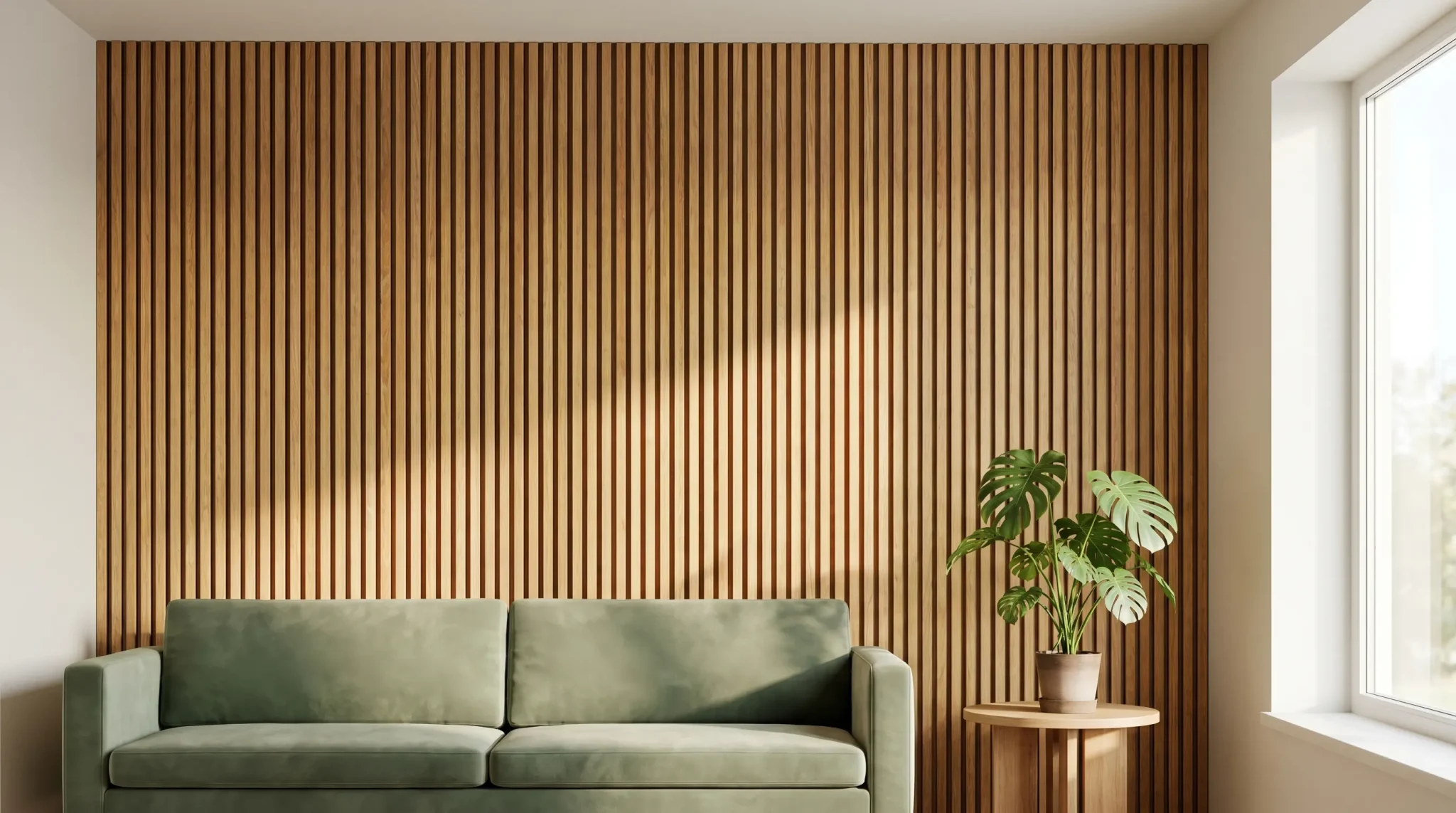
It works with white walls, warm neutrals, muted greens, soft blues, black accents, woven textures, and most common flooring finishes. It also makes a workspace feel less sterile. That matters more than people think, especially if you are working from home for long stretches.
- Light oak feels airy and casual.
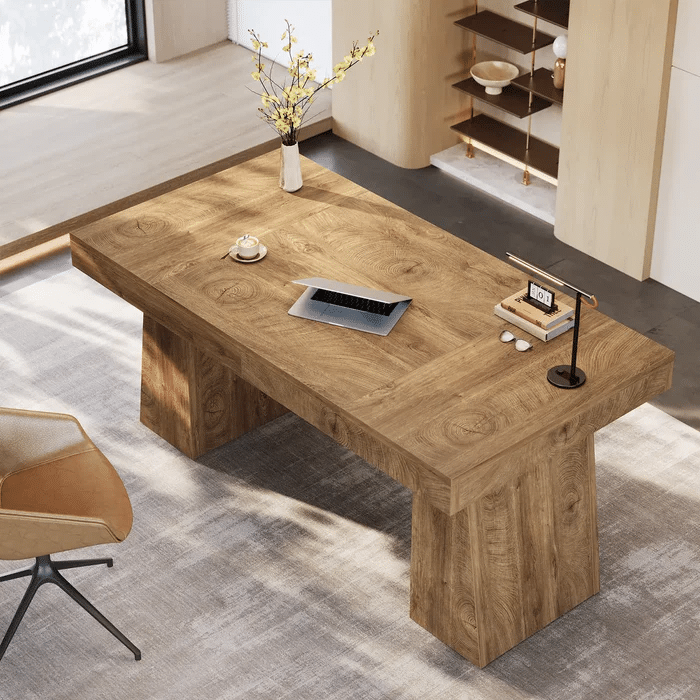
- Walnut feels warmer and a little more elevated
- Medium brown feels classic and grounded.
If you are stuck between white, black, and wood, the wood executive desk is usually the one that ages best in the room. It does not feel too cold, too sharp, or too trend-driven. It just settles in.
This is the choice I would make for most people who want their room to look better without overthinking it.
White desks work best when the room already feels warm
A white desk can look clean and fresh, but it is not automatically the best choice.
In some rooms, white looks crisp. In others, it can feel flat or a little too office-like. The difference usually comes down to what is around it.
A white desk looks better when the room already has warmth through wood floors, linen textures, beige upholstery, brass accents, or cream walls. That warmth keeps the desk from feeling clinical.
It also helps in tighter rooms where you want the work area to blend in instead of becoming the heaviest thing in view.
A white desk is especially useful when:
- your walls are soft white, light gray, or pale beige
- your room is small and you want it to feel more open
- you prefer a clean, minimal setup with very little visual noise
But if the room already feels cold, plain white can make that worse.
Black desks look sharp—but they are not for every room
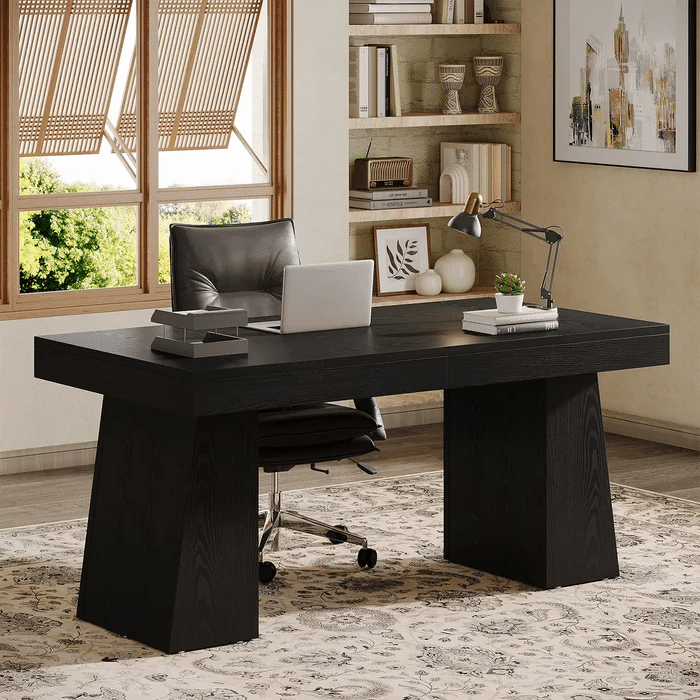
Black desks photograph beautifully, and in the right room they look confident, modern, and intentional.
They work especially well when you already have black picture frames, metal lighting, dark hardware, or a black office chair. In that kind of setup, the desk looks connected to the rest of the room instead of floating there by itself.
Still, black has more visual weight. It draws the eye. It shows dust faster. And in a low-light room, it can make the work corner feel denser.
So black is usually best when:
- the room has white or pale walls
- you want contrast
- the room leans modern or minimalist
- you have enough light to keep the space from feeling heavy
If your room is already dark, crowded, or full of medium-brown furniture, black may not be the most relaxed choice.
When an executive desk is the right move?
A lot of people like the idea of a desk because it feels more substantial, more grown-up, and more put-together.
Sometimes that is exactly the right call.
If you have a dedicated office, need more surface area, use dual monitors, deal with paperwork, or simply want the room to feel more professional, an executive desk earns its footprint. In that case, darker finishes usually make more sense than pale ones. Walnut, espresso, deep brown, and black all give that desk the presence people want from it.
But scale matters.
A large executive desk in a small bedroom can feel like the furniture version of speaking too loudly. Even if the color is beautiful, it may still be too much for the room. If the desk is big, the finish has to work even harder to balance the space.
That is why darker executive desks tend to work best in:
- larger rooms
- dedicated home offices
- spaces with lighter walls or strong natural light
- rooms where you want a more formal, focused mood
If the room is half office, half guest room, I would usually lean toward a simpler desk in a lighter or medium wood tone instead.
Think about the mood you want at 3 p.m.
Morning light is flattering. Mid-afternoon is more honest.
That is usually when a room starts to show its real personality. A desk can suddenly feel too stark, too dark, too busy, or exactly right.
So the better question is not just which color looks good. It is which color still feels good after a few hours of actual work.
Light wood and warm neutrals usually make a room feel calmer and easier to sit in. Black and white finishes read cleaner and more focused. A darker walnut tone or executive desk brings more presence and a more professional feel.
The right choice is the one that holds up in real life, not just in a styled photo.
A desk color should make your room feel more settled, not more complicated. Once that piece looks like it belongs, the whole workspace starts to feel easier.