Lilies are prized both as dramatic garden plants and as elegant cut flowers.
Lilies have a way of feeling both dramatic and deeply personal. In the garden, they rise above surrounding foliage with strong stems and sculptural blooms. As cut flowers, they bring fragrance, elegance, and symbolism to a room almost instantly. That combination is why lilies have remained so enduring: they are beautiful plants to grow, striking flowers to gift, and meaningful blooms for life’s biggest moments.
Lilies belong to the genus Lilium, and they are known for their six petal-like tepals, upright or nodding blooms, and a wide range of forms, from trumpet-shaped flowers to recurved “Turk’s cap” types.
Near the start of any conversation about funeral flowers, lilies almost always come up. Their long history of association with purity, peace, remembrance, and restored innocence has made them one of the most traditional choices for sympathy work and memorial tributes. For those wanting to choose a fitting farewell gift, lilies are often considered a natural place to begin. And for birthdays, thank-yous, new babies, anniversaries, or simple everyday gestures, lilies also remain one of the most versatile blooms to send. If you want to send a floral gift with both beauty and meaning, lilies are one of the most adaptable options available.
What Makes Lilies so Distinctive?
True lilies are bulbous perennials, valued for their strong vertical habit and large, showy flowers. Depending on the type, they may bloom in early, mid, or late summer, and many varieties are also prized for fragrance. Their flowers come in an impressive range of shapes and colours. In gardens, lilies can be grown in borders, cottage-style plantings, and cutting beds. As cut flowers, they bring long stems, generous flower size, and a polished look that works in both traditional and modern arrangements.
Part of their appeal is this dual purpose. A lily plant offers anticipation: buds forming, stems stretching, and a dramatic flush of bloom. A cut lily offers immediacy: height, fragrance, and presence from the moment it is placed in a vase. That ability to bridge garden value and floral value is one reason lilies remain so widely loved.
Common Types of Lilies
While there are many species and hybrids, a few groups are especially useful for gardeners and flower buyers to understand.
Asiatic Lilies
Asiatic lilies are often among the easiest lilies to grow. They are usually earlier flowering, come in a broad range of colours, and are often less strongly scented than Oriental lilies. In the garden, they are valued for reliable performance and bright colour. In bouquets, they bring a cheerful, clean-lined look.
Oriental Lilies
Oriental lilies are the lush, perfumed showstoppers many people recognise immediately. These are the lilies most often associated with rich fragrance, broad petals, and luxurious arrangements. They are especially popular for milestone gifts and statement bouquets.
Trumpet and Aurelian Lilies
Trumpet lilies have elongated, trumpet-shaped flowers and often carry a strong, elegant perfume. These lilies bring a refined, classic look to both gardens and floral work.
Martagon Lilies
Martagon lilies have nodding flowers with recurved petals, often called Turk’s cap lilies. They look more delicate and woodland-like than some of the bolder hybrid types and can add a graceful, naturalistic effect in the garden.
Longiflorum and Hybrid Lilies
Longiflorum lilies are best known for Easter-lily-style flowers. Modern breeding has also produced many hybrids, including LA hybrids and OT hybrids, which combine desirable qualities such as colour range, flower size, stem strength, and fragrance.
Lilies as Plants in the Garden
Lilies are ideal for gardeners who want vertical interest without a heavy shrub-like footprint. They can be tucked between perennials, used in dedicated cutting gardens, or planted in drifts for a strong seasonal display. Most varieties look best when the flowers can rise through or above companion plants, which helps support the stems visually and softens the bare lower foliage.
They also reward a little planning. By combining early, mid, and late-season lilies, gardeners can extend the display rather than getting one brief flush. Asiatic lilies can open earlier, Orientals later, and interdivisional hybrids can fill the gaps. Even a small garden can often fit a few bulbs, and because lilies emerge from bulbs, they create a satisfying rhythm of dormancy, anticipation, and bloom.
Lilies as Cut Flowers
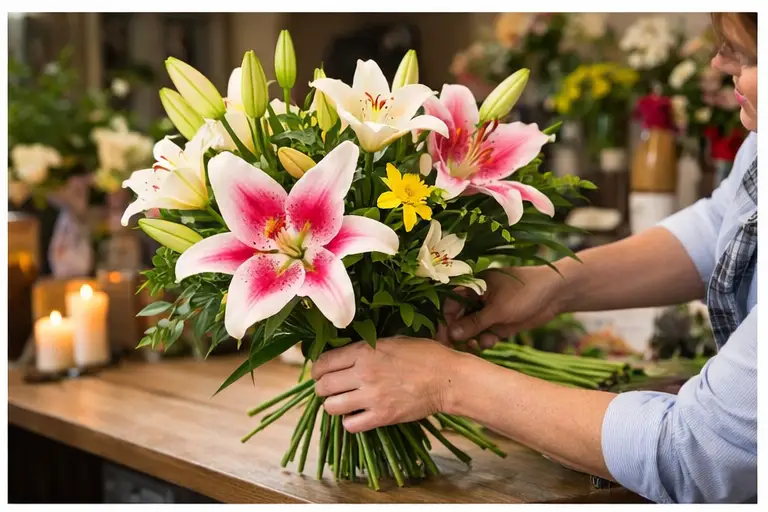
Lilies make striking cut flowers thanks to their long stems, large blooms, and strong visual presence.
Few flowers perform in a vase as confidently as lilies. Even a modest bunch can look generous because each stem carries multiple blooms or buds. Their upright lines make them useful in taller arrangements, while their bold petals help them read clearly from a distance.
They are also emotionally expressive. Some flowers feel casual. Lilies rarely do. They tend to communicate intention, whether that is sympathy, admiration, celebration, or reverence. White lilies feel serene and formal. Pink lilies can feel warm and affectionate. Orange and yellow lilies often feel more energetic and celebratory.
For home use, lilies can stand alone in a vase or be mixed with roses, chrysanthemums, foliage, or seasonal fillers. For events, they suit church work, formal receptions, condolence arrangements, and milestone celebrations because they hold visual weight without needing excessive volume.
The Significance of Lilies
Lilies carry a rich symbolic history. Across different traditions, they have been associated with purity, innocence, devotion, serenity, and renewal. In funeral contexts especially, white lilies are widely used because they are seen as representing peace, sympathy, and the restored innocence of the departed soul. That symbolism has made them one of the most recognisable memorial flowers in many traditions.
That does not mean lilies belong only to sorrow. Their symbolism is broad enough to fit happier occasions too. They can suggest hope, dignity, grace, admiration, and heartfelt affection. This wider meaning is one reason they work so well across life’s full emotional spectrum.
Best Occasions for Lilies
Lilies are unusually flexible because they can be scaled up or down depending on the moment.
For birthdays, they feel generous and elegant, especially in bright or softly romantic colours.
For anniversaries, Oriental lilies offer fragrance and drama.
For thank-you gifts, a vase of lilies can feel polished without being overly formal.
For housewarmings, they bring instant structure and freshness to a room.
For new babies, white, blush, or pastel lilies can feel calm and celebratory.
For sympathy, memorials, and funerals, lilies remain among the most traditional and meaningful choices.
The specific colour matters too. White lilies are most commonly associated with peace and remembrance. Pink lilies often feel affectionate and gentle. Yellow can feel uplifting, and orange can feel vibrant and bold. Matching the colour to the occasion helps lilies feel personal rather than generic.
Why Lilies Matter so Much at Funerals
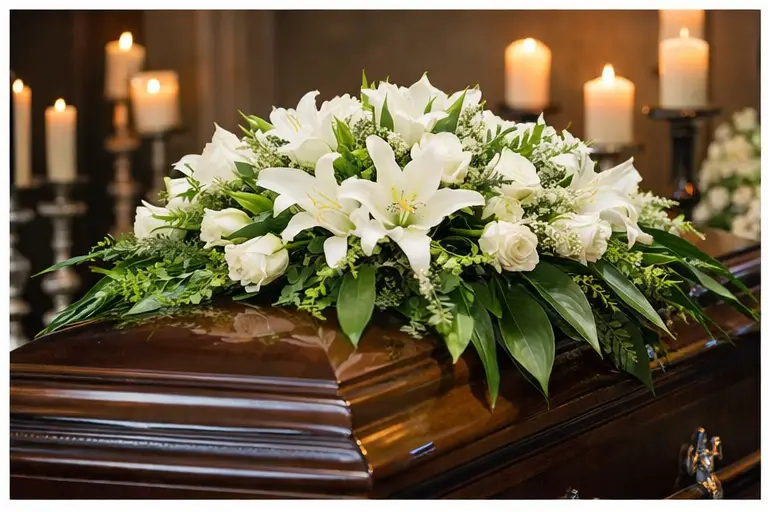
White lilies remain one of the most traditional and meaningful flowers for funerals and memorials.
Among funeral flowers, lilies have unusual emotional clarity. They feel solemn without seeming cold, beautiful without seeming frivolous, and traditional without feeling outdated. Their shape brings presence to casket sprays, wreaths, sheaf-style tributes, and sympathy bouquets. Their fragrance can add a sense of calm to memorial spaces. Most of all, their symbolism gives people a way to say something meaningful when words are difficult.
That is why lilies are so often chosen by family, friends, colleagues, and communities. They suit both close personal grief and more formal public remembrance. They can be understated in a simple bouquet or grand in a ceremonial tribute.
A Flower That Moves Between Life’s Moments
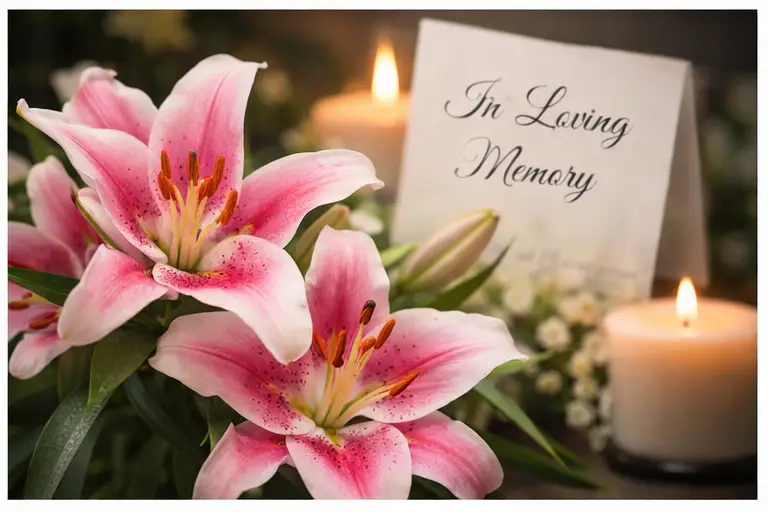
Lilies can express tenderness, remembrance, and quiet beauty in deeply personal ways.
What makes lilies special is not just their appearance, but their range. They can live in a garden bed, star in a vase, elevate a celebration, or offer comfort at a funeral. Few flowers move as naturally between joy and sorrow, intimacy and ceremony, everyday beauty and deep symbolism.
For gardeners, lilies are plants worth growing for their stature, structure, and seasonal drama. For flower lovers, they are cut blooms with presence and longevity. For gift-givers, they are expressive without being predictable. And for farewells, they remain one of the most meaningful flowers of all.
That is why lilies endure. They are not only beautiful. They are useful, symbolic, and deeply human in the way they accompany the moments that matter most.