Ever noticed your plants looking a bit under the weather, with leaves curling up or feeling oddly sticky?
You might have aphids throwing a party in your garden. These tiny sap-suckers are masters at draining the life out of your favorite plants while leaving behind a sugary mess called honeydew that invites even more trouble.
But here’s the thing: once you know what you’re dealing with, aphids are totally manageable.
This guide will walk you through spotting these pests, kicking them out for good, and making sure they don’t crash your garden party again.
What are Aphids?
Aphids are those minuscule, soft-bodied insects that latch onto your plants and suck the life right out of them. You might hear them called greenfly or blackfly, depending on their color.
What makes them particularly annoying is how ridiculously fast they reproduce. We’re talking entire generations in just weeks, which is why a small problem can explode overnight.
When their colony gets too crowded, some aphids even sprout wings and fly off to infest new plants.
They’re basically the ultimate garden freeloaders, always looking for their next meal ticket and multiplying faster than you can say “pest control.”
How to Identify Aphids?
Spotting aphids isn’t rocket science once you know what to look for. These pear-shaped pests are tiny (think pinhead-sized) and come in various colors like green, brown, yellow, black, or even pink.
Look for their distinctive long antennae and two tube-like structures called cornicles poking out from their rear ends.
Signs your plants are under attack:
- Sticky, shiny residue coating leaves and stems
- Black sooty mold growing on the honeydew
- Leaves curling, puckering, or turning yellow
- New growth looking twisted or stunted
- Buds that never quite open properly
How to Get Rid of Aphids: Quick & Effective Methods
Getting rid of aphids doesn’t always mean reaching for chemicals. Sometimes the simplest solutions work best, and these hands-on methods can clear up an infestation surprisingly fast.
Blast Them Away with Water
Grab your garden hose and give those aphids a forceful shower. A strong spray knocks them right off your plants, and here’s the kicker: most won’t make it back up.
They’re weak crawlers, so once they hit the ground, they’re pretty much done for. Repeat every few days until you’ve got the population under control, and you’ll see results without spending a dime.
Get Hands-On (or Prune It Out)
Sometimes you just need to take matters into your own hands, literally. Put on some gloves and gently squish aphids between your fingers or wipe them off with a damp cloth. It’s oddly satisfying and works great for smaller infestations.
For heavily infested stems or leaves that are absolutely crawling with bugs, just cut your losses. Snip off those parts and toss them in the trash. This removes thousands of aphids in one go and gives your plant a fighting chance.
Getting Rid of Aphids With Natural & DIY Treatments
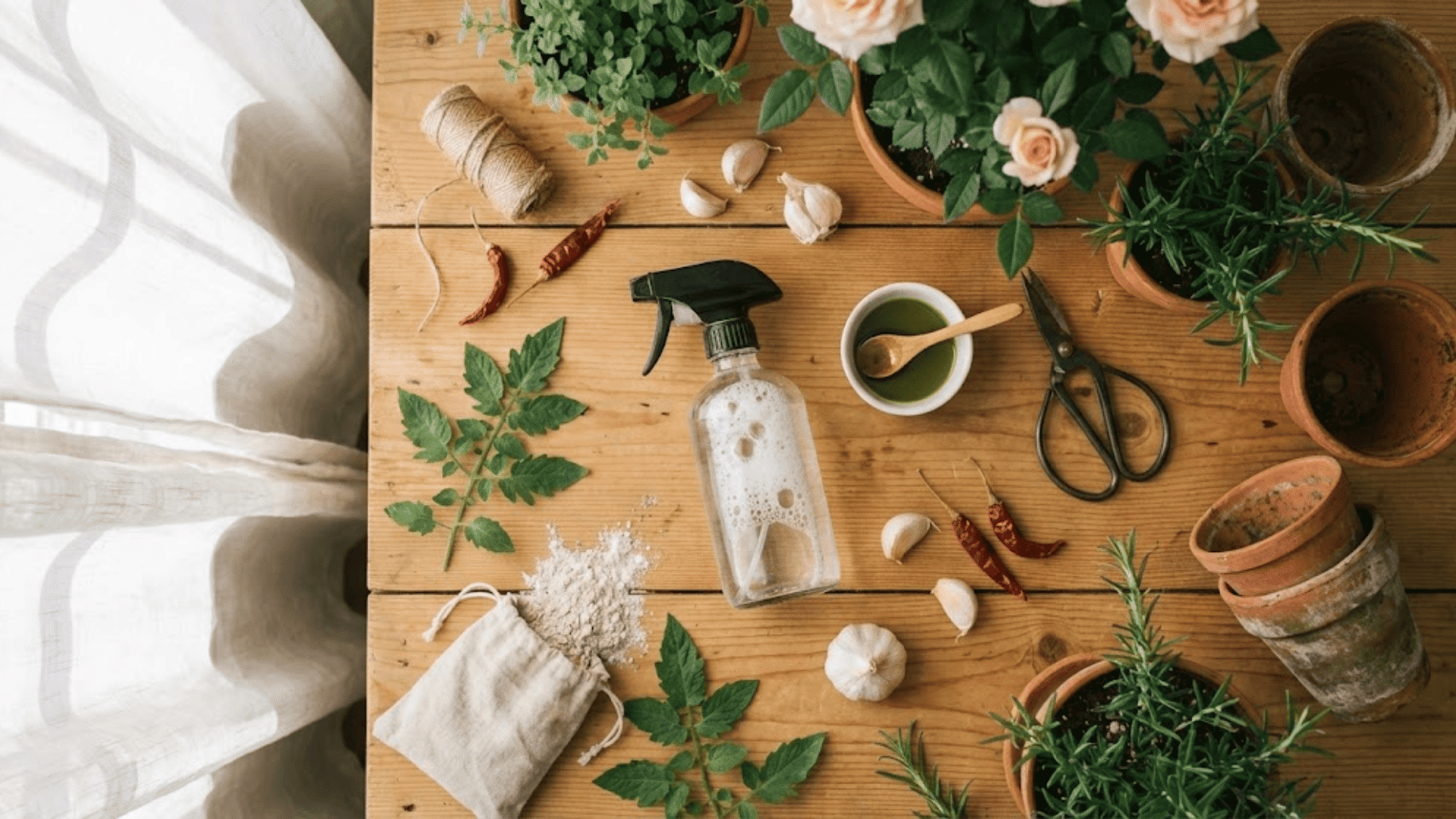
When water alone isn’t cutting it, these natural remedies pack a punch without the harsh chemicals. They’re safe for your plants, your family, and the beneficial bugs you want to keep around.
1. Soap-and-Water Spray
This kitchen-cabinet classic works by breaking down the aphid’s protective outer layer, causing them to dehydrate and die. It’s cheap, effective, and you probably have everything you need already.
- Step 1: Mix one teaspoon of mild liquid dish soap with one quart of water
- Step 2: Pour the solution into a spray bottle and shake gently
- Step 3: Spray directly on aphids, coating them thoroughly
- Step 4: Focus on leaf undersides where aphids love to hide
- Step 5: Repeat every few days until the infestation clears
2. Neem Oil
Neem oil is nature’s multitasker, acting as both a killer and a repellent that disrupts aphid feeding and reproduction. Just remember to use it wisely to avoid harming your plants.
- Step 1: Mix neem oil with water according to product instructions
- Step 2: Apply the in the early morning or evening to avoid leaf burn
- Step 3: Spray all plant surfaces, especially the undersides of leaves
- Step 4: Reapply every week or after rain washes it off
- Step 5: Test on a small area first to check for plant sensitivity
3. Horticultural Oils
These lightweight oils smother aphids by coating their bodies and blocking their breathing pores. Summer oils work during the growing season, while dormant oils tackle overwintering eggs.
- Step 1: Choose the right oil for your season (light for summer, heavier for dormant periods)
- Step 2: Dilute according to label directions
- Step 3: Spray thoroughly to cover all aphid colonies
- Step 4: Apply when temperatures are between 40-85°F
- Step 5: Avoid spraying drought-stressed or newly transplanted plants
4. Homemade Sprays
Got garlic, chili peppers, or tomato leaves? You’ve got aphid ammunition. These pungent concoctions repel and sometimes kill aphids through their strong compounds.
- Step 1: Steep crushed garlic, hot peppers, or tomato leaves in water overnight
- Step 2: Strain out the solids to avoid clogging your sprayer
- Step 3: Add a drop of dish soap to help the mixture stick
- Step 4: Spray generously on affected plants
- Step 5: Reapply after rain or every few days for best results
5. Diatomaceous Earth
This powdery substance is made from fossilized algae with microscopic, sharp edges that slice through aphid bodies, causing fatal dehydration. Use it strategically to protect pollinators.
- Step 1: Choose food-grade diatomaceous earth only
- Step 2: Dust it lightly on plant stems and leaves when dry
- Step 3: Apply early morning or evening when bees are less active
- Step 4: Reapply after rain or heavy dew
- Step 5: Avoid dusting flowers to protect beneficial insects
How to Get Rid of Aphids Using Biological Controls?
Sometimes, the best offense is letting nature handle the defense. These eco-friendly strategies bring in the good guys and create an environment where aphids just don’t want to stick around.
Beneficial Insects
Think of ladybugs, lacewings, hoverflies, and parasitic wasps as your garden’s hit squad. These predators absolutely love munching on aphids, with a single ladybug devouring dozens daily.
You can buy them online or attract them naturally by planting flowers like yarrow and dill. Once they move in, they’ll patrol your garden like tiny security guards, keeping aphid populations in check without you lifting a finger.
Companion Plants
Certain plants act as aphid repellents just by existing nearby. Garlic, chives, marigolds, and basil all emit scents that aphids find absolutely revolting.
Plant these strategically around your vulnerable crops, and you’ll create a natural barrier that sends aphids packing. Plus, you get bonus herbs and flowers for your kitchen and vases.
It’s basically landscaping that doubles as pest control, and it looks gorgeous, too.
How to Kill Aphids with Chemical and Commercial Options?
When natural methods aren’t making a dent, or you’re dealing with a serious infestation, commercial products can be your backup plan. Just remember to use them responsibly and always read the fine print.
| Product Type | Best For | Application Notes | Edible Garden Safety |
|---|---|---|---|
| Insecticidal Soaps | Moderate to heavy infestations | Must contact aphids directly; reapply after rain | Safe for vegetables with proper timing |
| Horticultural Sprays | Large-scale or persistent problems | Follow label instructions for mixing ratios | Check pre-harvest intervals |
| Systemic Insecticides | Severe infestations | Absorbed by the plant for long-term protection | Never use on edibles |
| Organic Certified Products | Organic gardens need stronger control | Look for OMRI certification | Safe, but follow waiting periods |
| Ready-to-Use Sprays | Quick spot treatments | No mixing required; shake and spray | Read the label for food crop guidelines |
| Concentrate Formulas | Large gardens, multiple applications | Requires precise dilution | Check days-to-harvest requirements |
Critical Reminder for Edible Gardens: Always verify the pre-harvest interval on labels before treating vegetables, fruits, or herbs you plan to eat.
Preventing Future Aphid Infestations on Plants
Dealing with aphids once is enough. The key to keeping them away for good is staying one step ahead with smart garden habits and vigilant monitoring.
- Inspect your plants weekly, focusing on new growth where aphids love to settle.
- Check leaf undersides religiously since that’s where colonies hide before exploding.
- Water and fertilize thoughtfully to keep plants strong without overfeeding nitrogen, which attracts aphids.
- Clear out garden debris and weeds regularly, as they create perfect aphid hideouts.
- Quarantine new plants for a week before adding them to your garden to avoid importing problems.
Once you build these habits into your routine, aphids become way less of a headache. A little prevention beats a lot of cure every single time.
Tackling Severe or Ongoing Aphid Outbreaks
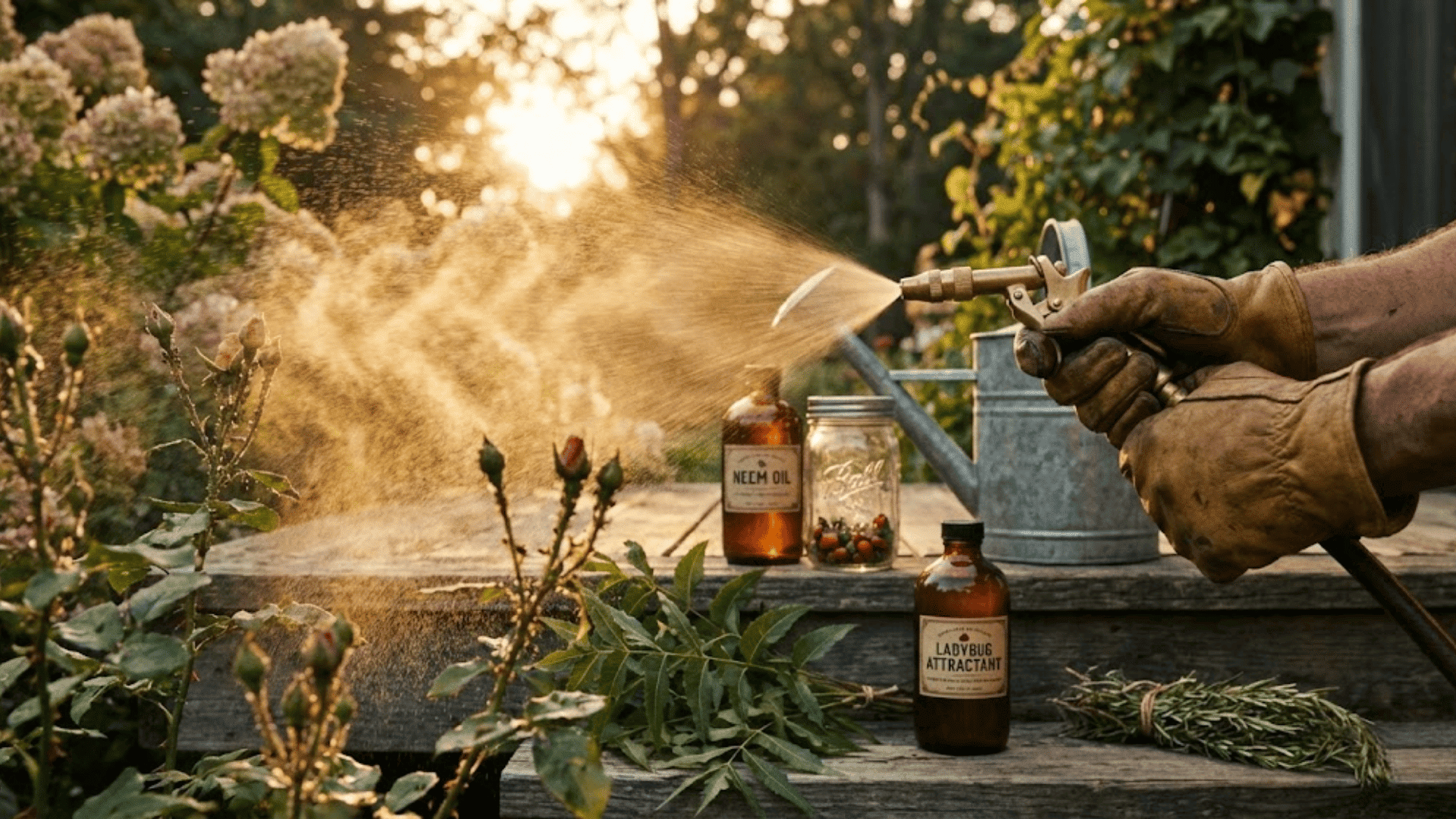
When aphids keep coming back despite your best efforts, it’s time to bring out the big guns with a multi-pronged attack.
Combine several methods at once: blast them with water, spray with neem oil, release ladybugs, and use insecticidal soap in rotation.
Consistency is everything here, so plan on treating your plants every few days for several weeks to break the reproduction cycle.
If you’re still losing the battle after all this, or if the infestation is threatening valuable landscape plants or an entire crop, calling in professional pest control might be your smartest move. Sometimes you need the pros.
The Bottom Line
Fighting aphids doesn’t have to feel like an uphill battle once you’ve got the right game plan.
Blasting them off with water, recruiting ladybugs, or mixing up a homemade spray all work wonders when you know how to get rid of aphids effectively.
The trick is catching them early and staying consistent with whatever method works best for your space. Your plants will thank you with healthier growth and better yields.
Got questions or your own aphid-fighting tips? Drop a comment below and let’s keep the conversation growing.