You know that sinking feeling when you spot those tiny, clingy intruders clustering on your favorite fiddle leaf fig?
Aphids have an uncanny ability to turn a thriving indoor jungle into their personal buffet, seemingly overnight. These persistent little pests don’t just appear; they multiply with alarming speed in the cozy warmth of our homes.
The beautiful thing is, reclaiming your green sanctuary from aphids on houseplants doesn’t require harsh chemicals or endless frustration.
This guide walks you through gentle, effective solutions that actually work, helping you restore your plants to their former glory while keeping your space toxin-free and beautiful.
What are Aphids?
Aphids are soft-bodied insects about the size of a pinhead, often appearing in shades of green, black, white, or even pink.
They’re drawn to the tender new growth on houseplants because it’s easier to pierce and packed with the sugary sap they crave.
Your indoor garden becomes especially appealing during cooler months when outdoor food sources dwindle.
These tiny feeders particularly love plants with lush foliage like pothos, philodendrons, ferns, and flowering varieties such as hibiscus and orchids.
Herbs grown indoors, including basil and mint, are also frequent targets. Anywhere there’s fresh, juicy growth, aphids will try to settle in.
Catching aphids on houseplants early makes all the difference in protecting your green space. Knowing exactly what to look for helps you act quickly before a small problem becomes a full-blown infestation.
What Aphids Look Like?
These tiny invaders might be small, but once you know their telltale features, they’re surprisingly easy to spot among your foliage.
| Feature | Description | What to Notice |
|---|---|---|
| Size | Pinhead-sized, typically 1-3mm long | Barely visible to the naked eye, often mistaken for specks of dirt |
| Shape | Soft, pear-shaped bodies with long antennae | Two tube-like projections (cornicles) at the rear end |
| Color | Green, black, white, pink, yellow, or brown | Color often matches the plant they’re feeding on |
| Texture | Soft-bodied, easily squished | No hard shell or protective covering |
| Wings | Most are wingless; winged aphids appear when overcrowded | Winged versions signal a mature, spreading colony |
Common Signs of Aphid Infestations
Beyond spotting the bugs themselves, aphids leave behind clear evidence of their presence that your plants will display.
- Sticky honeydew residue coating leaves and pooling on surfaces below your plant.
- Tight clusters of aphids congregating on new growth, stems, and leaf undersides.
- Curled, yellowing, or distorted leaves that look weakened and misshapen.
- Stunted growth with new shoots appearing smaller or failing to develop properly.
Why Aphids Appear on Houseplants?
Understanding why aphids on houseplants show up in the first place helps you prevent future invasions. These pests don’t appear randomly; certain conditions practically roll out the welcome mat for them.
1. Bringing Infested Plants Home
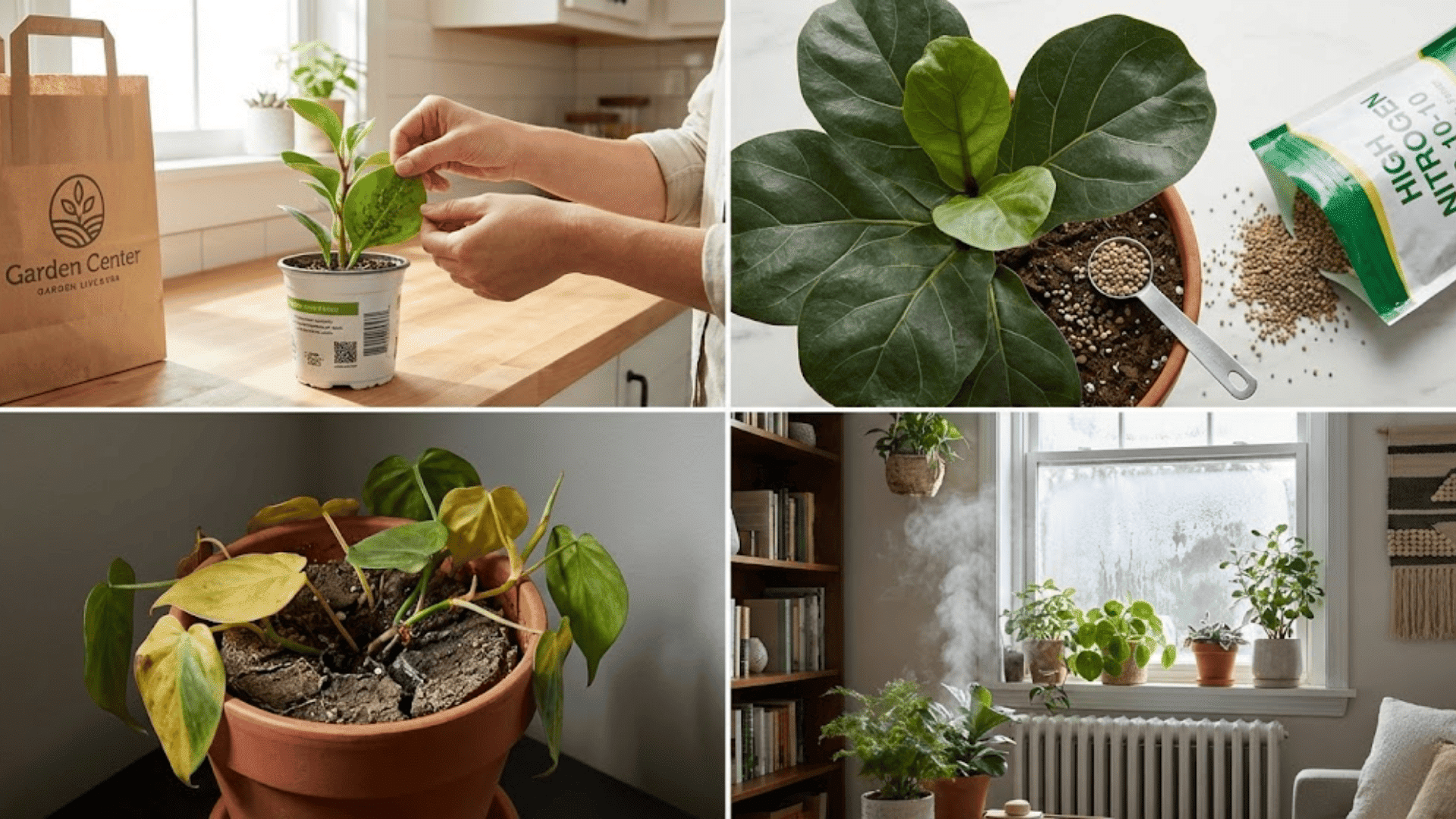
New plants from nurseries or garden centers can harbor hidden aphid colonies, especially on leaf undersides or tucked into growing tips. Even a few aphids can quickly establish themselves in your collection.
Always quarantine new additions for at least two weeks and inspect them thoroughly before introducing them to your other plants. Check stems, leaf joints, and the soil surface carefully, as aphids often hitchhike unnoticed.
2. Overfertilizing with Nitrogen
Too much nitrogen creates lush, tender growth that’s like candy to aphids. While fertilizer aids plant growth, too much nitrogen creates soft, sappy leaves that attract aphids on. This makes your houseplants irresistible targets.
Stick to balanced fertilizers and follow recommended dosing schedules rather than assuming more is better. Healthy, moderate growth is naturally more resistant to pest infestations.
3. Weak or Stressed Plants
Aphids gravitate toward plants that are already struggling. Underwatering, poor lighting, root issues, or incorrect humidity levels weaken your plant’s natural defenses, making it vulnerable.
Stressed plants emit chemical signals that actually attract pests. Maintaining consistent care routines keeps houseplants resistant to aphids. A healthy, strong-structured plant is less appealing to feeders.
4. Seasonal Factors and Indoor Environments
Indoor heating in winter creates warm, dry conditions that aphids love and stresses moisture-loving houseplants. Reduced ventilation in sealed homes leads to aphid outbreaks due to a lack of natural predators.
Spring often brings population spikes as aphids reproduce rapidly in favorable conditions. Your cozy indoor environment can become an aphid paradise if temperatures stay consistently warm and plants are clustered together.
Aphids on Houseplants vs. Other Common Pests
Not all tiny pests on your plants are aphids, and knowing the difference helps you choose the right treatment approach.
Here’s how aphids on houseplants compare to other common indoor invaders.
| Pest | Appearance | Location | Key Feature |
|---|---|---|---|
| Aphids | Pear-shaped, soft-bodied, various colors | New growth, stems, leaf undersides | Clustered groups, sticky honeydew residue |
| Spider Mites | Tiny dots, red/brown/yellow | Leaf undersides | Fine webbing, stippled leaf damage |
| Whiteflies | White, moth-like, 1-2mm | Leaf undersides | Flutter when disturbed, powdery appearance |
| Mealybugs | White, cottony, oval | Leaf joints, stems | Fuzzy white coating like cotton balls |
A quick tap test helps with identification: whiteflies will scatter into the air, while aphids stay put in their clusters. If you see webbing, you’re dealing with spider mites rather than aphids, which require different treatment strategies.
Are Aphids Harmful to Houseplants?
Aphids pierce plant tissue and suck out nutrient-rich sap, weakening your houseplants over time. This feeding causes leaves to curl, yellow, and drop, while stunting new growth.
The sticky honeydew they excrete attracts sooty mold, creating a black coating that blocks photosynthesis.
Beyond direct damage, aphids can transmit plant viruses as they move between hosts, spreading diseases throughout your collection. Small infestations are manageable annoyances, but left unchecked, aphids reproduce explosively.
A serious infestation can severely weaken or even kill vulnerable plants, especially young seedlings or already stressed specimens.
How to Get Rid of Aphids on Houseplants?
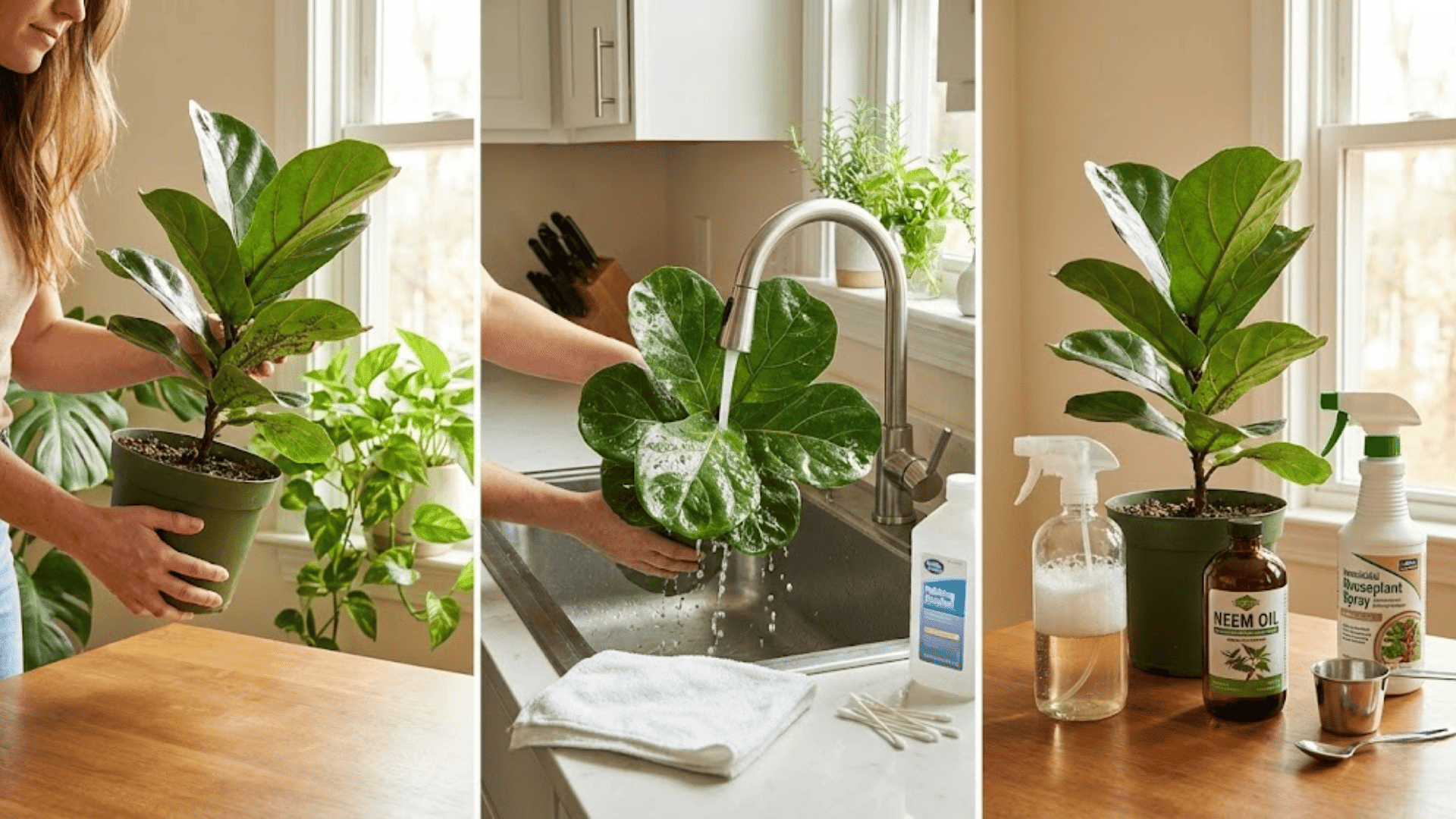
Taking action against aphids on houseplants doesn’t have to be complicated or stressful.
Following these straightforward steps helps you eliminate the infestation while protecting the rest of your indoor garden.
Step 1: Isolate the Affected Plant
As soon as you spot aphids, move the infested plant away from your other houseplants immediately. Aphids reproduce rapidly and can crawl or fly to nearby plants, turning a small problem into a widespread crisis.
Keep the isolated plant in a separate room or area until you’ve completely eliminated the infestation and monitored it for at least a week afterward with no signs of returning pests.
Step 2: Physical Removal
Start with the simplest approach: rinse your plant at the sink or shower with lukewarm water, focusing on leaf undersides and stems where aphids gather. The water pressure dislodges and drowns many aphids instantly.
For stubborn colonies, gently wipe leaves with a soft, damp cloth or use a cotton swab dipped in rubbing alcohol to remove individual aphids. This manual removal significantly reduces the population before applying any treatments.
Step 3: Treatment Options
Once you’ve physically removed as many aphids as possible, follow up with targeted treatments to eliminate remaining pests and prevent reinfestation.
- Insecticidal Soap: Suffocates aphids on contact; spray thoroughly every few days until completely gone.
- Neem Oil: Disrupts aphid life cycles and deters future infestations; apply weekly according to package directions.
- Commercial Houseplant Sprays: Ready-to-use formulas designed for indoor plants offer convenient, effective control.
Natural and DIY Remedies for Aphids on Houseplants
If you prefer gentler, chemical-free approaches, natural remedies can be surprisingly effective against aphids on houseplants.
Here’s a breakdown of popular DIY solutions and what to expect from each.
| Remedy | How to Use | Pros | Cons |
|---|---|---|---|
| Soap and Water Spray | Mix 1 tsp mild soap with 1 quart of water; spray the plant | Inexpensive, safe, kills on contact | Needs multiple applications, may damage sensitive plants |
| Neem Oil Solution | Dilute per instructions; spray weekly | Prevents reinfestation, disrupts life cycle | Strong odor, slower acting, can burn in sunlight |
| Alcohol Spot Treatment | Dab rubbing alcohol on aphids with a cotton swab | Kills instantly, precise targeting | Labor-intensive, can damage delicate leaves |
| Garlic or Chili Spray | Steep in water overnight; strain and spray | Natural repellent, deters pests | Mild effectiveness, strong smell, frequent reapplication |
What Plant Owners Say: Community Tips That Help
Real plant parents have tried just about every method imaginable to combat aphids on houseplants, and their collective wisdom offers invaluable insights.
Here’s what the community consistently recommends based on actual experience.
- “I spray mine down in the shower every few days until they’re gone. The water pressure alone gets rid of most of them.” This mechanical removal is the most praised first step by plant owners.
- “Neem oil worked, but you have to be patient and consistent. I did weekly treatments for a month.” Persistence with natural treatments yields results, but it requires commitment, not quick fixes.
- “Yellow sticky traps caught the winged ones before they could spread to my other plants.” Combining traps with other methods helps prevent infestations from hopping between plants.
- “My biggest mistake was waiting too long to isolate. By the time I moved it, three other plants were already infected.” Early quarantine is the number one regret shared across gardening communities.
- “Don’t go crazy with the soap concentration. I burned my pothos leaves thinking stronger would work better.” Overdoing treatments harms more than aphids, a hard lesson many learn.
Plant owners who catch infestations early and stick with their chosen treatment method see the best results, as discussed in communities like this helpful r/houseplants thread.
How Long Does It Take to Get Rid of Aphids?
Getting rid of aphids on houseplants typically takes 2 to 4 weeks with consistent treatment.
A single application rarely eliminates an entire infestation because aphids reproduce rapidly, and eggs can survive initial treatments.
You’ll need to repeat your chosen method every few to seven days to catch newly hatched nymphs before they mature and reproduce.
You’ll know the aphids are truly gone when you see no live insects, sticky residue disappears, new growth emerges healthy and uncurled, and at least two weeks pass without any signs of their return.
Patience and persistence matter more than perfect products.
Preventing Aphids on Houseplants
The best way to deal with aphids on houseplants is to stop them before they ever become a problem. A few simple habits can keep your indoor garden aphid-free and thriving.
- Quarantine new plants for at least 2 weeks and inspect them thoroughly before introducing them to your collection.
- Avoid overfeeding with nitrogen-rich fertilizers that create soft, sappy growth aphids find irresistible.
- Check your plants weekly by examining new growth, leaf undersides, and stems for early signs of infestation.
- Maintain consistent care routines with proper watering, lighting, and humidity to keep plants naturally resistant to pests.
Prevention requires less effort than treatment, and healthy plants naturally resist aphids. Incorporate these practices into your routine to save time on pest control.
When to Consider Stronger Treatments?
Sometimes aphids on houseplants overwhelm natural remedies, and stronger action becomes necessary.
If infestations persist after weeks of consistent treatment, colonies continue multiplying despite your efforts, or multiple plants become infected simultaneously, it’s time to consider commercial systemic insecticides.
When a plant is severely damaged with most leaves curled, yellowing, and covered in sticky residue, replacement might be more practical than treatment. Young seedlings and heavily infested specimens often aren’t worth saving.
If aphids keep returning despite isolation and repeated treatments, the plant may harbor hidden eggs or root colonies.
Trust your instincts when DIY methods clearly aren’t working.
Final Thoughts
Dealing with aphids on houseplants doesn’t have to feel overwhelming once you understand their patterns and weaknesses.
From that first shower rinse to consistent neem oil treatments, you now have a complete toolkit to protect your indoor jungle.
Remember, the key is catching them early and staying persistent with whichever method works best for your space. Your plants deserve to flourish without these tiny invaders draining their energy.
Have you battled aphids before? Drop a comment below sharing what worked for you. Your experience might help another plant parent save their favorite green companion.