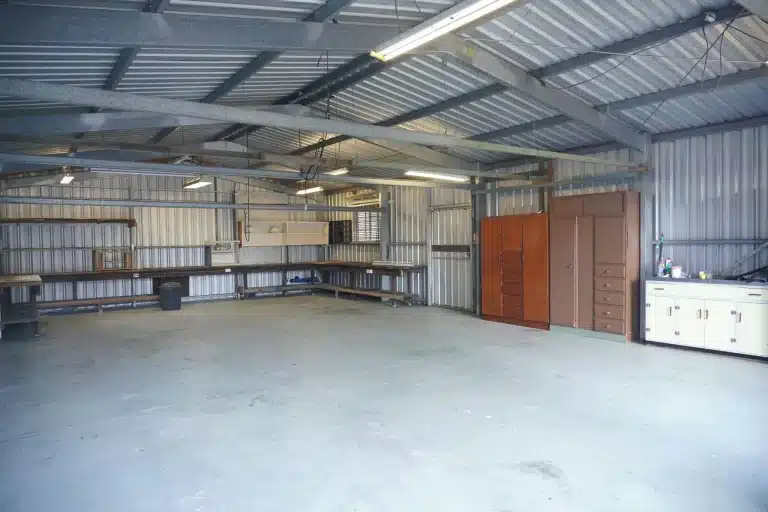
The top lazy garage hacks for perfect organization include utilizing a vehicle lift, installing pull-down attic stairs, and mapping a four-zone floor plan. You can also mount magnetic tool strips and use standardized clear bins to instantly reclaim floor space.
These straightforward methods bypass the need for expensive renovations by maximizing vertical clearance and creating dedicated zones for equipment.
Implementing these targeted garage organization strategies allows homeowners to transform cluttered bays into highly efficient workspaces and parking areas over a single weekend.
1. Clear the Floor
Walk into almost any cluttered garage, and the primary issue is visible immediately. A single vehicle consumes the majority of the usable square footage.
Tools, bicycles, and seasonal items get pushed to the perimeter, leaving virtually zero space for active projects or maintenance work. A four-post vehicle lift addresses this structural inefficiency at the source.
By stacking one vehicle above another, a quality four-post lift effectively doubles the parking capacity of a single bay without requiring an expanded footprint.
For garages without a second vehicle, the elevated platform creates a dedicated, accessible under-car workspace with clear rolling lanes.
Standard equipment carries up to 9,000 lbs and requires a ceiling height of approximately 11 feet, making this setup highly viable for standard residential bays.
When selecting equipment, prioritizing safety certifications and structural load ratings is critical. Sourcing a heavy-duty garage lift from HeavyLift Direct provides access to reliable models from reputable manufacturers. Reviewing guidelines for automotive lift safety provides a reliable framework for residential installations.
- This Weekend: Measure the ceiling height, verify the concrete floor thickness, and evaluate models that fit the specific bay dimensions.
- Short-Term Upgrade: Schedule a professional installation and reorganize the workshop setup around the newly established footprint.
|
Important: Always verify your concrete floor thickness and ceiling clearance before purchasing a vehicle lift. Most four-post lifts require a minimum 4-inch concrete pad and 11-foot ceilings for safe, OSHA-compliant operation. |
2. Stop Ignoring Your Attic
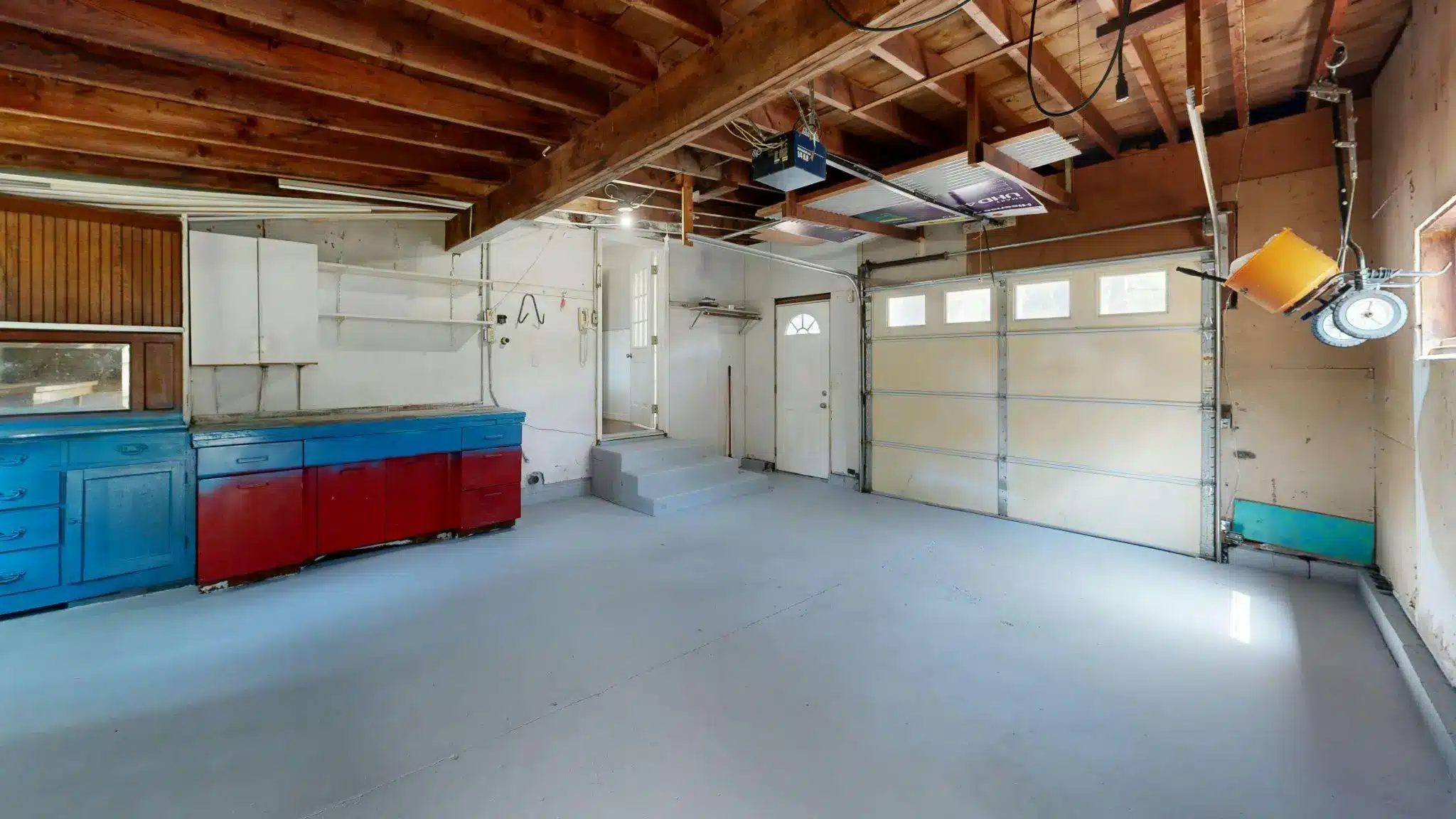
According to housing data, roughly 25% of homeowners with a two-car garage state they cannot fit even a single vehicle inside. In most cases, the lack of space is an illusion caused by neglected vertical clearance.
Standard residential garages feature 8 to 12 feet of vertical height, yet the area above eye level typically remains entirely unused due to accessibility challenges.
Stacking storage bins on the floor or relying on unstable step ladders creates safety hazards and discourages organization. Installing reliable overhead access, such as robust pull-down attic stairs from Inventive Garage, establishes a safe, permanent route to ceiling-mounted storage platforms.
A dedicated pull-down stair unit allows users to retrieve seasonal items in minutes without moving vehicles or balancing heavy loads.
The U.S. garage organization & storage market size is expected to reach USD 6.71 billion by 2033, growing at a CAGR of 7.7% from 2025 to 2033, according to a new report by Grand View Research, Inc.
Whether completed as a weekend DIY project or through professional installation, reclaiming this overhead space immediately frees up 40 to 60 square feet of ground-level flooring.
- This Weekend: Photograph the ceiling from the corner of the garage, utilize digital layout tools to map structural headers, and identify optimal zones.
- Short-Term Upgrade: Install the attic stairs, mount an overhead storage platform, and transfer all seasonal items off the primary floor.
|
Key Insight: A lack of garage space is often an illusion. By simply unlocking the 8 to 12 feet of neglected vertical clearance above eye level, you can instantly reclaim 40 to 60 square feet of floor space. |
3. Draw a Four-Zone Map
A mechanical lift reclaims the floor, and attic stairs unlock the ceiling, but neither upgrade functions optimally without an underlying organizational system.
Without defined zones, tools inevitably migrate toward lawn equipment, and seasonal items blend with active project gear. A strict four-zone floor plan solves this drift by giving every category a permanent boundary.
Zone 1 is for parking and rolling projects, ensuring clear lanes are maintained on both sides to accommodate rolling toolboxes.
Zone 2 serves as the workshop cockpit, containing the bench, slatwall, power strips, and frequently used hand tools. Everything required for daily fabrication or repair should sit within arm’s reach in this area.
Zone 3 is a highly accessed seasonal area utilizing wall hooks and low bin shelves for lawn care supplies, extension cords, and sports gear.
Finally, Zone 4 is reserved for the least-accessed items like holiday decorations and camping gear. Zoning requires nothing more than painter’s tape to implement initially, creating a permanent framework that can later be upgraded.
- This Weekend: Tape the four zone boundaries on the concrete, sort one category of items into its correct area, and label the seasonal bins.
- Long-Term Upgrade: Add heavy-duty slatwall to the tool zone and apply fluid-resistant interlocking floor tiles to lock in each area visually.
|
Pro Tip: Don’t overcomplicate your initial zoning phase. Use basic painter’s tape on the concrete floor to establish your four boundaries before investing in expensive modular cabinets or interlocking floor tiles. |
4. Mount Magnetic Tool Strips for Instant Accessibility

Once large zones are established, micro-organization dictates how smoothly a workspace functions. Hand tools piled in drawers inevitably lead to stalled projects and missing equipment.
Installing heavy-duty magnetic tool strips along the workbench wall provides instant visibility for screwdrivers, wrenches, and pliers.
The 2022 State of the Industry report by the Composite Panel Association highlighted that closets and organized storage projects dominated the market for composite‑panel applications, underscoring a growing trend toward optimizing interior storage spaces in homes.
Keeping the primary work surface completely clear ensures that you always have room to tackle new tasks. These space-saving garage ideas make an enormous difference in daily workflow.
- This Weekend: Mount two magnetic strips directly above the primary work surface and attach the most-utilized hand tools.
- Long-Term Upgrade: Expand the wall system with a full slatwall installation to hold heavier power tools and hardware bins.
5. Standardize Storage With Clear, Labeled Bins
Mismatched cardboard boxes and opaque containers create visual clutter and make locating specific items a time-consuming chore.
Standardizing all shelf and overhead storage with heavy-duty, clear modular bins ensures every piece of hardware or seasonal gear is immediately identifiable. You can find what you need without opening a single lid.
Homeowners are projected to spend roughly $522–526 billion annually on remodeling and repair work through 2026, depending on the quarter and forecast scenario, according to the Leading Indicator of Remodeling Activity (LIRA) from the Joint Center for Housing Studies at Harvard University.
Investing a fraction of that budget into uniform storage bins offers an incredible return on investment. This unified approach eliminates chaos and brings a sense of calm to the environment.
- This Weekend: Transfer loose hardware and seasonal gear into clear containers and apply high-contrast labels to the outward-facing sides.
- Long-Term Upgrade: Integrate interlocking modular cabinet systems that perfectly fit these standardized bins for a cohesive aesthetic.
Putting It All Together
Five hacks offer different effort levels, but all point toward the same outcome. The goal is a garage that actively supports projects rather than stalling them.
Clearing the floor with a mechanical lift, unlocking the ceiling with safe attic access, and maintaining order through precise zoning requires minimal ongoing maintenance once established.
Progress in organizational systems is inherently cumulative, meaning implementing all five strategies simultaneously is unnecessary.
Fixing one zone or installing one piece of access hardware creates immediate momentum. This turns a cluttered bay into a highly functional workspace.
|
Quote: “A garage should actively support your projects, not stall them. The key to lasting organization isn’t just cleaning up – it’s building permanent structural systems that make clutter impossible.” |
Your Next Steps
Select a single zone and set a two-hour timer to begin the transformation this weekend. If floor space remains the primary obstacle, measuring the bay for a four-post lift provides a clear starting point for vertical storage.
If ceiling access limits overhead capacity, evaluating layout options for pull-down stairs can clarify the structural requirements. One focused weekend is all it takes to build a foundation for a long-term organization.